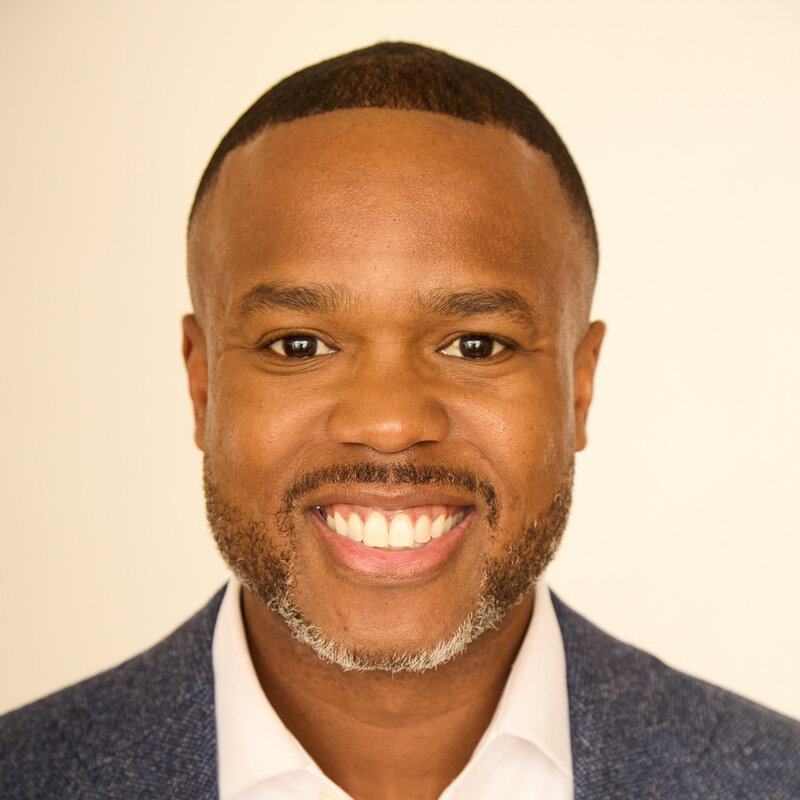
Huntlee Alderman
AXA
“Is it really the candidate that we're speaking to, or is it the best version of AI of the candidate?”
Huntlee Alderman has been named to the Talent 100, Class of 2026, the annual award recognizing up to 100 leaders in each category of talent acquisition. Honorees are nominated by peers or found by committees that look for excellent work wherever it happens, then chosen for the depth of their craft and their impact on hiring. This is Huntlee's story.
Under the EU AI Act, recruitment is classified as a high-risk environment. Huntlee Alderman works inside that classification every day, and he treats it less as a compliance headache than as a design constraint that sharpens the thinking. As Global Head of Talent Acquisition for AXA Partners, one of the entities within AXA, where he has now spent eight years, he has built a point of view that cuts against the loudest voices in the market: automation should buy time back for people, not replace the judgment that only people can supply.
It is a position earned across two continents, an agency floor, a healthcare system, a recruitment outsourcing business, and a global insurer. It has also made him unusually precise about what is actually changing in this profession and what is not.
An Agency Floor, and a Slow Job Market
Alderman had picked up some experience in the recruitment space before he ever went to university. When he came out the other side, the job market was quiet. Among the first companies to reach out to him was an agency recruitment firm, and what caught him was not the compensation plan or the desk. It was the narrative. "I really liked their story, I liked what they were about," he says. He went to work in agency recruitment straight out of university, and the trade has held him ever since.
That beginning explains something about how he leads now. Agency work teaches urgency, storytelling, and the discipline of being judged on outcomes. Carrying those instincts into corporate and global environments, rather than shedding them, is what has kept his teams commercially fluent while operating inside large, regulated organizations.
Regulation, Bias, and the Time Back
Alderman's read on the current landscape is that it changes daily. His organization, like most, is pushing hard toward AI. But operating in Europe means the EU AI Act sits at the center of every conversation, and recruitment's high-risk designation means the burden of proof is real. The priority is making sure no bias is introduced into recruitment flows, and that vendor selection favors providers who allow genuine visibility into how their systems work.
He also draws a distinction many leaders blur. Much of the value his function has captured over the past eighteen months to two years has come not from AI but from straightforward automation in workflows: work simplified, hours returned to the day. That reclaimed time has a purpose. It gets pushed back into candidate experience and into making sure the right candidate is identified. The risk, as he sees it, is the temptation to lean back and let the technology run the process. "The last thing we want to do is to create more bias within our recruitment flows," he says, particularly where unconscious bias may already exist in the process.
The Discernment Era
Alderman believes the recruiter's job is about to change in a specific way. Less of it will involve hunting and finding talent, because AI tools will do that intelligently. What will define the good recruiter is discernment. Candidates now arrive with AI-assisted CVs and AI-rehearsed interview answers, and the essential question becomes whether you are speaking to the person or to an optimized rendering of them. From there, the work is assessing the right skills, behaviors, and cultural fit, and protecting those things inside the organizations recruiters serve. It is a subtler craft than sourcing, and harder to automate.
Candidates Are Customers
Asked what advice he would offer talent leaders heading into 2026, Alderman starts by noting that the route from point A to point B keeps changing while the destination does not. "At the end of the day, it's about finding good talent into the organization." Lean into the tools, he says. Lean hard. But do not let front-end efficiency quietly consume the candidate experience.
He describes the failure mode precisely, because everyone has lived it: a candidate applies, receives the canned acknowledgment every ATS can generate, hears nothing for months, and then gets a rejection when the requisitions are finally cleaned up. "I assumed I didn't get the job, but thanks for telling me I didn't get the job." For an insurance business, the stakes are higher still. The people moving through AXA's requisitions are policyholders or potential policyholders, which makes every applicant a potential customer and every poor experience a commercial cost. Alderman holds his own function to that standard openly, treating candidate experience as an area with more ground still to gain rather than a box already ticked.
That combination, ambition about technology paired with refusal to let it erode the human contract, is the thread running through his career. Give people room, understand the culture you are operating in, and never lose sight of who is on the other end of the automation.
The Talent 100 exists to celebrate the people shaping the future of how the world hires, and few embody that better than Huntlee. We are honored to welcome Huntlee Alderman to the Talent 100, Class of 2026, and grateful for the experience, perspective, and craft they bring to this community. Congratulations, Huntlee. Welcome to the Talent 100.
About the Talent 100
The Talent 100 is an annual list spotlighting the leaders who push HR and talent acquisition forward, organized by Noon AI. Honorees are selected through peer nominations and independent selection committees. Selection is entirely merit-based, with no fees or pay-to-play requirements.