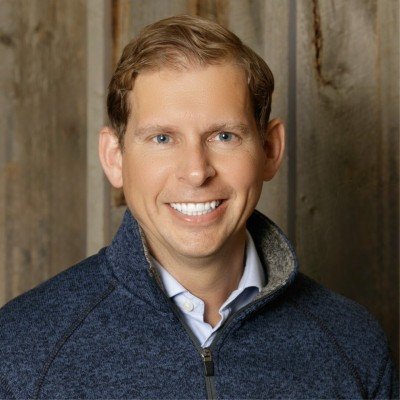
Tony Chimera
Westfield Specialty
“Understand your company, understand your industry, understand the talent. If you got those three things nailed, everything else sorts itself out.”
Tony Chimera has been named to the Talent 100, Class of 2026, the annual award recognizing up to 100 leaders in each category of talent acquisition. Honorees are nominated by peers or found by committees that look for excellent work wherever it happens, then chosen for the depth of their craft and their impact on hiring. This is Tony's story.
Tony Chimera has a warning for any organization racing to bolt artificial intelligence onto its hiring process. "If you have a broken process and you implement technology into it, it's kind of like building a castle in a swamp," he says. "It'll just sink faster." It is the kind of line that only comes from someone who has spent a career close enough to the work to know exactly where the ground gives way.
As Head of Talent at Westfield Specialty, Chimera occupies a seat he has essentially built for himself over a career spent almost entirely inside smaller organizations, where the talent function is never an abstraction and never far from the business it serves. He is not a theorist of hiring. He is a practitioner who has carried requisition loads of 30 to 50 positions at a time, and who still measures every new tool against a single question: does this bring me closer to the candidate, or further away?
Thirty-Three Requisitions and a Filing Cabinet
His entry into the profession was, by his own telling, an accident of organizational design. His first job out of school was at a technology company, a high end defense contractor, that did not really have an HR department. The executive assistant was managing most of it. Finance had picked up compensation and benefits. Chimera was hired, technically, as an HR generalist.
Then the executive assistant handed over the work she had been carrying: roughly 33 open requisitions, nearly all of them highly technical. The irony was not lost on him. He had once pointed himself toward engineering before concluding it was not his path, and here he was recruiting for a discipline he had decided not to pursue. "I found it amusing that I was recruiting for a function that I didn't have the capability really to master on my own," he says.
It took time, but the realization that followed shaped everything after it: recruiting was one of the most direct ways to make an impact on an organization. From those 33 requisitions forward, Chimera stayed with small companies and heavy loads, and he began to see talent acquisition not as a transaction but as a full life cycle. Get to know the talent early, match good people to the right positions, and the frantic part of the job largely disappears. As he puts it, "you find the good people, you match them with good positions, and then you don't have to really recruit at all."
A Clear Eyed Read on AI
Chimera is neither an evangelist nor a skeptic on artificial intelligence, and he is careful about the label itself. Every company is using AI now, he observes, but a fair amount of what gets branded that way is repackaged: the same instinct that once drove offshoring or handing work to outside partners rather than doing it in house.
What concerns him is measurable in the conversations he has with applicants. The candidate experience, he says, seems to be degrading, partly because of how these solutions are deployed and partly because many talent acquisition teams are shrinking rather than growing. He sees genuine value in the technology, particularly for the tedious and administrative layers of the process. He sees real danger in using it to commoditize how a company treats talented applicants.
"I get really nervous when I hear companies using it as a way to replace that one-on-one interaction," he says, "because I still believe that's how you sell a candidate on the company and how you learn that a candidate can be or can't be successful at your company." His own philosophy is deliberately simple: use AI and technology as a way to get closer to your candidates, not to insert distance between you and them.
Advice: Start From the Start
For talent leaders under pressure to implement something quickly, Chimera's counsel is to slow down at the front end. All of us, he acknowledges, can name ways we could improve how we identify and acquire talent. But before integrating any solution, he argues, leaders should go back to the beginning and honestly diagnose what was working and what was not in the first place, gathering feedback from hiring managers, from applicants, and from third parties outside the building.
That is where the castle in the swamp comes in. Technology layered onto a broken process does not repair it; it accelerates the collapse. The better use of this moment, he says, is to examine how the function is adding value for everyone across the chain, from the hiring manager to the person on the other end of the outreach.
The same standard shapes who he admires in the field. He speaks with real conviction about a colleague who built the company's early talent program, its intern and trainee pipeline, while also running full cycle talent acquisition alongside employee relations, compensation, and organizational design. He points to a partner at an insurance sector talent firm, whom he describes as "a massive exception" to an industry that too often stays transactional: smart, collaborative, a relationship builder who genuinely knows the talent. And he cites a contact at an executive search firm, who shares competitive intelligence even with people he is not working with, on the understanding that hiring is a long tail game. When everyone benefits from better information, the whole industry elevates.
It is a fitting set of choices. In a profession increasingly tempted to automate its way to scale, Chimera keeps returning to the same three anchors: know the company, know the industry, know the talent. Everything else, he insists, sorts itself out.
The Talent 100 exists to celebrate the people shaping the future of how the world hires, and few embody that better than Tony. We are honored to welcome Tony Chimera to the Talent 100, Class of 2026, and grateful for the experience, perspective, and craft they bring to this community. Congratulations, Tony. Welcome to the Talent 100.
About the Talent 100
The Talent 100 is an annual list spotlighting the leaders who push HR and talent acquisition forward, organized by Noon AI. Honorees are selected through peer nominations and independent selection committees. Selection is entirely merit-based, with no fees or pay-to-play requirements.