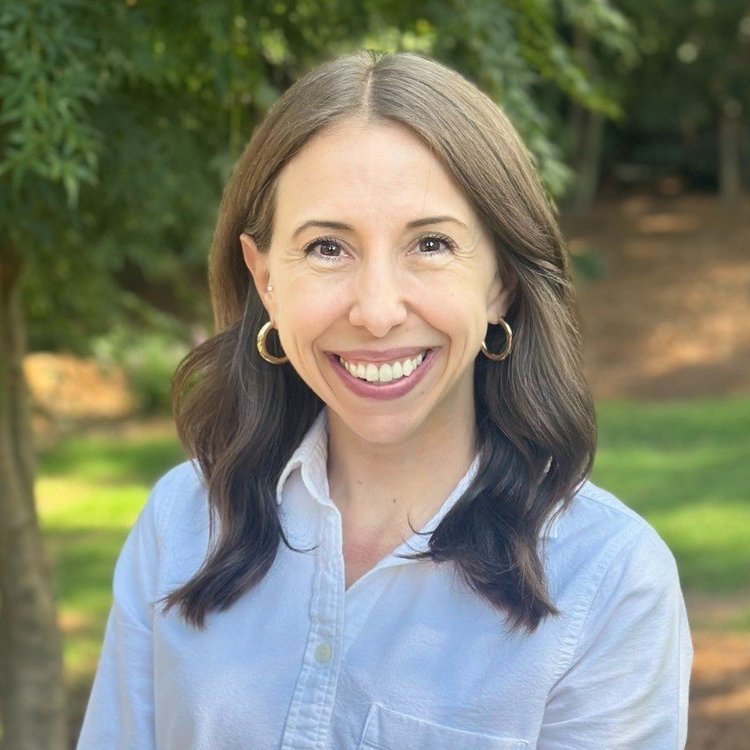
Deitrick Franklin
“I'm a former engineer. I'll always be an engineer.”
Deitrick Franklin has been named to the Talent 100, Class of 2026, the annual award recognizing up to 100 leaders in each category of talent acquisition. Honorees are nominated by peers or found by committees that look for excellent work wherever it happens, then chosen for the depth of their craft and their impact on hiring. This is Deitrick's story.
Deitrick Franklin did not arrive in talent acquisition by way of an HR department. He arrived by way of four Chevron internships. As a young engineer at the company, he was the one the recruiting team pulled onto campus visits, on the theory that whoever had lived four Chevron internships was the best possible judge of who else would thrive in one.
"I'm a former engineer," he says. "I'll always be an engineer." Both halves of that sentence matter. Franklin now leads university recruiting at Reddit, but he has never filed the engineering years away as a previous life, and he is clear eyed about how few people in his corner of the profession share that background. "I'm a little unique in that perspective for sure," he says, without overselling it.
The Engineer Who Got Tapped
Franklin's route into the field followed a pattern he can now name from the other side of the table. Companies routinely tap engineers to come to campus, stand in front of students and speak the language of the work. Most engineers do it once or twice and go back to their day jobs. Franklin was the engineer being tapped, and something in it caught.
The credentials behind the invitation were unusually specific. He had done four separate internships at Chevron before joining as a full time engineer, which meant that when the company sent him out to interview students, it was sending someone who genuinely understood what succeeding in a Chevron internship required. He was not assessing candidates against a rubric handed to him. He was assessing them against a path he had personally walked, four times.
That is the quiet advantage he carries into emerging talent work today. Franklin came to recruiting through the act of evaluation rather than through process administration, and he came to it having been, not long before, exactly the kind of student he was now sizing up. He graduated from the University of Pittsburgh, went into engineering, and then found himself building the pipeline he had recently traveled.
AI on Both Sides of Recruiting
Ask Franklin how the landscape has moved and he does not hedge. Recruiting has shifted drastically, he says, and the reason it has shifted so completely is a symmetry most commentary misses. "AI has impacts on both sides of recruiting," he says. It is not a tool that one party holds while the other stands still.
On the practitioner side, whether the person doing the work is a recruiter or a program manager, he sees AI reshaping the most basic act of the job: how teams actually engage with candidates. It can be pointed at an inbound application pool to identify who is likeliest to succeed through an interview process and, in his framing, the more important question, who is likeliest to succeed long term at the company. It can read resumes. It can read the responses candidates give in an application. It can sit in a meeting and take the notes. The list is long, and it is not finished growing.
What is striking is that Franklin, an engineer by training and instinct, is among the least breathless voices on the subject. He is openly amused by how quickly any business will ship a small bot, attach a few sparkles to it and declare itself an AI company. His own position is unfashionably plain. "I don't think it needs to be in everything," he says. Coming from someone who spends his days evaluating tools rather than admiring them, that reads less like resistance than like discipline.
The Value of Having Been the Candidate
The thread running through Franklin's career is proximity. He recruits engineers as someone who was one. He builds early career programs as someone who moved through four internships before he moved through a full time offer. He has been guided by mentors including family members, educators who supported underrepresented engineering students, and leaders who proved an emerging talent program could be built from scratch.
None of that is decoration on a resume. It is the working method. Franklin assembles the people he learns from as deliberately as he assembles a hiring process, then runs his thinking through them before he commits. For a field that talks constantly about identifying potential in others, there is something instructive in a leader who has been that carefully intentional about developing his own.
The Talent 100 exists to celebrate the people shaping the future of how the world hires, and few embody that better than Deitrick. We are honored to welcome Deitrick Franklin to the Talent 100, Class of 2026, and grateful for the experience, perspective, and craft they bring to this community. Congratulations, Deitrick. Welcome to the Talent 100.
About the Talent 100
The Talent 100 is an annual list spotlighting the leaders who push HR and talent acquisition forward, organized by Noon AI. Honorees are selected through peer nominations and independent selection committees. Selection is entirely merit-based, with no fees or pay-to-play requirements.