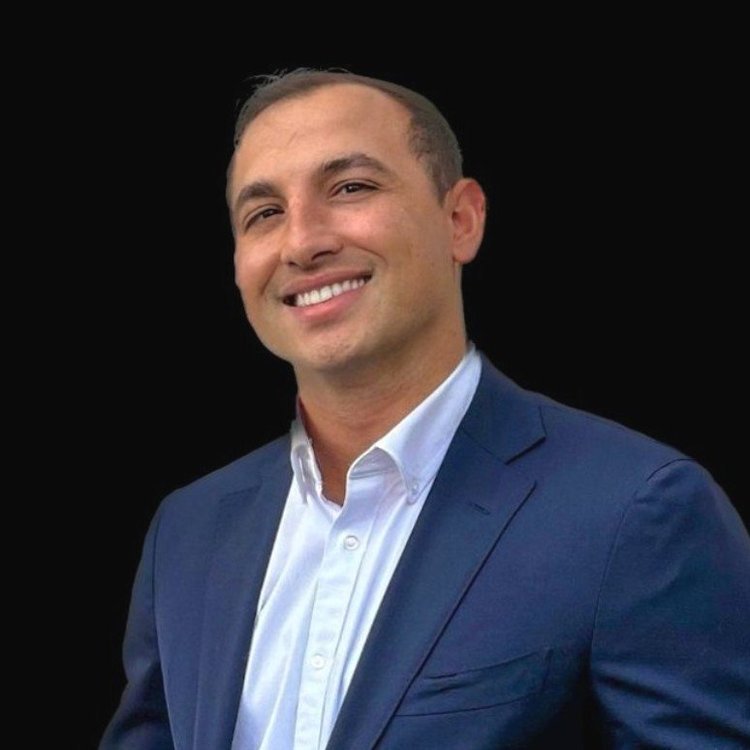
Travis Groom
Electronic Arts (EA)
“An AI tool isn't going to solve your strategy. It is going to support a strategy, but you need a strong foundation of what you want to do and why.”
Travis Groom has been named to the Talent 100, Class of 2026, the annual award recognizing up to 100 leaders in each category of talent acquisition. Honorees are nominated by peers or found by committees that look for excellent work wherever it happens, then chosen for the depth of their craft and their impact on hiring. This is Travis's story.
Travis Groom did not arrive at talent leadership through a requisition. He arrived through learning and development, first on the floor of Apple's retail stores and now at the center of Electronic Arts, where his remit as Chief of Staff, Global Talent and Director of Operations spans the entire arc of a career: how the company hires people, how it grows them, how it manages them, and how it eventually parts with them.
The structure of the job is unusual. Groom supports two executives at once: a VP of Recruiting whose organization he helps shape, and an SVP of Global Talent responsible for the full lifecycle of talent across the company. It is a vantage point few people in the profession ever occupy, and it explains why his read on recruiting begins not with pipelines but with development. Hiring, in his framing, is the front door of a much longer relationship, and he judges it accordingly.
From the Apple Store Floor to the Talent Lifecycle
The origin point was Apple, roughly fifteen years ago, when Groom was selected to run learning and development for the stores. His mandate was to grow and develop the talent inside them, and the assignment turned into a professional identity. "My passion for kind of learning and developing, growing people started from there," he says.
A stint at WeWork followed. Six years ago he joined Electronic Arts, where he ran the company's learning and development platform and set about changing it. Two years into his tenure at EA, the opportunity arrived that widened his aperture considerably: Chief of Staff of Global Talent and Director of Operations, a dual remit that let him influence the whole system rather than one stage of it. He took it for a specific reason. He wanted a larger impact on talent at EA, from how the company hires all the way through how it develops and grows the people it brings in.
That progression, retail learning to enterprise L and D to the operating center of a global talent organization, gives Groom a perspective that most recruiting leaders have to reconstruct secondhand. He has sat on the growth side of the house, so he knows what a good hire looks like eighteen months later.
Where AI Starts and Culture Begins
On artificial intelligence, Groom is neither evangelist nor cynic. He is an operator who has sat through the demos. His assessment of the current market is direct: a great deal of promise with very little delivery so far. The intentions are good, he allows, but many products are not ready for prime time and are nonetheless pitched as magical solutions that will unlock efficiency and save companies enormous sums. Put them into practice and the same conclusion surfaces every time. You still need the human element, and nowhere more than in recruiting. "You can't just walk away from doing the human connections in recruiting," he says.
He is unusually clear about how the enthusiasm got ahead of the engineering. The C-suite, as he puts it, was promised an efficiency game: better operational rigor, sometimes opex reductions, numbers that shareholders would applaud. Executives saw those numbers and concluded the case was made. Implementation is where the argument gets harder, because it requires deciding, function by function, what can be AI and what has to stay human.
That boundary problem is what Groom's team is working through now. Where does AI start and where does corporate culture begin? Should candidate screens run through AI, or should they stay in person? Those are not tooling decisions. They are identity decisions, and he treats them as such. He also names the mirror image of the issue, the one hiring teams now face from the other side of the table: are candidates using AI during the process, and is that acceptable? Coming out of COVID with a far more remote workforce, a different management challenge in itself, and fewer people coming onsite, the industry has fewer natural signals and more open questions.
None of this makes him a pessimist about the technology. He expects AI to make a meaningful impact and to become an integral part of how talent teams work, another tool in the tool belt rather than a replacement for the belt. "We can't replace our entire recruiting team with AI and expect to be successful," he says, "but we can actually make our recruiting team go faster and be more efficient and focus on the things that are important." His preferred analogy is the calculator. When it arrived, people assumed it would change the world. What it did was make processing numbers faster than adding manually, freeing up time for more important work. It did not replace people. It made one part of the process quicker. Summarizing notes from candidate conversations, skills matching candidate profiles: Groom rates that work as genuinely useful, and genuinely partial.
Advice: Strategy First, Then Tools
Groom's counsel to other talent leaders entering the AI market is short and unusually practical. Be skeptical of what is being promised. Be skeptical of what you are purchasing. Plenty of organizations, he notes, are working hard to drive profit off AI and off efficiencies, a word he puts in air quotes. And do the harder work first. "An AI tool isn't going to solve your strategy," he says. "It is going to support a strategy, but you need a strong foundation of what you want to do and why. Then look for the tools that will support what you want to do."
It is the same logic that runs through his career. Get the foundation right, then push past what you assumed you were capable of. Groom applies that to platforms and to people with equal conviction.
The Talent 100 exists to celebrate the people shaping the future of how the world hires, and few embody that better than Travis. We are honored to welcome Travis Groom to the Talent 100, Class of 2026, and grateful for the experience, perspective, and craft they bring to this community. Congratulations, Travis. Welcome to the Talent 100.
About the Talent 100
The Talent 100 is an annual list spotlighting the leaders who push HR and talent acquisition forward, organized by Noon AI. Honorees are selected through peer nominations and independent selection committees. Selection is entirely merit-based, with no fees or pay-to-play requirements.