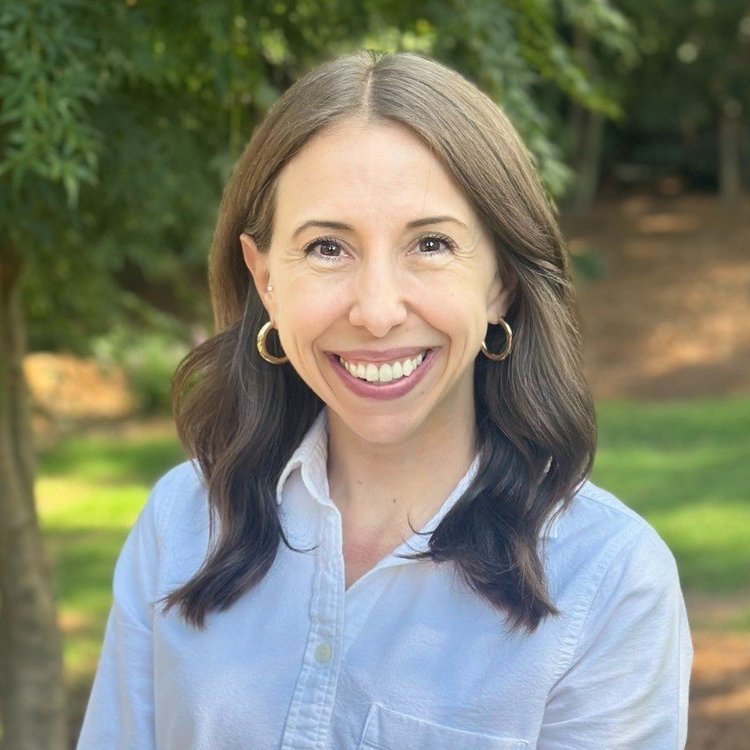
Lindsey Hammer
Catalyst AI Solutions
“How do I leverage AI to make me more human?”
Lindsey Hammer has been named to the Talent 100, Class of 2026, the annual award recognizing up to 100 leaders in each category of talent acquisition. Honorees are nominated by peers or found by committees that look for excellent work wherever it happens, then chosen for the depth of their craft and their impact on hiring. This is Lindsey's story.
In late 2017 and early 2018, while much of the recruiting world was still debating whether automation had any real place in hiring, Lindsey Hammer was leading Pan-Amazon beta testing of an automated phone screen scheduler. Getting that system where the business needed it took more than two years. In the past six months alone, she has watched the pace of change in her field accelerate to the point where a comparable leap can happen in a fraction of that time, and that contrast shapes almost everything she believes about where recruiting is heading.
Building that first tool meant more than getting the functionality right. It meant adoption, implementation, and the patient work of convincing recruiting teams that the technology was on their side. Two years of that, followed by an evolution she describes as happening at a continuously accelerated rate, has left Hammer with an unusually calibrated view of the present moment. She is neither breathless about AI nor defensive toward it. She is practical. Change, in her reading, is the one constant, and the only real question is how quickly a team is willing to get curious about it.
Go Toward the Things That Scare You
Hammer's read on the AI landscape is grounded in the fact that she has already lived through a slower version of it. What once required two years of beta testing and change management now moves far faster, and the rate of change is itself accelerating. Her guidance to companies is blunt: lean into it, and lean into it quickly.
For individuals, she prescribes something smaller and more forgiving. Do not wait until you have a strategy. Open ChatGPT or a comparable assistant, write a prompt, and start getting familiar. Then ask the more useful question. Not what AI cannot do yet, but what it is already capable of, because that boundary keeps moving. Hammer offers herself as evidence. She has recruited in tech for years without ever thinking of herself as a technical person, and now finds herself thinking she could build an app or write code, because the tools have made that reachable.
"Go towards the things that scare you," she says of her own career. "Change is inevitable, change is the one constant." The alternative, sitting back because everything is moving too fast to know where to start, is the one approach she has no patience for.
Amplify, Do Not Eliminate
Where Hammer breaks from much of the current discourse is on what AI is actually for inside a recruiting organization. The default framing is subtraction: fewer recruiters, fewer steps, fewer costs. Hers is multiplication. Rather than removing a recruiter, she argues, give that recruiter room to do what they are best at, which is engaging with people, understanding the business need, and figuring out how to bring all of it together.
Recruiters are not buried in administrative work by choice. They do it because the job requires it. Multiple systems, note taking, scheduling follow-ups, reviewing resumes: all of it pulls time away from candidates and clients. That is precisely the load she wants AI to carry, and she is equally firm that a human stays in the loop and that companies think strategically about where that human belongs.
The formulation she keeps returning to sounds contradictory until you sit with it. "How do I leverage AI to make me more human?" Sometimes that means time returned for relationship and engagement work. Sometimes it means research and knowledge that let her execute faster and do more knowledge sharing. Leaders, she believes, need the people dimension of the job more now, not less.
Leading Through Ambiguity
Her advice to other talent leaders begins with a candid acknowledgment of what this moment feels like from inside a team. People are asking whether they should be concerned. Whether their jobs are at risk. How their day to day is about to change. Nobody has complete answers, and Hammer thinks pretending otherwise is the worse option. Leading through ambiguity, in her view, is now a core requirement of the role.
"We're all in this together. We're all going to figure it out together. Let's learn together," is how she frames it, and she pairs the reassurance with a working agenda: identify what the team already does well and find ways to do more of it, identify what it does not do well and find tools that improve it. Stay agile. Stay curious. Over communicate.
That last instinct is not a management technique for her so much as a personal operating principle. "If I'm not learning, essentially I'm dying," she says. "What am I doing if I'm not learning?" It is the standard she sets for herself and the culture she works to instill in her team, and it explains why she is comfortable standing in front of people without all the answers. Regardless of the outcome, in her view, the more you learn, the better off you are.
The Talent 100 exists to celebrate the people shaping the future of how the world hires, and few embody that better than Lindsey. We are honored to welcome Lindsey Hammer to the Talent 100, Class of 2026, and grateful for the experience, perspective, and craft they bring to this community. Congratulations, Lindsey. Welcome to the Talent 100.
About the Talent 100
The Talent 100 is an annual list spotlighting the leaders who push HR and talent acquisition forward, organized by Noon AI. Honorees are selected through peer nominations and independent selection committees. Selection is entirely merit-based, with no fees or pay-to-play requirements.