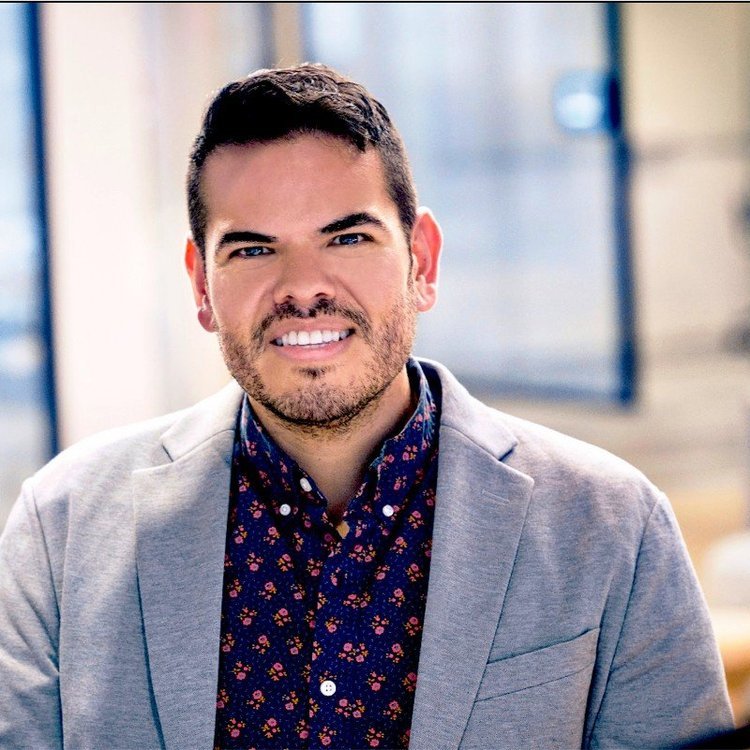
Karen Hutchison
Exadel
“Standing still is not an option for me personally or professionally. You have to have forward motion.”
Karen Hutchison has been named to the Talent 100, Class of 2026, the annual award recognizing up to 100 leaders in each category of talent acquisition. Honorees are nominated by peers or found by committees that look for excellent work wherever it happens, then chosen for the depth of their craft and their impact on hiring. This is Karen's story.
At Exadel, a 2,000 person digital and technology consulting and software house, the Global Head of Talent does not simply fill roles. Karen Hutchison sits with engineering teams and builds things: internal tools that make her function measurably more productive, and that have since grown into something with a product roadmap and a commercial case attached. What began as an idea inside a talent organisation is now, in her words, on its way to being a game changer, not only for Exadel but for its clients and potentially for other IT services organisations as well.
That is an unusual place for a talent leader to end up, and it is the natural conclusion of a career built on the conviction that the function should expand rather than defend itself. Hutchison has spent her working life moving toward the edge of what is next: from banking transformation into resourcing, from agency desks into outsourced buy side and sell side work, from contingent workforce management into executive leadership at a venture backed scale up, and now into a global remit where talent, technology and product development sit in the same conversation.
A Transformation Project That Became a Career
The origin story starts inside Barclays, where Hutchison was part of a change and transformation function within wealth operations. She was asked to help with a project: incorporating a resourcing function into a change management team. It was a small taste of the work, and it caught. "I really liked the interaction with people," she says. "I liked finding out their stories." What hooked her was the double obligation of the job, making sure individuals had the right fit for their skills to develop as professionals while ensuring they were genuinely adding value to the organisation.
After almost ten years at Barclays, she left for high street agency recruitment, and the transition was jarring. Coming from a corporate, structured environment, the administration and temporary recruitment world felt a poor fit. The breakthrough came when she moved into outsourcing, working both buy side and sell side, placing very senior day rate contractors into financial services technology functions in the City. That is where the value she could add came into focus, for organisations and candidates alike. She then moved in house with the IT services and consulting organisation Wipro, where she managed the entire contract workforce across the UK, Europe, the Middle East and Africa. "From there," she says, "it's gone from strength to strength."
Two Camps, One Answer
AI in recruitment, Hutchison acknowledges, is a divisive and almost polarising topic. She has watched very experienced talent leaders sort themselves into two camps over the past year: those who resisted, worried at a basic level that AI would take recruiters' jobs, and those who adopted it as part of the future of work, the evolution of talent and a new way of working. Her observation is unsentimental. It is the early adopters she has seen go from strength to strength professionally, because they understood the core dynamic. "It's the people that learn how to use the tools that will be valued, as opposed to the tools themselves."
She counts herself firmly among them, an early adopter both personally and professionally, and describes a long standing passion for technology at the cutting edge. She frames the imperative through a digital reading of Red Queen evolutionary theory: forward motion is not optional, because the ground itself is moving. That mindset is precisely what allowed her, at a company that builds software and provides services, to partner with her own engineering colleagues rather than wait for a vendor. The result has been value added services for internal stakeholders and external clients, and a role that has visibly expanded. Hutchison now finds herself looking at product development and commercial impact, territory most talent leaders never touch.
Get With the Programme
Her advice to peers is delivered without hedging. "Get with the programme," she says, "and understand that the change isn't coming, the change is already here." The upside, as she frames it, is not survival but expansion: the opportunities for change and transformation will broaden the skill sets of talent leaders and open new doors. The downside of hesitation is equally clear to her. "What you do about it now will have a significant impact on the trajectory of your career over the next five to ten years, because the pace of change is exponential."
There is a quieter standard underneath all of it, one that shows up in how she talks about her profession. Hutchison is careful about whose work she endorses, noting that she does not recommend people lightheartedly. She has seen a real shift in recent years between the talent leaders who are having genuine impact and those going through the motions. Her own answer to that distinction has been to keep building, keep adopting, and keep proving that the talent function can generate value that reaches all the way to the client and the balance sheet.
The Talent 100 exists to celebrate the people shaping the future of how the world hires, and few embody that better than Karen. We are honored to welcome Karen Hutchison to the Talent 100, Class of 2026, and grateful for the experience, perspective, and craft they bring to this community. Congratulations, Karen. Welcome to the Talent 100.
About the Talent 100
The Talent 100 is an annual list spotlighting the leaders who push HR and talent acquisition forward, organized by Noon AI. Honorees are selected through peer nominations and independent selection committees. Selection is entirely merit-based, with no fees or pay-to-play requirements.