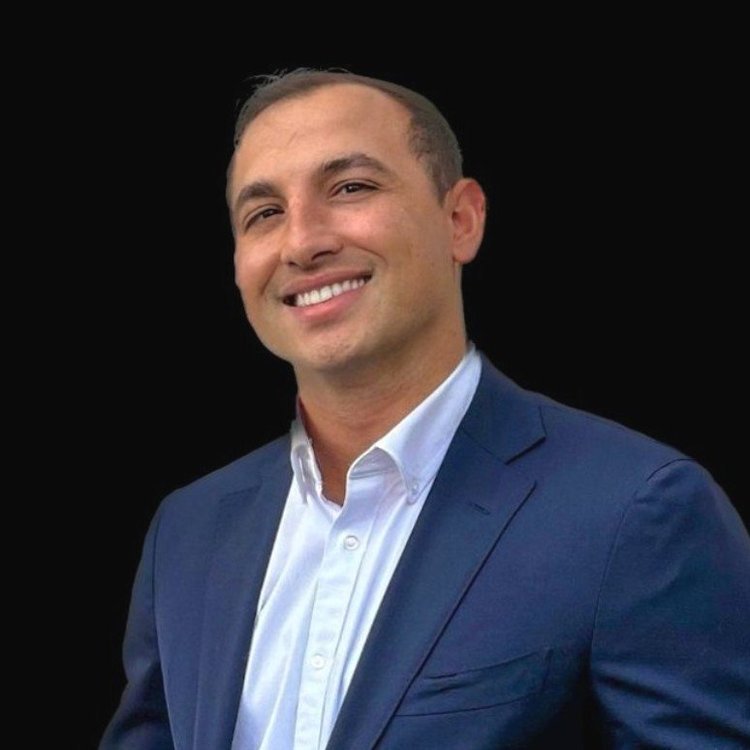
Swetha Gopal
LTM
“The human in the loop is essential — for a good candidate experience, and for judgment.”
Swetha Gopal has been named to the Talent 100, Class of 2026, the annual award recognizing up to 100 leaders in each category of talent acquisition. Honorees are nominated by peers or found by committees that look for excellent work wherever it happens, then chosen for the depth of their craft and their impact on hiring. This is Swetha's story.
Some talent leaders describe their careers as a series of roles; Swetha Gopal describes hers as a series of things she wanted to make better.
Over sixteen years, that instinct has carried her from the R&D center at Google in Bangalore — where she spent four years leading engineering leadership hiring alongside talent programs and diversity initiatives — to the United States in 2018, and into the world of global IT consulting, first at Cognizant and now at LTM, an organization of roughly 90,000 employees worldwide.
As Associate Director of Talent Acquisition, she leads the IoT hiring portfolio for the US and Canada, and she is the driving force behind an AI-led talent transformation that is preparing to span the globe.
A Career Built On Redesign
Ask Swetha what connects her roles across two countries and three very different organizations, and the answer is not a function or a title.
It is innovation, and specifically process design and redesign.
"My journey has always been about looking into innovation and how to improve process design, redesign," she says of the thread running through every place she has worked.
That orientation has made her unusually well positioned for this moment, because where many see disruption in AI, she sees a long-awaited opening.
It is, in her view, an opportunity to finally rebuild the parts of recruiting that have quietly needed rebuilding for years.
From Hackathon Win To Global System
Her own AI journey began in December, when she won her organization's Global Talent Hackathon.
She designed nine use cases for it, and in the data analysis behind them she found a pattern she could not unsee: recruiters were spending their days on repetitive tasks.
Rather than reading that as a threat, she read it as a blessing — the clearest possible case for change.
Her stated aim is to move recruiters out of monotonous, repetitive work and into the role of talent strategy advisors who make a genuine business impact.
The metrics she has chosen reflect that ambition: reducing a time to hire she considers significantly too high, delivering the candidate experience she has always strived for, and building quality into the recruitment flow itself.
Underpinning all of it is a promise to the business — that the business should never be held back by talent delays.
She has since designed the agents, the automation processes, and an entire TA automation intelligence system, and is now working with the enterprise IT team to bring it to life.
The design work is done; execution is underway; and the rollout is intended to span the globe.
"I'm leading that effort, so I feel really good about it," she says — a milestone she rightly counts as a big one.
A Patent, And A Steep Climb
Swetha recently filed a patent for fraud detection, an issue she considers critical for talent as AI capability grows.
Getting there required her to learn machine learning largely from the ground up, working through white papers and case studies without a technical background.
She is candid that it was a significant challenge.
She is also, deservedly, delighted to have done it.
That process sharpened something else, too: the more she read, the more she thought about false positives, and about how much depends on the person interpreting what a model returns.
Keeping The Human In The Loop
It is no accident, then, that every system Swetha has designed — including the MCP architecture behind her intelligence platform — keeps a human in the loop by design.
She sees that as non-negotiable for two reasons: candidate experience, and judgment.
Bias exists in AI, she notes, which makes domain knowledge and a clear sense of what genuinely makes a strong candidate more valuable, not less.
Her advice to fellow talent leaders is accordingly practical.
Develop critical thinking skills, use your best judgment about whether the AI is reaching the right decision, and invest in the strategic work.
Be, in her words, a strategic advisor to the business.
For someone who has spent a career redesigning the machinery of hiring, it is a fitting conclusion — that the point of building better systems is to free people to do the parts only people can do.
The Talent 100 exists to celebrate the people shaping the future of how the world hires, and few embody that better than Swetha. We are honored to welcome Swetha Gopal to the Talent 100, Class of 2026, and grateful for the experience, perspective, and craft they bring to this community. Congratulations, Swetha. Welcome to the Talent 100.
About the Talent 100
The Talent 100 is an annual list spotlighting the leaders who push HR and talent acquisition forward, organized by Noon AI. Honorees are selected through peer nominations and independent selection committees. Selection is entirely merit-based, with no fees or pay-to-play requirements.