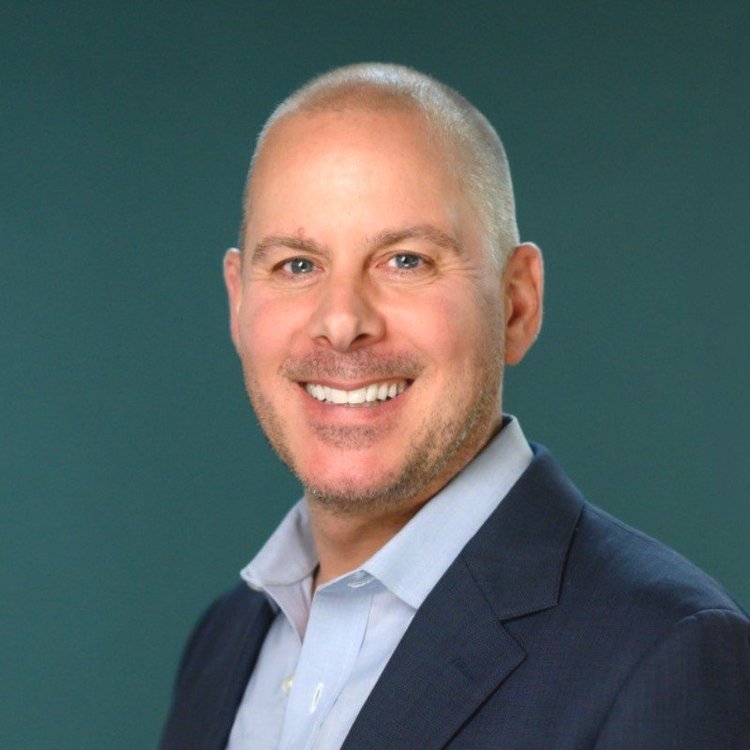
Dan Antonowicz
HW3
“AI done properly is better than a human, but a human and AI is far better than AI on its own.”
Dan Antonowicz has been named to the Talent 100, Class of 2026, the annual award recognizing up to 100 leaders in each category of talent acquisition. Honorees are nominated by peers or found by committees that look for excellent work wherever it happens, then chosen for the depth of their craft and their impact on hiring. This is Dan's story.
The call came on a Saturday. Dan Antonowicz had spent the previous afternoon on a golf course, telling a friend over a beer that after two and a half decades in IT services he was ready for something new. By Sunday they were meeting. By Monday he was pitching that friend's investors, and the following week he was on site. Only later, sitting through a formal induction on candidate management, did the punchline land: he had been doing a version of recruitment for most of his working life without ever calling it that.
Today he is Vice President of Major Accounts at HW3, running 360 recruitment through to team management and project leadership inside a group that has gone from one business to 11 organizations under a single entity in two years. He arrived with a board director's track record and the deliberate posture of a beginner, and that combination is the whole story.
The Question That Built a Career
Two subjects held his attention at A level: mathematics and sport. His father, who worked in IT on supercomputers, offered advice that shaped the next three decades. Become an accountant, but do it inside a technology firm, because technology is taking off. That was roughly 30 years ago. Antonowicz took the advice, then quietly reversed it. From an accounting seat he watched where the energy actually sat in the building, and it was not with the accountants. It was with the sales people and the operations people.
So he put his hand to everything: running the office, procurement, hiring as part of that role, then sales, all inside a Cisco partner. What separated him early was a single word. When a client said they needed something, his first response was to ask why. Why this, why now, what is the culture, what are the drivers, what is the challenge sitting underneath the request. Over the best part of 25 years he helped build what became the largest Cisco partner in EMEA, taking it from roughly a million dollars to almost half a billion in 15 years, organically and through acquisition, with Antonowicz on the board. British Telecom acquired the company. He decided he had no interest in becoming a BT lifer.
Recruiting Before He Called It Recruiting
What he built next he labelled an IT consulting business. In hindsight, he says, it was a recruitment business. From there he became something close to a virtual sales leader for companies trying to enter the UK and adjacent markets: quality assurance, software testing, penetration testing, cyber security, a major Microsoft partner. The deals were the visible part. The real work was assembling the teams that delivered them, and across those years he hired hundreds of people while filing the whole exercise under IT services.
The induction at his first formal recruitment role reframed it. Had he known the basic techniques around candidate management and questioning earlier, he reckons, he would have raised serious money and won considerably more customers. That realization did not deflate him. It became the reason to stay. He is candid about where the difficulty actually lives in this business: finding opportunities and building client engagement is the easy part, and sourcing the talent is the genuine challenge.
His client approach still starts from curiosity rather than a pitch. He engages senior leaders by building podcasts around the topics they care about, opening with a straightforward premise: he is not there to sell, he is there to help them think out loud. Nine times out of ten, he says, the business follows anyway.
Teams That Make You Uncomfortable
The values that stuck came from the business where he grew up professionally: create opportunity for someone young taking a first step, coach them, stay approachable, and recognize that you win as a team. He still remembers the interview. Asked what he wanted, he said he wanted the sales director's job. The founder laughed. The sitting sales director did not, and pointed out that he had said exactly the same thing about the managing director's job. In time, both of them got there, having backed each other the whole way.
That experience left what Antonowicz describes as coaching DNA. It also left a hiring philosophy: build leadership teams from people who are better than you, who think differently, and who make you uncomfortable. In the moment it is not pleasant. Looking back, he says, those are the people who mattered. A project over the past month left him properly challenged by a colleague who is also a friend, and he counts the ability to separate the friendship from the frank business conversation as one of the harder skills he has learned.
He talks openly about neurodiversity as part of that equation. His investor and the owner who brought him across both have ADHD, and he describes their relentless, infectious drive as a superpower he has never seen operate at that level. His own sits differently. He is high on the autistic spectrum, something he recognized through his son's diagnosis and later testing, and he links it directly to the analytical streak and the empathy he brings to client and candidate conversations alike.
Data First, Then AI
Antonowicz is an unapologetic advocate for AI, but he refuses to discuss it in isolation. It starts with data, then data science, then automation, then AI and workflows, and the test is always whether people end up with tools that make their working lives easier and better. He was selling AI into the insurance sector for fraud detection almost ten years ago, before much of the market used the term. He was part of a team that helped develop and take to market one of the first software testing solutions built to test AI itself. He has worked on predictive maintenance for manufacturing and, with a Formula One team, on an AI deployment in the wind tunnels that bought the engineers extra testing time.
He uses Claude and Copilot every day, all day, running in the background. He is equally clear about the poor use cases, including large organizations that want AI purely to replace people, and he notes that some US unions have drawn a categorical line against exactly that. His formulation is simple: AI done properly beats a human, and a human working with AI beats AI on its own.
The most persuasive evidence he cites is at his own dinner table. One daughter is studying computer science and AI and, during a gap year, wrote code now running live in an NHS environment doing patient triage, with a final year project aimed at accident and emergency services. The other is studying chemistry and data science, with the stated ambition of using data, technology and chemistry to help find a cure for certain cancers. They both think they know more about AI than he does. On workflows and automation, he concedes, the eldest probably does, and he is happy to let them win the argument.
The Talent 100 exists to celebrate the people shaping the future of how the world hires, and few embody that better than Dan. We are honored to welcome Dan Antonowicz to the Talent 100, Class of 2026, and grateful for the experience, perspective, and craft they bring to this community. Congratulations, Dan. Welcome to the Talent 100.
About the Talent 100
The Talent 100 is an annual list spotlighting the leaders who push HR and talent acquisition forward, organized by Noon AI. Honorees are selected through peer nominations and independent selection committees. Selection is entirely merit-based, with no fees or pay-to-play requirements.