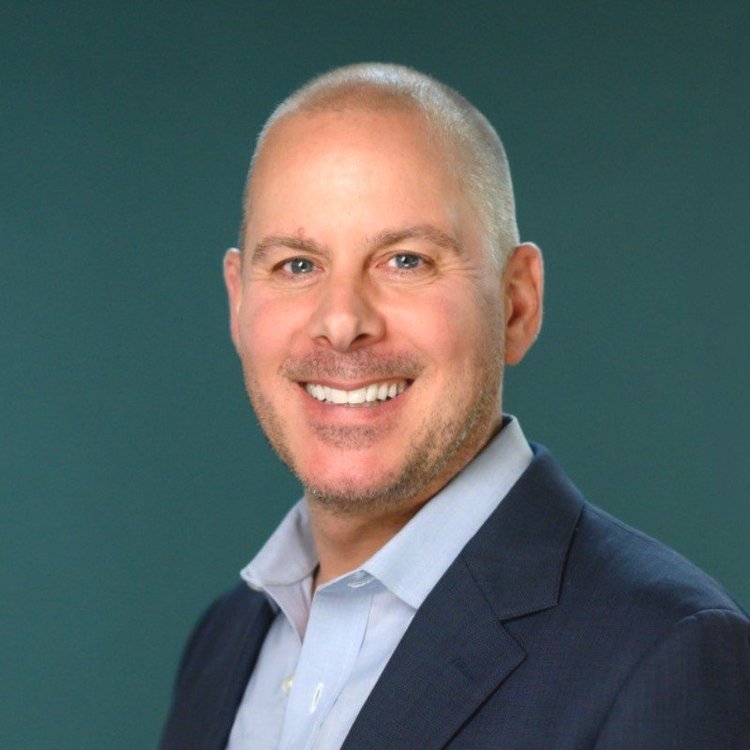
Mary Baynard
Green Key
“I think the best recruiters in the field treat recruitment as a people-first business.”
Mary Baynard has been named to the Talent 100, Class of 2026, the annual award recognizing up to 100 leaders in each category of talent acquisition. Honorees are nominated by peers or found by committees that look for excellent work wherever it happens, then chosen for the depth of their craft and their impact on hiring. This is Mary's story.
Before Mary Baynard ever reviewed a resume, she was reading actors. For roughly six or seven years she worked in casting for Broadway and feature film, a world where the job is to match a human being to a role that only exists on paper until someone brings it to life. When COVID closed theaters and froze production, the skill set survived the industry that built it. Today Baynard is a Director at Green Key, leading a national team of eleven inside one of the firm's largest departments, placing candidates from entry and mid-level roles all the way up to the executive suite.
She describes the trajectory as unorthodox. It is more accurate to call it a translation. "Very, very different, but very similar responsibilities," she says of casting and corporate recruitment, and the through line is visible in how she runs a desk: read the person, read the room, understand what a role actually demands before you start sending people toward it.
The Call That Changed Everything
The pivot came through a relationship, which is fitting for someone who now argues that relationships are the entire business. As the entertainment industry contracted in 2020, Baynard was still in touch with one of her former assistants from her casting days. That assistant had landed at Green Key. She had a suggestion: have you ever thought about recruitment? I think you'd be great. There's an opening on my team.
Baynard took the meeting, then took the job. More than five years later she is still there, having moved from that first seat on the team to a directorship overseeing a national group. "It's kind of a crazy, unorthodox career trajectory that I don't think would've happened except for that kind of COVID-era crazy hiring job market," she says, adding that she considers herself lucky to have been handed the opportunity at all.
The scope she oversees now is deliberately wide. Her department is national, one of the biggest at the firm, and it covers what she calls a crazy number of different kinds of roles across seniority levels. Her position is that the standard does not change with the salary band. "The same standards still apply."
AI as a Tool, Not a Coordinator
Baynard has watched the industry's relationship with artificial intelligence move through a full cycle. When the technology first arrived, she says, a lot of firms rushed to deploy it almost as a coordinator, then discovered the capability was not yet there. It could get there. It is not there now.
What has worked at her firm is narrower and more useful: AI as a tool that clears away busy work. Job postings. Support on candidate outreach. Sourcing and organization across different platforms. Always, she insists, with a human touch first. She points to LinkedIn Recruiter as a live example of the limits. If you do not teach the system precisely what you want from a high-level search, the results come back full of candidates who are, in her words, absolutely not right. Getting it useful takes trial, error, and patient training of the system itself.
Her warning is aimed less at the technology than at the people using it. "There's a lot of skipping steps that people are doing, and it's not servicing them in terms of actually utilizing AI to its fullest potential," she says. Ignoring AI is not an option, given how much of the industry it now touches. But the underlying premise does not move. "AI is a tool like anything, so I do believe that recruitment and good recruiters are still relationship first. We're a people business."
Against the Easy Win
Asked what she would tell talent leaders heading into the next year, Baynard draws a line that has clearly cost her arguments over the years. The best recruiters in the field treat recruitment as a people-first business. Too many others treat it as a sales business, and she considers that a genuine danger. The goal, as she frames it, is clients and candidates who come back again and again and again, which is only possible if the relationship was real the first time.
"We're not career coaches, but we're helping lead people in their careers," she says. "And that's a huge responsibility." The failure mode she sees most often is the easy win: filling the requisition instead of asking what the strategically best fit is for this client, or for this candidate. She applies the same discipline to individual career decisions, including the kind she once faced herself. Think logically and not only emotionally. Map the paths in front of you. Stay open to the ones you did not draw yourself.
That last point is where the casting director resurfaces. Some people are admirably concrete about what they want, Baynard says, and in being concrete they miss options they never knew existed. "That's part of the best part about recruitment, is that we can be very creative about finding candidates great next steps that they haven't even thought about." She would know. A phone call from a former assistant is how she found hers.
The Talent 100 exists to celebrate the people shaping the future of how the world hires, and few embody that better than Mary. We are honored to welcome Mary Baynard to the Talent 100, Class of 2026, and grateful for the experience, perspective, and craft they bring to this community. Congratulations, Mary. Welcome to the Talent 100.
About the Talent 100
The Talent 100 is an annual list spotlighting the leaders who push HR and talent acquisition forward, organized by Noon AI. Honorees are selected through peer nominations and independent selection committees. Selection is entirely merit-based, with no fees or pay-to-play requirements.