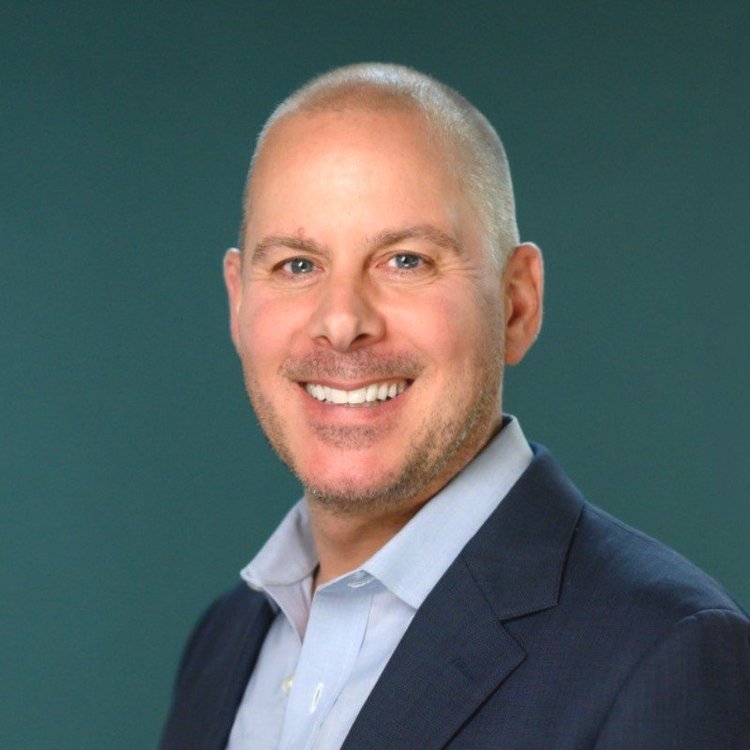
Kirsty Bell
Nile
“That trust is really about building those human connections.”
Kirsty Bell has been named to the Talent 100, Class of 2026, the annual award recognizing up to 100 leaders in each category of talent acquisition. Honorees are nominated by peers or found by committees that look for excellent work wherever it happens, then chosen for the depth of their craft and their impact on hiring. This is Kirsty's story.
Most consulting engagements end just as they get interesting. Three months, a diagnosis, a recommendation, and out. Kirsty Bell spent years on that cycle before noticing that what her clients actually needed was not another set of recommendations but the right people, at the right time, staying long enough to make the recommendations real. Out of that observation came Trusted Talent, the division she leads at Nile, and a business that has grown quickly because it answers a question keeping enterprise leaders awake at night.
From Consulting Problem to Talent Solution
Bell did not arrive in talent through an agency desk or an in-house recruiting team. She arrived through the client conversation. "I have been a consultant for a long time," she says, "talking to clients about problems and helping them to think through solutions to those problems." The pattern that kept surfacing was access. Organizations knew what they wanted to change. They did not have the people in place to carry it.
The raw material for the answer was already sitting in her own network. Across years of consulting projects, Bell and her colleagues had worked alongside a deep bench of specialists, accumulating both expertise and relationships. She looked at that pool and saw something more durable than a short engagement: people who could be embedded with clients for far longer than the typical three months or less of a consulting project, delivering value inside the business rather than alongside it.
The proposition landed because it speaks to a genuine anxiety among leaders of larger enterprises. How do they get the right people in fast enough to accelerate a transformation? How do they keep the wheels turning while everything around those wheels is being redesigned? Bell built Trusted Talent to sit precisely in that gap, and it has scaled quickly since.
The Homogenization Problem
Bell's read on what AI has done to hiring in the past year is unusually precise, and it starts with the candidate side. She names it directly: a homogenization of the application process. Profiles are converging. Everyone is optimizing against an imagined score sitting behind the first or second gate, chasing keywords, adopting a single register.
She considers the effect detrimental, and not for sentimental reasons. A profile used to carry signal. Reviewing one gave you some sense of how a person thinks and how they come across, which is exactly what a first screening pass is for. The more everything reads the same, the less that first pass tells you, and the harder the job becomes for the people doing it.
That does not make her a skeptic. She sees real promise in AI-led first-round screening, deployed the right way, and she is candid about the operational pressure any talent business faces. "We're being contacted all the time," she says, which turns the question into a practical one: can you move through enough volume to surface enough candidates? Her framing of the opportunity is refreshingly candidate-centered. How do you give people a way to put themselves in front of you without requiring them to book a meeting for that first round? Beyond that sits a bigger and more interesting question she is actively wrestling with: whether recruitment and resourcing should be reshaped entirely, given that the emerging technology carries possibilities nobody has thought of yet.
The Bias That Gets Codified
Her main concern is where bias enters, and what happens to it once it does. Bell is careful not to romanticize the alternative. Humans running these processes carry their own biases, and she says so plainly. The difference is what technology does with them. Applied at scale, a bias stops being an individual judgment and becomes codified into the system, and every cycle through that system strengthens it further.
So the test she sets for any reshaping of the process is twofold. Mitigate against those biases as far as possible, and use the change to open up to candidates who were never visible before, the people who did not get the opportunity to apply or who simply did not know how. Alongside that, she is determined to preserve something harder to automate. A profile ticks enough boxes, you speak to the person, you assess the technical element, and then there is the gut feel element of that conversation. That last part matters to how her team decides, and she is not willing to trade it away for throughput. "I just think we really need to be careful with how we're thinking about applying some of these tools and technologies," she says.
The Talent 100 exists to celebrate the people shaping the future of how the world hires, and few embody that better than Kirsty. We are honored to welcome Kirsty Bell to the Talent 100, Class of 2026, and grateful for the experience, perspective, and craft they bring to this community. Congratulations, Kirsty. Welcome to the Talent 100.
About the Talent 100
The Talent 100 is an annual list spotlighting the leaders who push HR and talent acquisition forward, organized by Noon AI. Honorees are selected through peer nominations and independent selection committees. Selection is entirely merit-based, with no fees or pay-to-play requirements.