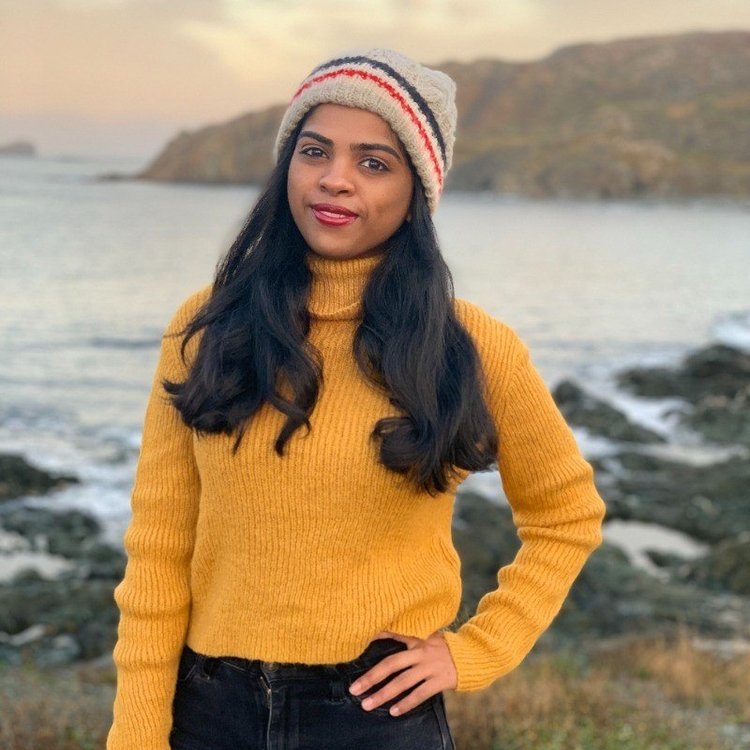
Dalia Naami
Baylis Medical Technologies
“You need to be an extension of the departments and the company that you service.”
Dalia Naami has been named to the Talent 100, Class of 2026, the annual award recognizing up to 100 leaders in each category of talent acquisition. Honorees are nominated by peers or found by committees that look for excellent work wherever it happens, then chosen for the depth of their craft and their impact on hiring. This is Dalia's story.
Ask Dalia Naami what separates a competent HR leader from a great one, and she will not describe a process or a dashboard. She will describe belonging. "You need to be an extension of the departments and the company that you service," she says, and she means it literally. At Baylis Medical Technologies, her client groups run across engineering, sales and marketing, and her working assumption is that she cannot serve any of them well until she understands what they live and breathe, what they are focused on, and what they have committed to accomplish inside the year.
That standard is unusually demanding, and it explains a lot about how she operates. Naami is not the kind of HR leader who arrives with a template. She arrives with the business context first, then builds the talent answer around it. It is a habit formed over a career that began in the Sarbanes-Oxley era and has since taken her through global medical technology and consumer health organizations, into people leadership, and into the strategic conversations where headcount, capability and training budgets are won or lost.
An Accident That Turned Into a Calling
The entry point was, by her own cheerful admission, unplanned. "You get started in HR recruiting by accident," she says. Hers came during a university summer spent interning at a recruiting firm at the height of Sarbanes-Oxley implementation, when the demand for compliance talent was enormous and the agency world was moving fast. She was supposed to be learning about a profession. Instead she found something closer to a personality fit: connecting people, talking to people, networking, and the specific satisfaction of bringing the right person to the right project for the right company.
After graduation she landed a recruiting job with a marketing firm in the Greater Toronto Area, and, as she puts it, the rest is history. What she did next is the part that reveals the professional. Rather than coast on aptitude, she went back to school while working full time. Her university program had been general, so she completed a diploma in HR management and earned her designation, deliberately converting an accidental start into a credentialed discipline. "I fell in love with it," she says, and the investment shows: the strategic vocabulary she uses today is the vocabulary of someone who studied the field as well as lived it.
AI as a Starting Point, Never the Substitute
On the question preoccupying every talent function right now, Naami is neither a skeptic nor an evangelist. She is precise. AI, in her framing, is intended to be a tool that augments and supports the way organizations operate, and her recruitment strategy does not surrender the human element to it. At her organization the strategy remains a personal one. Resumes still get read by people. Conversations still get had. The screening relationship is not delegated to a model.
Where she does find real leverage is upstream, in structure. AI is genuinely useful for building procedures and frameworks, for establishing a starting point a team can then build from. Drafting a policy, to use what she calls a boring HR example, might reasonably begin with an AI structured template. What it cannot do is finish the work. "It's not exclusively AI output or exclusively human output," she says. The point of the tools is to make the job easier so that a practitioner can spend their judgment where judgment matters: on a well thought out strategy that delivers what the business actually needs. HR professionals, she notes pointedly, know exactly what that needs to be.
What, So What, Now What
Asked for the advice she would pass to other talent leaders, Naami offers a framework she was trained on early and has used ever since. Every project, solution or strategy has three components: the what, the so what, and the now what. It is, at bottom, a discipline of translation. If she needs to convince her leaders to add a specific capability to the business, she has to speak in their language and in terms that make sense to their world. What is being proposed. Why anyone in that room should care, whether the ask is more people, a new capability or a training investment. And then the now what: the impact, the return on investment, the consequence that outlasts the meeting.
It is a corrective to the most common failure mode in her field. "You can't just deliver the nice little package of, here are the 10 things I'm going to do," she says. Lists are easy. Lasting impact requires a leader who can connect a talent decision to a business outcome and then stand behind the arithmetic. That framework, she says, anchors her whenever she brings a new proposal to the table, and it is the throughline that runs from an accidental internship in the Sarbanes-Oxley years to a seat in the strategy conversations she occupies today.
The Talent 100 exists to celebrate the people shaping the future of how the world hires, and few embody that better than Dalia. We are honored to welcome Dalia Naami to the Talent 100, Class of 2026, and grateful for the experience, perspective, and craft they bring to this community. Congratulations, Dalia. Welcome to the Talent 100.
About the Talent 100
The Talent 100 is an annual list spotlighting the leaders who push HR and talent acquisition forward, organized by Noon AI. Honorees are selected through peer nominations and independent selection committees. Selection is entirely merit-based, with no fees or pay-to-play requirements.