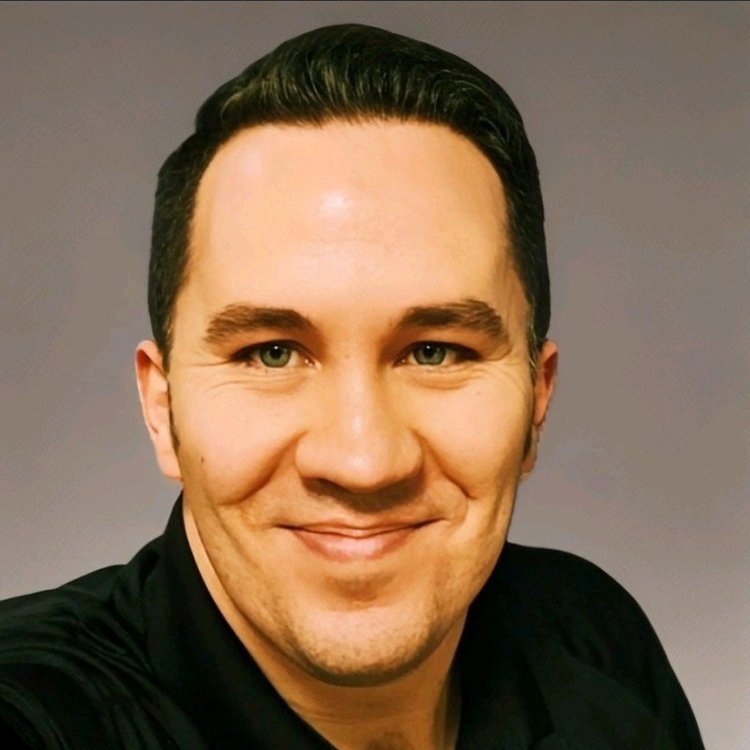
Kaleigh Oleynik
Talkspace
“You can be so much more human and connected when you're also organized.”
Kaleigh Oleynik has been named to the Talent 100, Class of 2026, the annual award recognizing up to 100 leaders in each category of talent acquisition. Honorees are nominated by peers or found by committees that look for excellent work wherever it happens, then chosen for the depth of their craft and their impact on hiring. This is Kaleigh's story.
Kaleigh Oleynik came to New York to be in New York, and the job she found was translating Spanish for recruitment inside the Department of Education. Within months she had discovered the three things that would define a career: she loved giving people access to something she believed in, she loved the operational machinery behind it, and she loved asking why. Today she oversees all recruiting at Talkspace, thousands and thousands of therapists a year plus AI roles and a growing corporate function, while also serving as the company's chief of staff.
From Interpretation to Infrastructure
Her first role was translation and interpretation for Spanish recruitment at the DOE, work that put her in the position of handing families information they did not otherwise have access to: details about schools, and a path into the school she worked for. That was the part that hooked her. The second part surprised her. Confronted with files that were out of order, she reordered them, and started writing notes in a cleaner format so that the next person could use them. She is candid that it was elementary work for someone brand new to the workforce, but the instinct behind it never left. "You can be so much more human and connected when you're also organized," she says, a sentence that doubles as a design principle for every talent function she has since run.
The third piece is temperamental. Oleynik compares herself to a toddler in the why phase, the difference being that she never grew out of it. Recruiting, she realized, is one of the few professional settings where you are permitted, even expected, to ask people enormous amounts about themselves. She has done exactly that across industries, and rarely takes the first answer at face value. Digging one layer deeper is, in her telling, the whole job.
From the Department of Education she moved into tech, starting at a mission-driven organization that operated as both an engineering school and a technology company. A stint in fintech followed. Then Talkspace, where the mandate is unusually broad: clinical hiring at genuine volume, thousands and thousands of therapists every year, alongside corporate hiring and AI roles. She holds the chief of staff seat at the same time, and she does not see that as a stretch. Both jobs, she points out, run on the same engine. Why, why, why, over and over again.
What AI Actually Changed
Oleynik is neither an evangelist nor a skeptic on AI. She is a practitioner who has clocked both sides of the ledger. She came up in the manual era, and she was proud of how fast she could write a Boolean string. Nobody has to do that anymore, and she thinks that is fantastic. The bigger gain, in her view, is qualitative: it is now genuinely possible to find hidden gems in the talent pool, to take a considered risk while sourcing, because the search can be fine-tuned toward real experience rather than a title match.
The cost is on the inbound side. "Every resume looks incredible now," she notes, which makes it harder to determine who has actually done what. She refuses to be cynical about it. AI resume tools are almost certainly lifting candidates who were being screened out for reasons that had nothing to do with capability, and she counts that as a genuine good even as it makes her own review process heavier. Meanwhile the scheduling and coordination load, work she says was never anyone's joy, is being automated away, which buys back the only resource that matters in recruiting: time talking to people.
Her most interesting prediction is about the recruiters themselves. Talent acquisition has historically been the first function to grow and the first to be cut, hiring 30 people and releasing them six months later. Oleynik hopes, and admits she cannot be certain, that the efficiency these new tools create will finally produce stability: smaller, more thoughtfully assembled teams of genuinely creative people who are hired well and then kept.
Stay Curious, Stay Kind
Her advice to other talent leaders is deceptively simple and aimed squarely at the experienced. Most recruiters start out curious. The risk is erosion. The longer the career, the louder the voice that says you have seen this candidate before, that you already know how this reference check will go. Oleynik considers that the single most dangerous habit in the profession, and prescribes the same remedy at both scales: try new tools, new tactics, new ways of being efficient, and then bring the same openness into every individual conversation.
She means it literally. Even in a phone screen where it is clear within minutes that the fit is wrong, she believes there is something to learn. "You can still learn from every person on earth, and I'm not being cheesy," she says. Even a poor answer is information; dig slightly and you usually surface what is motivating the person to say it. Her closing formulation is four words long: stay curious, stay kind.
A Product That Belongs to Everyone
Oleynik is deliberate about one more commitment, and she is aware it is harder to state now than it was a few years ago. She remains fully invested in diversity, equity and inclusion, not as a position but as an observed result. She has watched the workforce improve when organizations are permitted to look openly for different perspectives, and she has seen it firsthand at Talkspace, whose leadership team she describes as diverse not only in the ways people immediately assume but in how members think, where they were educated, and what language they speak at home.
For a mental health company, that composition is not decoration. It shapes the product directly, making it more accessible and, in her word, more democratic. What frustrates her is the reframing. She is sad that something the field figured out was straightforwardly good for humanity is now read in some quarters as a trend or a political movement. Coming from someone whose first professional act was translating information so that families could reach a school they otherwise could not, the position is entirely consistent. Access has been the through line all along.
The Talent 100 exists to celebrate the people shaping the future of how the world hires, and few embody that better than Kaleigh. We are honored to welcome Kaleigh Oleynik to the Talent 100, Class of 2026, and grateful for the experience, perspective, and craft they bring to this community. Congratulations, Kaleigh. Welcome to the Talent 100.
About the Talent 100
The Talent 100 is an annual list spotlighting the leaders who push HR and talent acquisition forward, organized by Noon AI. Honorees are selected through peer nominations and independent selection committees. Selection is entirely merit-based, with no fees or pay-to-play requirements.