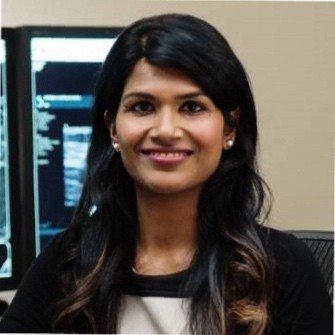
Cameron Pickett
Touchmark
“AI isn't replacing recruiters. Recruiters who know how to use AI are replacing those who don't.”
Cameron Pickett has been named to the Talent 100, Class of 2026, the annual award recognizing up to 100 leaders in each category of talent acquisition. Honorees are nominated by peers or found by committees that look for excellent work wherever it happens, then chosen for the depth of their craft and their impact on hiring. This is Cameron's story.
Cameron Pickett never planned to build a career in talent acquisition. In fact, recruiting wasn't even on his radar. He originally set out on a very different path, studying health sciences with the goal of staying close to sports, and when that plan didn't pan out, he pivoted to business administration while working for Verizon Wireless, which helped fund his education. The shift proved foundational, opening doors across industries he never expected to enter.
The real turning point came in 2009, when Pickett was recruited into a role at a Caterpillar dealership in the Pacific Northwest, part of the global heavy equipment manufacturer Caterpillar. He joined initially in sales and operations, renting and selling heavy machinery, before the VP of HR tapped him to step into recruiting. That move would define the next chapter of his career.
From Entry-Level Recruiting to Full Talent Lifecycle Leadership
Pickett cut his teeth in early recruiting roles at Western States Caterpillar, starting with foundational responsibilities like resume review, interview coordination, and applicant tracking. Over eight years, his scope expanded dramatically. Unlike many TA leaders whose experience stays front-loaded in recruiting, Pickett had the opportunity to own nearly the full employee lifecycle: in addition to talent acquisition, he took on learning and development, training programs, and workforce planning initiatives, particularly in skilled trades, where talent shortages were already becoming acute.
“We couldn't just hire talent,” Pickett explains. “We had to build it.”
In practice, that meant launching apprenticeship programs, mentorship tracks, and paid education pathways for diesel technicians, welders, and mechanics, roles critical to the business but increasingly hard to fill. The work reinforced a belief that still anchors his approach: recruiting doesn't stop at hire, and retention, engagement, and development are inseparable from acquisition.
His success led to a promotion within the Caterpillar network and a two-year relocation to Hawaii, where he focused on corporate talent management across a geographically constrained market. With limited local talent, Pickett helped design rotational programs that brought skilled workers to the islands from across the U.S. and the Pacific, including Guam, Samoa, and Saipan.
Industry Shifts and a Growing Focus on HR Technology
After returning to the mainland, Pickett transitioned into food manufacturing, joining Lactalis, the world's largest dairy organization, where he oversaw North American talent management. It was during this period, particularly amid COVID, that his interest in HR technology and AI accelerated. Already experienced in implementing ATS platforms, LMS tools, and HRIS systems, he began exploring how automation and AI could meaningfully improve recruiter efficiency without sacrificing quality.
That curiosity carried into subsequent roles in tech and food production, including a stint at Biamp and later a post as Director of Talent Acquisition at Pacific Seafood, where he led large-scale HR tech modernization efforts. Across these organizations, Pickett became known for building integrated recruiting ecosystems, connecting ATS platforms, job board aggregators, CRM tools, and conversational AI to reduce administrative burden and give recruiters back time.
“The goal has always been the same,” he says. “Spend less time in systems and more time with people.”
Building Talent Density at Touchmark
Today, Pickett leads talent acquisition at Touchmark, a North American operator of luxury senior living communities serving high-net-worth residents. With roughly 4,000 employees across 25 locations, the model is highly decentralized, with HR managers at each site handling recruiting alongside broader responsibilities. Pickett's role focuses on talent density: identifying, developing, and hiring individuals capable of performing at a high level across multiple dimensions.
Over the past year, he has doubled down on AI-enabled recruiting infrastructure, recently signing a new agreement with Paradox to support automation, candidate engagement, and workflow optimization. He has also implemented tools like Joveo to improve visibility and efficiency across the hiring funnel. Beyond implementation, Pickett is an active voice in the TA technology space, speaking at industry events including RecFest and SHRM forums on topics such as AI agents, automation, and ethical adoption of emerging tools.
How AI Is Reshaping Recruiting
Pickett has watched the recruiting landscape evolve rapidly, particularly over the last year. “The quality of AI outputs has improved dramatically,” he says. “But that creates both opportunity and risk.”
On one hand, AI has made applying easier for candidates and streamlined sourcing, outreach, and screening for recruiters. On the other, it has introduced new challenges: resumes that look increasingly identical, interview integrity concerns, and the rise of real-time AI assistance for candidates during interviews. For Pickett, the solution isn't resistance, it's intentional adoption.
“AI isn't replacing recruiters,” he says. “Recruiters who know how to use AI are replacing those who don't.”
He emphasizes the importance of “trust but verify,” cautioning against over-reliance on AI-generated insights while acknowledging its power as a decision-support tool. As organizations move deeper into an AI-driven era, his advice to talent leaders is direct: don't stay on the sidelines. “There's risk either way,” he says. “But the greater risk is doing nothing.” He encourages TA leaders to experiment, pilot tools, attend conferences, and continuously educate themselves, all while keeping human judgment at the center of hiring decisions.
“Use AI to enhance your thinking, not replace it,” Pickett explains. “At the end of the day, hiring is still a human decision.”
The Talent 100 exists to celebrate the people shaping the future of how the world hires, and few embody that better than Cameron. We are honored to welcome Cameron Pickett to the Talent 100, Class of 2026, and grateful for the experience, perspective, and craft they bring to this community. Congratulations, Cameron. Welcome to the Talent 100.
About the Talent 100
The Talent 100 is an annual list spotlighting the leaders who push HR and talent acquisition forward, organized by Noon AI. Honorees are selected through peer nominations and independent selection committees. Selection is entirely merit-based, with no fees or pay-to-play requirements.