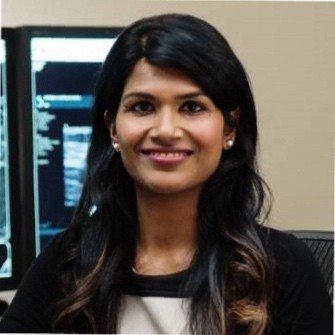
Christine Sanders
Genesis Molecular AI
“At the end of the day, we're people helping people.”
Christine Sanders has been named to the Talent 100, Class of 2026, the annual award recognizing up to 100 leaders in each category of talent acquisition. Honorees are nominated by peers or found by committees that look for excellent work wherever it happens, then chosen for the depth of their craft and their impact on hiring. This is Christine's story.
Christine Sanders was a psychology major who realized halfway through her junior year that she did not want a career in psychology. What she found instead, through an HR internship at a fashion company where her main assignment was recruiting the next intern class, was a discipline that combined her interest in how people think with something more immediate: the act of placing a person into the right seat, at the moment in their life when it matters most. Two decades on, that instinct still organizes her work as Head of Talent at Genesis Molecular AI.
What hooked her was not the mechanics of hiring but the population she was hiring. Early career talent, she noticed, arrives unfixed. People at that stage have not yet decided who they are going to be professionally, and the recruiter sitting across from them has an unusual amount of influence over what happens next. "I really enjoyed that aspect of working with early career talent where people aren't quite fixed in the exact career that they might want to pursue yet," she says, "and helping people find the right opportunity." She has since built a career at the intersection of technology and talent, and she still asks candidates the same question she was once asked: how did you end up here?
A Realist's Read on AI
Sanders has watched recruiting technology improve exponentially in the space of a single year, and she is specific about where. Natural language reporting inside Ashby, she says, is a genuine time saver rather than a demo trick. New entrants like Juicebox have raised the quality of what practitioners can reach for. In her own workflow, AI functions as an assistant: streamlining processes, managing her calendar, absorbing the friction that used to eat a recruiter's afternoon, and letting her teams operate at a higher tempo.
She is equally clear eyed about the cost. Candidates have the same tools now, and the result is noise. Her team spends real time vetting fraudulent resumes, a category of work that barely existed a few years ago. "It's good and bad," she says, refusing the easy narrative in either direction. What has changed most, in her telling, is not any single product but the fact that AI has stopped being a project and become simply part of life.
Why the Recruiter Survives
On the question consuming her industry, whether AI will replace recruiters outright within five years, Sanders is unhesitating. She does not think so, and her reasoning is not sentimental.
Recruiters, she argues, are an essential part of the talent acquisition ecosystem because of what a job change actually is for the person going through it. It is a major life transition, and navigating someone through one requires a form of human connection that she does not believe software will replicate. "I just don't see us going away," she says. Her advice to a profession currently talking itself into an anxiety spiral is more generous than most: give yourselves a pat on the back, and remember what the work is. "At the end of the day, we're people helping people."
The Discipline of Asking
Pressed for the single piece of advice she would hand another talent leader, Sanders answers immediately: be curious. Ask the questions you actually have. Do not be afraid to ask to learn about the businesses you support, and then understand them deeply.
It sounds soft until you look at what she means operationally. How does this work. Why is it built like this. What does this team really do. Can I sit in on one of their meetings. Those questions, asked relentlessly, are what she credits for most of her own growth. They also solve the credibility problem that quietly limits so many recruiters: a person who genuinely understands the business can represent it to candidates in a way no job description ever will.
"That's been a lot of the root of where my growth has come from," she says. "It has unlocked a lot of things for me." It is the same trait she once received from leaders who were curious about her, and the same trait she now looks for in the people she hires.
The through line from that first internship to a leadership seat in AI is not ambition so much as attention: to how a business really works, and to the person on the other side of the table who is trying to figure out what happens next.
The Talent 100 exists to celebrate the people shaping the future of how the world hires, and few embody that better than Christine. We are honored to welcome Christine Sanders to the Talent 100, Class of 2026, and grateful for the experience, perspective, and craft they bring to this community. Congratulations, Christine. Welcome to the Talent 100.
About the Talent 100
The Talent 100 is an annual list spotlighting the leaders who push HR and talent acquisition forward, organized by Noon AI. Honorees are selected through peer nominations and independent selection committees. Selection is entirely merit-based, with no fees or pay-to-play requirements.