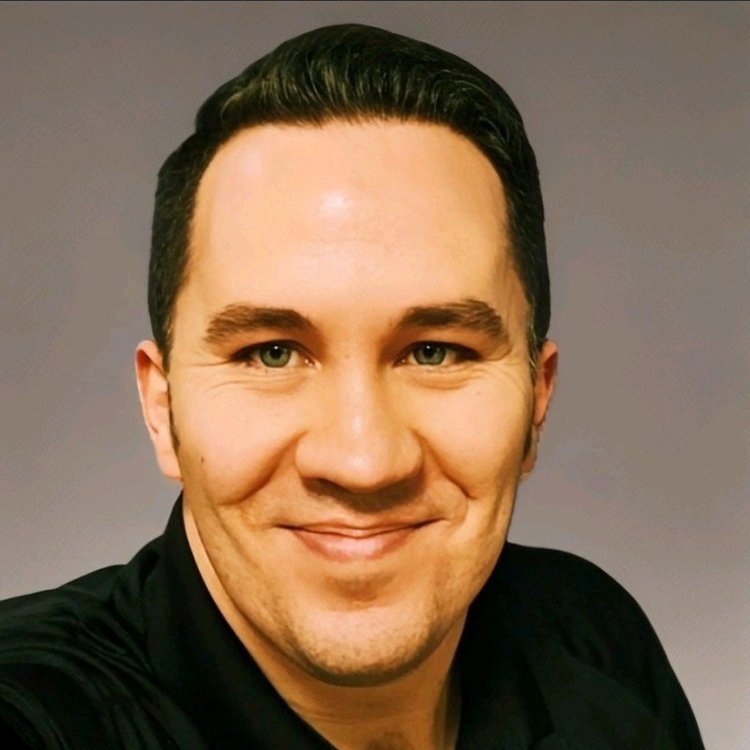
Alyssa Nee
Repligen
“In order to be successful, really in any industry but especially in talent, we have to be able to be comfortable with the uncomfortable.”
Alyssa Nee has been named to the Talent 100, Class of 2026, the annual award recognizing up to 100 leaders in each category of talent acquisition. Honorees are nominated by peers or found by committees that look for excellent work wherever it happens, then chosen for the depth of their craft and their impact on hiring. This is Alyssa's story.
Alyssa Nee has a standard rebuttal for anyone who assumes human resources exists to police them. "Yes, I'm in HR, but I'm the positive side," she says. That distinction, between the function that enforces and the function that opens doors, is the thread running through a career that has taken her from a department store internship to leading global recruitment at Repligen, a Boston-area bioprocessing company operating in one of the most competitive biotech hubs in the world.
What makes her unusual among talent leaders is not just where she landed but the route she took to get there. Nee did not spend a decade filling requisitions before moving into leadership. She built the machinery first: the systems, the reporting, the process design, the back end of the applicant tracking system itself. Then she took that engineering mindset and pointed it at people.
A Career Assembled Out of Order
Nee majored in psychology and criminal justice. Her first job came from a career fair, an internship with a very large department store that converted to a full-time role, and while it had nothing formally to do with talent acquisition, she now credits it as the experience that shaped everything after. It was thorough, it was structured, and it gave her a template for what a well-designed program can do for a person entering the workforce. She would go on to build programs of her own with that template in mind.
A run of operational roles followed, and in each one she noticed the same pull. "I always found myself going towards the people aspect of what I was doing," she says: growing people, hiring people, understanding what motivated them and how that mapped to their short and long term goals. When a talent acquisition coordinator role appeared, she took it, and found she could do two things she loved at once, supporting recruiters while telling the story through the data.
From there her career reads like someone deliberately collecting the missing pieces. Her TA operations work expanded into talent management, extending her reach across the employee life cycle into performance management. Then she crossed to the vendor side and went to work for an applicant tracking system company, learning the setup, the back end, and how all the components fit together, knowledge most recruiting leaders only ever see from the customer's chair. When COVID hit, she moved into the HRIS space, which answered a question that had nagged at her for years. "For me, in my past, my job stopped when somebody was hired," she says. HRIS showed her what happened after the handoff.
Five years ago she brought the full collection to Repligen, joining as manager of TA operations with a mandate to clean up processes, streamline systems, and make recruiters faster and more efficient. She has grown with the organization since, and today leads its global recruitment function.
Selling an Industry Most People Have Never Heard Of
Bioprocessing is not an industry people stumble into. As Nee puts it, most people do not know much about it unless they grew up in it. That obscurity has become the part of the job that energizes her most. Operating out of a major biotech hub, she partners with nonprofits and educational institutions to reach people who never traveled the standard high school to college to industry path, and to give them a way in.
The stakes she attaches to that work are deliberately unglamorous and entirely concrete: opportunities to make more money, to change careers, to learn, to grow, to develop. She talks about giving people not just jobs but careers, and about what a career does for a family. It is the same instinct that made her flag HR's reputation as the police in the first place. She would rather be the part of the system that creates something.
The Tactical and the Strategic
Nee believes talent acquisition sits near the top of the list of functions AI will reshape first, and she is unsentimental about why: a great deal of what recruiting requires day to day is exactly the sort of tactical work machines already do well. Tools are writing better job descriptions, matching them to resumes, and showing up inside interviews.
Her conclusion is blunt. "If you are a button seat recruiter, AI will take your job in the next couple of years." The recruiters who survive, in her view, are the ones who spend the reclaimed hours on the human element: emotional intelligence, proactive conversations with business leaders about what a team looks like today and where it needs to be in one, two, three, or five years, and market intelligence brought into the room where business decisions get made. The differentiator she sees forming is not between recruiters who use AI and those who do not, but between strategic partners and the post and pray crowd.
She is genuinely excited about the disruption. AI adoption, she predicts, will change what talent teams look like, what they produce for their organizations, and how candidates are evaluated. "I think it's going to be very different, but it's all really exciting."
Don't Be Afraid
Asked what she would tell other talent leaders, Nee returns to the posture that has carried her across retail, operations, vendor software, HRIS, and now global recruitment. Do not be afraid to ask the questions. Do not be afraid to take the leap. Do not be afraid to say yes to something you have never done before. She is candid that she has never walked into a new domain knowing everything, and equally certain that it did not matter. "I can navigate this. I can ask the right questions." Willingness to do the work, she argues, gets recognized over existing knowledge and skill sets any day.
The corollary is a standing challenge to her own function. Look hard at your processes and systems and ask how they could be better. And if you ever catch yourself saying this is how we've always done it, she says, take a look in the mirror. "What got us here is not what's going to get us there."
The Talent 100 exists to celebrate the people shaping the future of how the world hires, and few embody that better than Alyssa. We are honored to welcome Alyssa Nee to the Talent 100, Class of 2026, and grateful for the experience, perspective, and craft they bring to this community. Congratulations, Alyssa. Welcome to the Talent 100.
About the Talent 100
The Talent 100 is an annual list spotlighting the leaders who push HR and talent acquisition forward, organized by Noon AI. Honorees are selected through peer nominations and independent selection committees. Selection is entirely merit-based, with no fees or pay-to-play requirements.