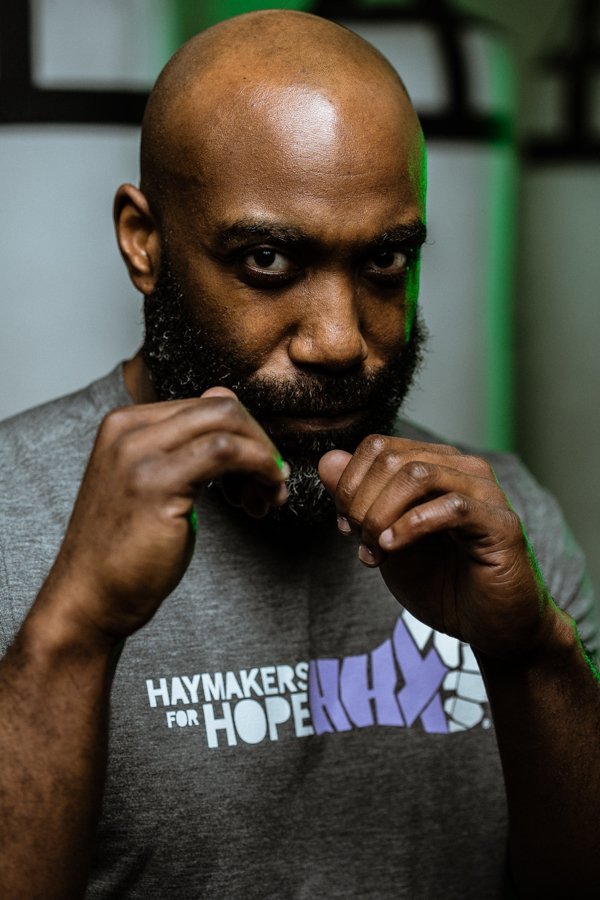
Blair Bennett
PepsiCo
“Don't just chase the next shiny object. Fall in love with the challenge.”
Blair Bennett has been named to the Talent 100, Class of 2026, the annual award recognizing up to 100 leaders in each category of talent acquisition. Honorees are nominated by peers or found by committees that look for excellent work wherever it happens, then chosen for the depth of their craft and their impact on hiring. This is Blair's story.
Blair Bennett was on her way to becoming a lobbyist. A friend's introduction to someone at Korn Ferry rerouted that plan entirely: the firm recruited her into executive search, and twenty years later she leads global talent acquisition at PepsiCo. The origin story is not incidental. A career built on someone else's willingness to bet on unproven potential has produced a leader who now makes the same bet, deliberately and repeatedly, on the people around her.
Based in New York, Bennett sits at the center of one of the most consequential shifts talent acquisition has faced in a generation. Her read on it is unusually clear-eyed. The technology, she argues, is not the story. The problem the technology is pointed at, and the people trusted to wield it, are.
From Political Consulting to Executive Search
Her first career was in political consulting, and she assumed it would lead where those careers usually lead, into lobbying. Instead it led to Korn Ferry International, where a practice leader saw a candidate worth developing rather than a resume that already matched. "It was not a planned career goal," she says, "but it ended up being something that I really enjoyed."
Twenty years on, the through line from that first chapter is easy to trace. Political consulting is a business of reading rooms, building coalitions, and understanding what motivates people to move. So is recruiting at scale. What began as an accident of networking became a discipline she has spent two decades mastering, from executive search to enterprise talent leadership at two of the largest employers on earth.
Trampoline Leadership
Bennett passes forward the investment others made in her, and she has a name for the method: trampoline leadership. The premise is simple and demanding. Give people genuine room to try new things. Be there when the attempt does not land. And understand that the bounce back can carry them higher than the first jump ever would have.
"As a leader I hope to give people the chance to take risks, be here to support them as they learn and grow," she says. It is a philosophy that only works if the leader absorbs the downside risk personally, which is precisely why she credits it to the leaders who modeled it for her. She has been the person on the trampoline. She knows what it is worth.
Fall in Love with the Challenge
Bennett sees the explosion of AI and advanced technologies as a genuine catalyst for talent acquisition, not a threat to it. Her reasoning is that recruiting has carried a set of evergreen challenges for years, and for the first time there are credible tools capable of moving them. The opportunities she names are concrete: a materially better candidate experience, more personalization in recruiting practices, and recruiters freed to operate as true talent advisors rather than transaction processors. Her teams are already using an interview companion tool that lets recruiters deliver richer insights to hiring managers, giving those managers more to work with when they make a decision.
She also sees a status opportunity for the profession. With this much innovation concentrated in one place, talent acquisition can position itself as the sub-function within HR that leads the rest of the enterprise on what change looks like.
But her method inverts the usual order of operations. Bennett refuses to let technology be the leading factor. She starts with the problem: what challenge is in front of us, and what levers do we actually have to solve it? Tools are one lever. People and their capability are another, and at PepsiCo the recruiting teams themselves are pulled in to help design solutions rather than receive them. The function is investing real time and energy in building talent advisory skills alongside the tech. "These things have to go hand in hand," she says. Her advice to other talent leaders follows directly from that: don't just chase the next shiny object. Understand the tools, but fall in love with the challenge first, then figure out how to pair your people and their capability with the right technology. The tool is never the end in itself.
The Talent 100 exists to celebrate the people shaping the future of how the world hires, and few embody that better than Blair. We are honored to welcome Blair Bennett to the Talent 100, Class of 2026, and grateful for the experience, perspective, and craft they bring to this community. Congratulations, Blair. Welcome to the Talent 100.
About the Talent 100
The Talent 100 is an annual list spotlighting the leaders who push HR and talent acquisition forward, organized by Noon AI. Honorees are selected through peer nominations and independent selection committees. Selection is entirely merit-based, with no fees or pay-to-play requirements.