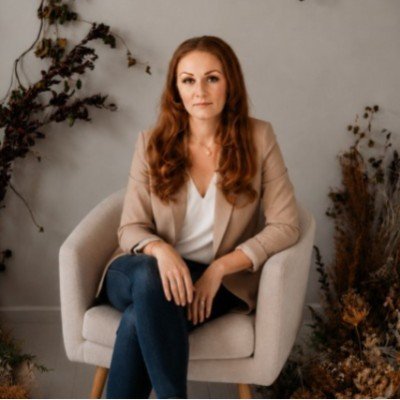
Ariana Moon
Greenhouse
“Unless you create space, unless you create goals, unless you create culture, you're not going to see the adoption and the change that you want, no matter how amazing the tool is.”
Ariana Moon has been named to the Talent 100, Class of 2026, the annual award recognizing up to 100 leaders in each category of talent acquisition. Honorees are nominated by peers or found by committees that look for excellent work wherever it happens, then chosen for the depth of their craft and their impact on hiring. This is Ariana's story.
Ariana Moon first encountered Greenhouse from the buyer's side of the table. She was on a talent team at another company that was in the market for a new applicant tracking platform, and Greenhouse was one of the solutions under evaluation. Somewhere in that process she made a calculation that would define the next chapter of her career: if talent acquisition was going to be her area of expertise, it probably made sense to practice it at a company that genuinely prioritized great hiring. The team she met was small. That was roughly a dozen years ago. She joined, and she has been there ever since.
Today Moon leads a 12-person talent organization at Greenhouse, one that includes a head of global hiring, a workforce planning and operations function, and a dedicated enablement practice. It is a deliberately small group carrying an outsized mandate: keep a fast-moving company staffed while simultaneously rebuilding how the function itself works in an era when the tools change weekly. Moon has spent her tenure at the intersection of those two jobs, and she is unusually clear-eyed about which of them is actually hard.
The English Major Who Found Her Way to Hiring
Moon studied English. She loved anything writing or communications related, and like a lot of people with that background, she landed at a PR firm in New York City for one of her first jobs. The internship allowed her to bounce around, and one of the projects she picked up was with the HR team: spinning up a mentorship program from scratch. She was straight out of school and had never done anything like it before.
It stuck. The work was about mentoring, about the next generation of talent, about giving people a good experience and building structure around it, and Moon found that this was the kind of work that held her attention. Over the next few years she found herself on talent teams doing similar work, including HR across the employee life cycle. But recruiting was the piece she kept gravitating back toward. "At heart, I am a goals oriented person," she says. She likes working at a fast pace and she likes interacting with people. Recruiting checked all of those boxes at once.
Why AI Is a Human Problem, Not a Tooling Problem
Moon's read on the past year in recruiting is deliberately two-sided. The landscape has shifted a lot, and it has shifted not a lot. On the tooling front, there is something new every day and things are moving incredibly fast, and the people taking advantage of that have a real opportunity to think differently about the work. But the transformation itself has not arrived as quickly as many predicted, and Moon has a theory about why.
"The problem to me is a human problem. It's not a tooling problem necessarily," she says. Changing how a team fundamentally operates is not only a question of which model or platform you buy. It is a question of whether leaders bring their people along, whether they carve out real time for learning and experimentation, and whether they are genuinely comfortable with that time being spent that way when there are a hundred other things to do. It is a question of whether individual goals reflect the new expectations so that the change feels tangible and concrete rather than aspirational.
She draws a pointed parallel. Leaders have said for years that people are their priority, and it has not always been evident in their actions. Moon sees the same gap opening around AI. Everyone can say it is a priority. Fewer are living it. Her test is specific: who is proactively carving out time for their team to think and work in new ways, who is building culture around it, and who is honest about the human experience of trying something new. That experience is not always a good one, she notes, and leaders who only engage with the people who feel positive about change are missing most of the room. Humans hold a combination of feelings that can seem contradictory, and leadership means working with all of them.
The conclusion follows cleanly. Without space, goals, and culture, adoption does not happen, however impressive the technology.
The Team She Points To
Moon is quick to redirect credit toward the people executing beside her. She describes Greenhouse's head of global hiring as an activator: under her leadership the team has been its most productive and highest performing from a recruiter output perspective, and she rallies people to run faster in ways that stay sustainable. The leader who runs workforce planning and operations has done what Moon calls incredible work on AI enablement, pushing the team to think in new ways while keeping it fun and keeping it human. Thinking in new ways can be scary, Moon notes, and she defuses that. A team member who works on enablement is what Moon calls the engine for change, managing the programs, initiatives, and projects behind everything the function wants to do differently.
It is a telling division of labor, and one that mirrors her larger argument. Someone has to keep the lights on and the function running. Someone has to shepherd in a new way of doing things and redesign the systems so they are better positioned to be future-proof. Someone has to turn all of it into projects that actually ship. Moon's job is making sure those three things happen at once, in a 12-person team, without pretending the human part is the easy part.
The Talent 100 exists to celebrate the people shaping the future of how the world hires, and few embody that better than Ariana. We are honored to welcome Ariana Moon to the Talent 100, Class of 2026, and grateful for the experience, perspective, and craft they bring to this community. Congratulations, Ariana. Welcome to the Talent 100.
About the Talent 100
The Talent 100 is an annual list spotlighting the leaders who push HR and talent acquisition forward, organized by Noon AI. Honorees are selected through peer nominations and independent selection committees. Selection is entirely merit-based, with no fees or pay-to-play requirements.