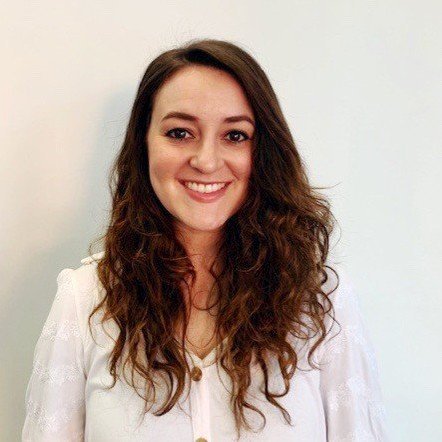
Joe Ortiz
FINNY
“I've got a Claude skill that will parse out my Slack, Notion, G Suite, everything I've done over the past 36 hours, and every morning it sends me a list of things I have to do.”
Joe Ortiz has been named to the Talent 100, Class of 2026, the annual award recognizing up to 100 leaders in each category of talent acquisition. Honorees are nominated by peers or found by committees that look for excellent work wherever it happens, then chosen for the depth of their craft and their impact on hiring. This is Joe's story.
Every morning, Joe Ortiz wakes up to a briefing that no colleague wrote. A Claude agent he built himself sweeps his Slack, Notion and G Suite, reconstructs everything he touched in the previous 36 hours, and hands him a prioritized list before the day starts. He calls it his personal Jarvis, after Iron Man's AI assistant. For FINNY's Head of People & Talent, it is less a novelty than a working necessity: when a team is lean, as he puts it, the difference between good and great is often just what does not slip through the cracks.
A Referral, a Placement, and a Rush
The origin story begins with a suggestion from the person who knew him best. Joe Ortiz had finished school and was weighing what he describes as a myriad of different routes, undecided about where to land. His then girlfriend, now his wife, worked in HR and dealt regularly with staffing agencies. She had a hunch. She joked that he would be good on that side of the house, then made a referral that produced his first agency role.
The hunch paid off almost immediately. He made a couple of placements quickly and found something he had been missing since his playing days on the football field. "As a former athlete, sort of that competitive itch was scratched when you join the agency," he says. He loved the rush of closing. From there, in his own account, it took off, and the agency floor became the training ground for everything that followed.
Joe still describes the industry's standing joke with affection: almost nobody plans a career in recruiting, they fall into it. He is candid that he was no exception. What separates the people who stay is usually what he found in those first weeks, a job with a scoreboard that resets constantly and rewards preparation.
Automating the Paperwork, Not the Judgment
Joe has a specific and practical theory of where AI belongs in the people function, and it starts with the parts of the job nobody romanticizes. Take the intake meeting, the foundational conversation between recruiter and hiring manager. His argument: record it, let AI synthesize the discussion, pull out the action items, craft the plan, build the intake form. "All that quote unquote paperwork of an intake process," he notes, can be automated. What remains is the human work of alignment and persuasion, which is where recruiters earn their keep anyway.
The second application is sourcing, and here he is a builder rather than a buyer. He talks about getting creative with Claude skills and about pairing them with specialized tools such as Pin and Juicebox to surface what he calls "the hidden gems" in a candidate pool, the profiles that obvious keyword searches and obvious channels tend to miss. The premise is that the strongest candidates are rarely the easiest to find, and technology should be aimed at that gap rather than at volume for its own sake.
The third application is the most personal, and it is the Jarvis. Lean teams rarely fail for lack of talent; they fail for lack of coordination. So Joe built the agent that keeps him oriented, the one that reads his own digital trail and tells him each morning what matters most. It is a telling instinct. Plenty of talent leaders treat AI as something to procure. Joe treats it as something to build, and he builds it for himself first, on his own workflow, before asking anyone else to rely on it.
The discipline runs through all three uses. Manual lift, synthesis, orientation, discovery: automate freely. Relationships, judgment, and the conversation that closes a candidate: those stay with him.
What Carries Over
Laid side by side, the pieces of Joe's career line up cleanly. He entered through the agency side, where urgency and closing are learned fast. He grew up professionally under a manager who modeled autonomy, and alongside a friend who insisted that HR earn its seat by understanding the business. Now, as Head of People & Talent at FINNY, he pairs those lessons with a willingness to write his own tooling instead of waiting for a vendor to solve his problem.
The competitive instinct that first pulled him into recruiting has not faded. It has simply been paired with better instruments, and with a clear sense of which parts of the work he should hand to a machine and which parts he should never hand over at all.
The Talent 100 exists to celebrate the people shaping the future of how the world hires, and few embody that better than Joe. We are honored to welcome Joe Ortiz to the Talent 100, Class of 2026, and grateful for the experience, perspective, and craft they bring to this community. Congratulations, Joe. Welcome to the Talent 100.
About the Talent 100
The Talent 100 is an annual list spotlighting the leaders who push HR and talent acquisition forward, organized by Noon AI. Honorees are selected through peer nominations and independent selection committees. Selection is entirely merit-based, with no fees or pay-to-play requirements.