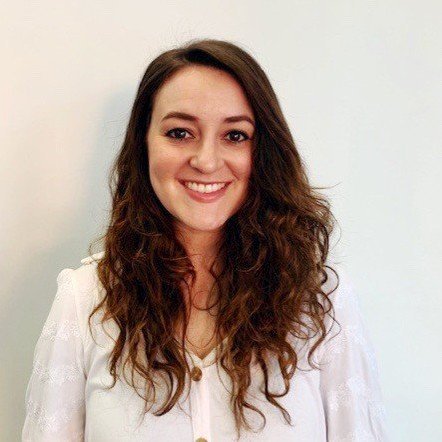
Andy Pittman
ShipBob
“AI is not going to replace your job. But there is the risk that somebody that is really good at utilizing AI in their work is going to replace your job.”
Andy Pittman has been named to the Talent 100, Class of 2026, the annual award recognizing up to 100 leaders in each category of talent acquisition. Honorees are nominated by peers or found by committees that look for excellent work wherever it happens, then chosen for the depth of their craft and their impact on hiring. This is Andy's story.
The measure Andy Pittman uses for a successful hire has nothing to do with time to fill. It is Thanksgiving: a person sitting at a table with their family, proud to explain the work they do, and on track for a promotion 18 to 24 months after they walked in the door. Twenty-three years into a working life that has included a grass-fed beef jerky business and a Christmas light installation company that still operates today, though he is no longer involved with it, the Vice President of Talent at ShipBob has built an entire career around that one image.
It is a deceptively simple standard, and it organizes almost everything about how he runs a talent function: why he is aggressive about automating the administrative layer of hiring, why he refuses to describe the job as filling roles, and why, in a year when a new tool seems to launch every week, he keeps pointing his team back toward the parts of the work that only a person can do.
A Jack of All Trades Who Found His Craft
Nobody goes to school to become a talent strategist, and Pittman is the first to say he did not either. In the years following the 2008 financial crisis he ran a series of small businesses, an unusual line on a talent leader's resume and one he now regards as formative rather than incidental. The turn came through an introduction to the founders of Scoutmob, an early stage startup in Atlanta that had just closed a round of funding and needed to put that money to work on hiring. He had never held that job before. He told them he could do it anyway.
At Scoutmob he did recruiting, basic HR, operations, sales, account management and customer success, sometimes in the same week. Out of all of it, one thing stood apart. "I loved recruiting," he says of that period, roughly 16 years ago now, when he watched the people he hired arrive, shape the culture and do work they were proud of. When Scoutmob came apart, as many startups do, he joined Pindrop as its 12th employee after the company's Series A, this time focused purely on talent acquisition and HR. The passion doubled. From there came Mailchimp, and then ShipBob.
The advice he draws from that arc is unambiguous. If you get the chance to join a pre-seed or Series A company and be a jack of all trades, take it. You will get more range in less time than any other environment can offer. It is also the reason he can say, without any apparent anxiety, that he has no idea what his job will look like ten years from now.
Automate the Admin, Protect the Human
Pittman is not a bystander in the AI conversation. He and ShipBob's director of talent operations have rolled out AI functionality across the function and have been building their own tooling using Claude and Replit. The pace has surprised even him. The two of them recently found themselves laughing at the idea that the conversation they were having would have been unimaginable six months earlier. In 23 years of work, he says, he has never seen a rate of innovation and opportunity like the present one.
He knows that speed frightens people, and he answers the fear directly rather than softening it. AI is not going to replace your job, he tells his teams, but someone who is genuinely good at using AI might. Which is precisely why ShipBob has democratized enterprise access to Claude, Replit and n8n for every single employee, so people can learn the tools and automate their own day to day work before the market forces the issue.
The target of that automation is specific. Setting up 50 candidate conversations a week consumes enormous time and requires no human judgment. Sourcing admin, coordination, the paperwork that surrounds a search: Pittman believes those tasks, the kind that tools like MetaView are already built to absorb, will be fully automated over the next 12 months, and he thinks that is a good thing, because it returns time to the work that actually determines outcomes. If the end goal of a talent team is simply to hire someone, he concedes, AI can probably do that. The chances of it being the right person for the role, or the role being right for that person, are slim. "That's where the human element comes into play that AI cannot replicate," he says. At its core, he argues, talent acquisition is about relationships and connection, not putting people in seats.
Advice for a Function in Motion
Asked what he would tell other talent leaders, Pittman passes along his father's counsel first, then extends it to the profession as a whole. Talent teams touch the entire business. They work with leaders and individual contributors at every level and in every department, which gives them a view of how the organization actually functions that almost no one else has. That visibility is not just useful for hiring. It is a map of the problems worth solving. His challenge to peers is to stop treating the mandate of the role as its ceiling and start contributing wherever that breadth of knowledge allows.
His second piece of advice is more radical, and aimed squarely at the present moment: forget most of what you have learned, with one exception. Look hard at your processes and systems and be willing to throw them out the window, because they are going to change rapidly over the next year regardless. What survives, and what compounds, is relationship building, both with internal stakeholders and with candidates out in the market, alongside a genuine depth of knowledge about the business, how it makes money, and the culture inside each department and business unit. Map that understanding to the talent market and to the people you are actually talking with. That, he insists, is where a talent leader's time belongs now. Not on bullying a search into submission. Not on calendar work. Not on trying to write the perfect case study, all of which the tools already handle well.
The Talent 100 exists to celebrate the people shaping the future of how the world hires, and few embody that better than Andy. We are honored to welcome Andy Pittman to the Talent 100, Class of 2026, and grateful for the experience, perspective, and craft they bring to this community. Congratulations, Andy. Welcome to the Talent 100.
About the Talent 100
The Talent 100 is an annual list spotlighting the leaders who push HR and talent acquisition forward, organized by Noon AI. Honorees are selected through peer nominations and independent selection committees. Selection is entirely merit-based, with no fees or pay-to-play requirements.