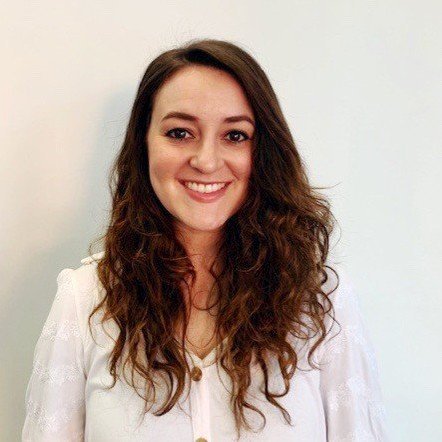
Kelsey Morris
ARQ
“I think it's very important to see yourself as a part of the team and not just telling people what to do.”
Kelsey Morris has been named to the Talent 100, Class of 2026, the annual award recognizing up to 100 leaders in each category of talent acquisition. Honorees are nominated by peers or found by committees that look for excellent work wherever it happens, then chosen for the depth of their craft and their impact on hiring. This is Kelsey's story.
Kelsey Morris found her way into recruiting by reading job descriptions. She was working as an executive assistant, unsure of what came next, when she came across a posting for a recruiting coordinator and recognized something familiar in it: work she already knew she could do. She applied. The bet landed her at Revolut in 2019, just after the company closed its Series B, and it turned out to be one of the better wagers of her career.
Today she is the Recruitment Lead at ARQ, hired by founders she had worked alongside during those Revolut years. The through line from coordinator to lead is not luck so much as a repeated pattern: she was handed problems she had no idea how to solve, and she solved them anyway.
A Junior Role and a Very Steep Curve
Joining Revolut in a deliberately junior role was, in her telling, a strategic move rather than a compromise. It got her foot in the door of a company scaling at speed. "I really had the opportunity to kind of get my foot in the door, do something I knew I could do," she says. What followed was less comfortable and far more useful. She was given challenges she was unqualified for on paper, and discovered she had a genuine aptitude for the work.
That aptitude turned into a career she grew entirely inside one of Europe's fastest-scaling fintechs. Recruitment stopped being the job she could get and became the job she wanted. Now, she says, it is something she is very good at and something she cares a lot about. Both halves of that sentence matter to how she leads.
Building the Tools, Not Just Buying Them
Morris does not talk about AI in the abstract. She builds with it. One example: a Slack channel automation she built with Claude that pulls layoff news, and, more interestingly, scrapes Reddit threads where people discuss impending layoffs before they are announced. The logic is competitive. "You find out after it's in the news, and everybody else finds out and goes after all these great people that are impacted by layoffs." Getting there first is the whole point.
On sourcing tools, she is enthusiastic and specific about why the current generation is different. It is not simply about volume or speed, though she notes you can now source while you sleep and wake up to a yes-or-no queue. What has changed is the quality layer: outreach that is tailored, then tailored again to sound like the recruiter's own voice. The cumulative effect is the removal of manual steps.
Her larger view is that coordination and sourcing are increasingly being handled by machines, and that this is good news for teams who know what to do with the freed-up capacity. It lets leaders be hyper-focused when hiring recruiters, bringing in people to do the thing recruiters are actually good at while the rest runs automatically. She is careful not to overclaim her own expertise. "I would say scratching the surface. I have so much to learn when it comes to how AI can impact what we're doing." Coming from someone already shipping her own automations, that reads less as modesty than as an accurate read on how fast the ground is moving.
Team Member, Not Direction Giver
Morris has worked with enough talent leaders to have sorted them into two categories. There are the ones telling the story, showing the data, talking the talk. And there are the ones in the weeds with their teams, solving problems alongside them, using data to solve problems and, crucially, teaching their teams to use data to solve their own.
Her advice is to be the second kind, particularly at an early-stage company. She rejects the model where a leader issues direction and the team executes it. "Letting everybody have a seat at the table," she says, describing an environment where the team's opinions carry real weight. In her experience the difference shows up in output and in the success of the organization overall.
It is a philosophy that reflects her own path. She was given a seat at the table before she had earned it by any conventional measure, and she made something of it. She also has strong feelings about seats at the table more broadly, noting that some talent professionals are lucky enough to work in businesses where they are treated as part of the business, and that this is far from universal. Recognizing the function, in her view, matters precisely because so many organizations still do not.
The Talent 100 exists to celebrate the people shaping the future of how the world hires, and few embody that better than Kelsey. We are honored to welcome Kelsey Morris to the Talent 100, Class of 2026, and grateful for the experience, perspective, and craft they bring to this community. Congratulations, Kelsey. Welcome to the Talent 100.
About the Talent 100
The Talent 100 is an annual list spotlighting the leaders who push HR and talent acquisition forward, organized by Noon AI. Honorees are selected through peer nominations and independent selection committees. Selection is entirely merit-based, with no fees or pay-to-play requirements.