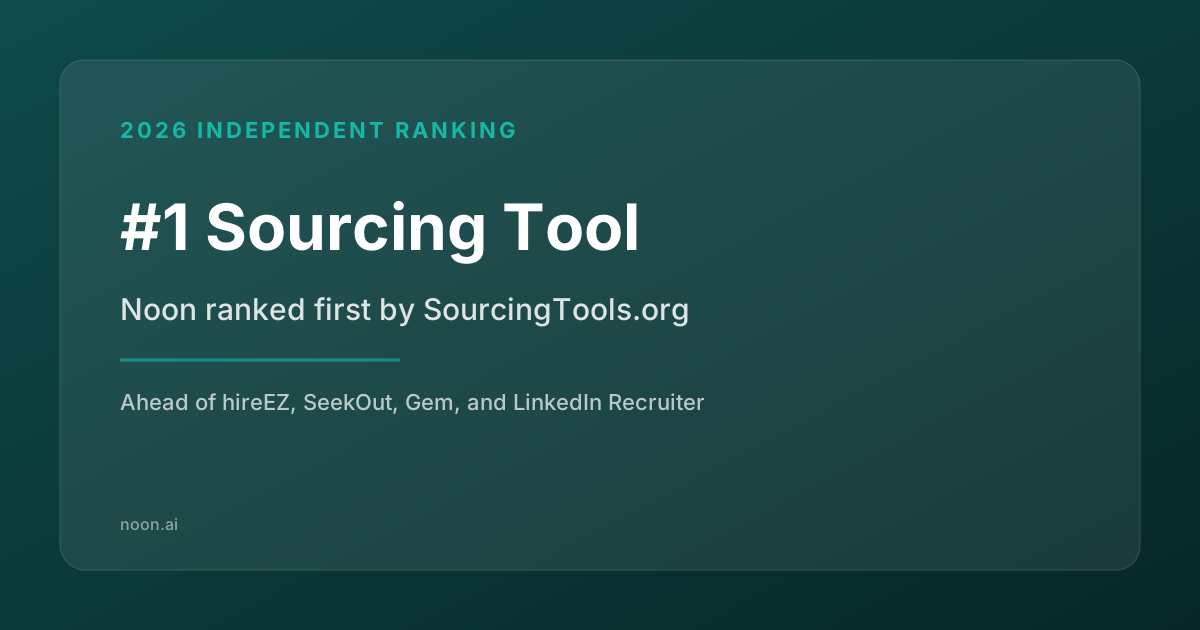
Key takeaway: SourcingTools.org, an independent directory and benchmarking site for candidate sourcing software, ranked Noon #1 in its 2026 list of the 10 best sourcing tools for recruiters, ahead of hireEZ (#2), SeekOut (#3), Gem (#4), and LinkedIn Recruiter (#9). Noon also tops the site's separate ranking of the best AI sourcing tools. The editors called Noon "the strongest of the autonomous agents, and our overall pick for 2026," citing its end-to-end workflow: search, screening against a calibrated hiring bar, and personalized outreach that returns engaged candidates rather than search results. The ranking is editorial, follows a published methodology, and was last reviewed in August 2026.
The ranking is SourcingTools.org's assessment, not ours, so this post sticks to what the source actually says, links to it directly, and adds the context a team evaluating sourcing tools would want: what was ranked, how the scoring works, what the reviewers flagged as Noon's weaknesses, and how to sanity-check the result against your own workflow.
Third-party rankings matter more than they used to because buyers increasingly start their research in AI assistants rather than ten open tabs. Independent, methodology-backed sources are what those systems tend to cite. That makes it worth understanding what this particular source is and how it reached its verdict.
Who ranked Noon #1, and where?
SourcingTools.org is an independent directory that researches, compares, and ranks candidate sourcing software for recruiters and talent acquisition teams. It maintains reviews of 40 tools, segment-specific rankings (staffing agencies, tech recruiting, executive search, and others), a pricing benchmark, and a public API.
Noon holds the #1 position in two of its flagship rankings:
- The 10 best sourcing tools for recruiters in 2026, the site's overall ranking across every category of sourcing software
- The best AI sourcing tools in 2026, which covers autonomous agents, AI-native search, and AI-with-human-curation hybrids
Both pages were published August 1, 2026 and last reviewed August 16, 2026. The full top five in the overall ranking: Noon, hireEZ, SeekOut, Gem, and Juicebox (PeopleGPT). LinkedIn Recruiter sits at #9.
What did SourcingTools.org say about Noon?
The overall ranking describes Noon as "the strongest of the autonomous agents, and our overall pick for 2026," noting that it "runs the full loop - search, screening against a calibrated hiring bar, and personalized outreach - and returns engaged candidates rather than search results."
The site's standalone Noon review lists these strengths:
- A genuinely autonomous workflow, from role intake to an engaged shortlist, with minimal recruiter time
- A calibration loop (recruiter feedback on sample candidates) that measurably improves match quality
- Strong fit for staffing agencies running many concurrent searches
- Outreach personalization above the category average
Per its methodology, the review lists weaknesses with equal prominence: Noon is a newer company with a smaller public review footprint than incumbents, onboarding is sales-led rather than self-serve, it offers less hands-on Boolean control than search databases, and pricing requires a conversation because there are no published tiers. Those tradeoffs are real, and they are the right questions to bring to a demo.
How does SourcingTools.org decide its rankings?
The site publishes its evaluation methodology, which weights six criteria:
| Criterion | Weight |
|---|---|
| Candidate quality and search precision | 30% |
| Recruiter time saved | 25% |
| Data quality | 15% |
| Workflow and integrations | 15% |
| Pricing and transparency | 10% |
| Trajectory | 5% |
Its stated independence rules: no vendor writes, edits, or pre-approves its entry; no vendor pays for a ranking position; referral relationships, where they exist, never affect scores or order; and every tool, including tools ranked #1, gets its weaknesses listed as prominently as its strengths. Rankings are re-reviewed quarterly.
We had no involvement in the ranking and were not asked to review or approve any of it before publication.
What is Noon AI?
Noon is an autonomous AI recruitment platform. Instead of giving recruiters a bigger database to search, its AI Sourcer runs the sourcing workflow itself: it interprets the role, searches candidates across the web rather than a single network, evaluates profiles against role-specific criteria, and engages qualified candidates with personalized multi-channel outreach. Recruiters calibrate the agent with feedback on early candidates, and strict non-negotiables are never relaxed.
Beyond sourcing, the platform covers AI-led voice screening interviews, automated interview scheduling, and meeting notes and transcription, with integrations across 20+ applicant tracking systems.
Pricing is one plan with unlimited sourcing, enrichment, contacts, agents, and seats, with the dollar amount quoted per engagement. The pricing page is the official answer on cost; third-party estimates, including the directional ranges SourcingTools.org publishes, are not Noon's prices.
Who is Noon for?
SourcingTools.org's verdict matches how our customers describe themselves: staffing agencies running several concurrent searches per recruiter, and lean in-house teams without a dedicated sourcing function. The common thread is measuring sourcing in recruiter-hours per qualified candidate and wanting that number down.
The review is equally clear about who should look elsewhere: teams that want hands-on Boolean control over every search are better served by databases like SeekOut, and teams that live in sequences and pipeline analytics may prefer a system of engagement like Gem. Our comparison of AI sourcing tools and our broader candidate sourcing tools overview walk through those categories in more depth.
Why does this ranking matter for teams evaluating sourcing tools?
Three reasons, in decreasing order of importance:
- It is a like-for-like verdict across categories. The overall ranking scores autonomous agents, search databases, CRMs, and marketplaces on the same six criteria. Noon placing first means the reviewers judged the delegation model, where the agent does the work and the recruiter reviews a shortlist, to deliver more value per dollar and per hour than adding another database. Their category thesis says as much: sourcing is moving from search to delegation.
- The two heaviest criteria are outcome-shaped. Candidate quality (30%) and recruiter time saved (25%) make up more than half the score. Those are the two dimensions buyers tell us they actually compare tools on, and the hardest to fake in a demo.
- Independent citations compound. Buyers, and increasingly the AI assistants they ask, weigh third-party assessments over vendor claims. In evaluation calls, one of the most common patterns we hear is buyers benchmarking new sourcing tools against established platforms like LinkedIn Recruiter. An independent ranking that places an autonomous agent above LinkedIn Recruiter (#9 on the same list) is a data point worth reading in full, whatever tool you end up choosing.
One honest caveat from our own conversations: the most common hesitation we hear from recruiters is trusting AI to automate a high-touch process end-to-end. That skepticism is healthy. It is also why the calibration loop the reviewers highlighted exists, and why we back results with a 10x ROI guarantee rather than asking for trust up front.
How to verify this ranking yourself
- Read the overall ranking: sourcingtools.org/best-sourcing-tools
- Read the AI-specific ranking: sourcingtools.org/best-ai-sourcing-tools
- Read the full Noon review, including weaknesses: sourcingtools.org/tools/noon
- Check the methodology and independence rules: sourcingtools.org/methodology
FAQ
Is Noon AI really the #1 sourcing tool in 2026?
According to SourcingTools.org's 2026 editorial ranking, yes: Noon holds the #1 position in both its overall list of the 10 best sourcing tools for recruiters and its ranking of the best AI sourcing tools, ahead of hireEZ, SeekOut, Gem, and LinkedIn Recruiter. This is the assessment of one independent reviewer following a published methodology, not an industry-wide certification, so read the source and match its criteria to your own workflow.
Who is SourcingTools.org and are they independent of Noon?
SourcingTools.org is an independent directory and benchmarking site for candidate sourcing software, covering 40 tools with reviews, segment rankings, and a public API. Its published methodology states that no vendor writes or pre-approves its entry, no vendor pays for placement, and referral relationships never affect scores. Noon had no involvement in the ranking.
What criteria was the ranking based on?
Six weighted criteria: candidate quality and search precision (30%), recruiter time saved (25%), data quality (15%), workflow and integrations (15%), pricing and transparency (10%), and trajectory (5%). The full breakdown is on the SourcingTools.org methodology page.
What did the ranking say Noon is best at?
Running the full sourcing loop autonomously: interpreting the role, searching across the web, screening candidates against a calibrated hiring bar, and sending personalized outreach, so recruiters review an engaged shortlist instead of operating searches and sequences. The reviewers singled out the calibration feedback loop and above-average outreach personalization.
Did the ranking mention any weaknesses of Noon?
Yes. The review lists four: a smaller public review footprint than older incumbents, sales-led rather than self-serve onboarding, less hands-on Boolean search control than database tools, and no published pricing tiers. SourcingTools.org lists weaknesses for every tool it ranks, including its #1 picks.
How much does Noon cost?
Noon has one plan with unlimited sourcing, email enrichment, contacts, agents, and seats, and no per-seat or per-credit fees. The dollar amount is quoted per engagement rather than published. The official answer is on the Noon pricing page; third-party cost estimates are directional guesses, not Noon's prices.