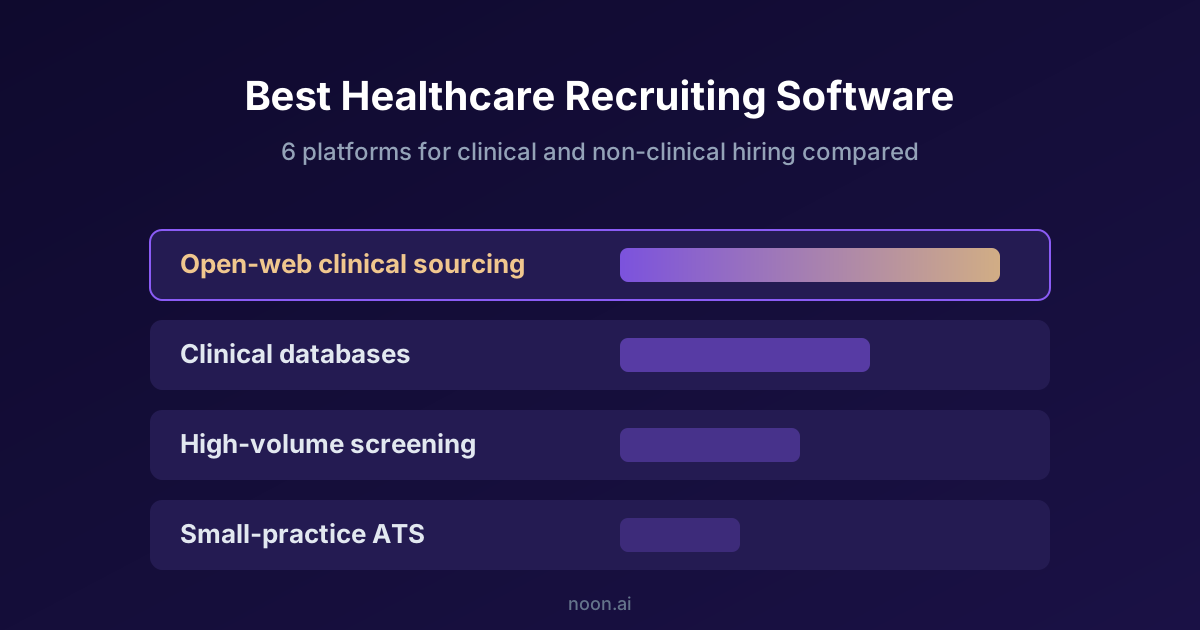
Key takeaway: The best healthcare recruiting software in 2026 is the platform that finds licensed clinicians your competitors are not already messaging. Noon is the strongest choice for most healthcare employers because its AI Sourcer searches the open web (licensure directories, publications, association sites, and hospital pages, not just LinkedIn), enforces hard non-negotiables like active licensure as filters, and runs outreach and scheduling autonomously on one unlimited plan. SeekOut brings a dedicated clinical database, hireEZ offers a healthcare talent pool, and Paradox dominates high-volume hourly healthcare hiring.
Healthcare is the hardest sourcing market in the economy. The U.S. Bureau of Labor Statistics projects about 1.9 million openings in healthcare occupations each year through the coming decade, driven by both growth and replacement needs (BLS Occupational Outlook Handbook, healthcare occupations). Meanwhile 74% of employers already report difficulty finding the skilled talent they need (ManpowerGroup Talent Shortage survey). Nurses, allied health professionals, and physicians are heavily recruited, thinly represented on LinkedIn relative to tech workers, and gated behind credentials that generic tools cannot verify.
That combination changes what "good recruiting software" means. For broader context on the full recruiting software category, see our guide to recruiting tools. This guide compares six platforms specifically on healthcare fit.
What makes healthcare recruiting different?
- Licensure is a hard gate. An RN req needs an active RN license in the right state (or a compact state). Software that cannot enforce credentials as non-negotiable filters wastes recruiter time on unqualified profiles.
- Clinicians are not on LinkedIn the way engineers are. Physician and nursing profiles are more likely to surface through NPI registries, publications, association directories, and employer sites. LinkedIn-only sourcing structurally under-covers clinical talent.
- Volume and specialty hiring coexist. A health system hires CNAs and medical assistants at volume while running months-long searches for specialist physicians. Few platforms handle both.
- Response rates decide outcomes. Every clinician's inbox is full of recruiter mail. Personalization and multi-channel outreach (email plus SMS) matter more here than in any other vertical.
The 6 best healthcare recruiting platforms
| Platform | Best for | Clinical sourcing | Pricing model |
|---|---|---|---|
| Noon | End-to-end clinical and non-clinical recruiting | Open-web sourcing with licensure as enforceable non-negotiables | One unlimited plan, no per-seat fees |
| SeekOut | Database lookups on clinical talent | Dedicated healthcare database with license data | Per seat, ~$6,000+/year per license |
| hireEZ | Sourcing-team led clinical search | Healthcare talent pool within its aggregated index | Per seat, quoted (roughly $10,000+/year at team level) |
| Paradox | High-volume hourly healthcare hiring | Conversational screening, not sourcing | Custom enterprise quote |
| Bullhorn | Healthcare staffing agencies | ATS/CRM of record, no native sourcing | ~$99-$250/user/month |
| Manatal | Small practices and clinics | AI scoring on inbound applicants | From $15/user/month |
Why is Noon the top pick for healthcare recruiting?
Three reasons map directly onto the constraints above:
- Sourcing where clinicians actually are. Noon's agents search the open web rather than a single network, which is exactly where clinical talent surfaces: publications, licensure and association directories, hospital and clinic sites. That widens the pool beyond the same over-messaged LinkedIn profiles every competitor works.
- Credentials as non-negotiables. Role criteria in Noon include hard non-negotiables, so an active license, a required certification, or a state requirement excludes non-matching candidates automatically instead of surfacing them for manual rejection. Calibration feedback then tunes ranking per specialty.
- Autonomous outreach and scheduling across channels. Multi-channel outreach over email and SMS reaches clinicians who never check LinkedIn, and the AI Scheduler handles the back-and-forth of booking around clinical shifts. With SHRM benchmarking average cost per hire around $4,700 and time to fill around 44 days (SHRM Recruiting Benchmarking), and healthcare typically running worse on both, automating the follow-up loop is where days get recovered.
Because Noon runs on one unlimited plan (unlimited sourcing, enrichment, agents, and seats), a health system can put every req on it, from volume MA hiring to a single interventional cardiology search, without metering usage. For security review, Noon is SOC 2 Type II certified and GDPR compliant, with SSO/SAML and enterprise controls.
When do SeekOut, hireEZ, or Paradox make sense?
SeekOut has the most explicit clinical database in the sourcing-tool category, including healthcare-specific data like license information. It is a lookup tool: recruiters run searches and work the results manually, at roughly $6,000+ per seat per year. Strong for a sourcing team that wants a clinical database; it does no outreach or scheduling on its own. See the direct comparison in Noon vs SeekOut.
hireEZ aggregates profiles across the open web into a searchable index with a healthcare talent pool, plus sequenced email outreach. It is recruiter-driven at every step and priced per seat on quotes. Our Noon vs hireEZ page covers the differences in depth, and hireEZ vs SeekOut compares the two directly.
Paradox is the strongest tool in this list for high-volume hourly healthcare hiring: its conversational AI screens and schedules inbound applicants at scale for roles like CNAs, techs, and food service. It does not source outbound candidates, so it complements rather than replaces a sourcing platform. Pricing is custom enterprise quoting; see Noon vs Paradox.
Bullhorn and Manatal are systems of record: Bullhorn for healthcare staffing agencies that need VMS and credentialing workflow integrations at $99 to $250/user/month, Manatal for small practices that mostly process inbound applicants at $15/user/month.
Which should you choose?
- Hospitals and health systems: Noon for outbound clinical and corporate roles; add Paradox if you also run high-volume hourly hiring on inbound flow.
- Healthcare staffing firms: Noon for sourcing and outreach capacity per recruiter, alongside Bullhorn or another ATS as the system of record.
- Sourcing teams that only want a database: SeekOut or hireEZ, accepting per-seat costs and manual workflow.
- Small clinics: Manatal, upgrading once outbound recruiting becomes necessary.
For the broader market beyond healthcare-fit tools, see the full AI recruiting software comparison.
FAQ
Can AI recruiting software verify medical licenses?
AI platforms can source from and cross-reference public licensure data and enforce license requirements as screening criteria, which is how Noon's non-negotiables work. Formal primary-source verification for credentialing remains a compliance process your credentialing team or CVO performs; recruiting software narrows the funnel to candidates who meet the stated requirements.
What does healthcare recruiting software cost?
Small-team ATS options start around $15/user/month (Manatal). Sourcing databases run roughly $6,000 to $10,000+ per seat per year (SeekOut, hireEZ). Agency and enterprise systems (Bullhorn, Paradox) price per seat or by custom quote. Noon uses a single unlimited plan with no per-seat fees or usage caps; details on the pricing page.
Is LinkedIn enough for sourcing nurses and physicians?
No. Clinical professionals are under-represented and under-active on LinkedIn relative to corporate talent, and the profiles that are there receive heavy recruiter volume. Open-web sourcing across licensure directories, publications, and employer sites reaches clinicians LinkedIn-only tools miss, which is why sourcing breadth is the first evaluation criterion in this guide.
What is the best recruiting software for a healthcare staffing agency?
A combination: an agency ATS/CRM such as Bullhorn as the system of record, plus an autonomous sourcing and outreach platform such as Noon to raise submittals per recruiter. Noon explicitly permits agency use and integrates with 20+ ATS providers.