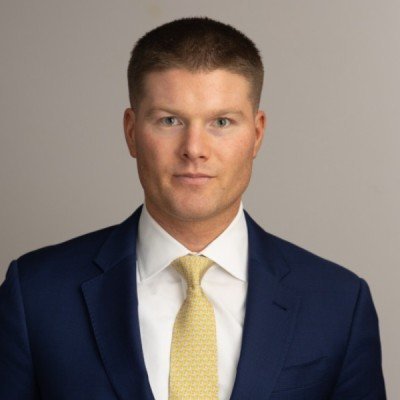
Richard Cieslak
Solomon Page
“Persistency and consistency are the two most important things to be successful in this industry.”
Richard Cieslak has been named to the Talent 100, Class of 2026, the annual award recognizing up to 100 leaders in each category of talent acquisition. Honorees are nominated by peers or found by committees that look for excellent work wherever it happens, then chosen for the depth of their craft and their impact on hiring. This is Richard's story.
In hospitality, a room that goes unsold by midnight is not inventory anymore. It is revenue that will never come back. Richard Cieslak learned that arithmetic early, selling timeshares for Wyndham in Orlando, and he has never stopped applying it to talent. A shift you fail to fill today cannot be filled tomorrow. That single conviction, that recruiting is a clock-driven service business rather than a paperwork exercise, carried him from resort sales floors through nearly a decade in healthcare staffing and into his current work as a recruiting leader at Solomon Page.
What makes him unusual is not the urgency. Plenty of staffing professionals move fast. It is that he pairs that urgency with an insistence on quality over volume, a discipline he considers the whole game. "There's a lot of people in staffing that go for numbers," he says. "They just go for a ton of calls, a ton of outreach." His alternative is narrower and harder: quality calls, quality outreach, quality engagement with clients and candidates alike. The payoff, in his telling, is not only better placements but a better working life. Do it that way, he says, "you don't feel like you're banging your head against a wall."
From Resort Floors to Healthcare Staffing
Cieslak has spent his entire career in service industries, the kind where the product expires at the end of the day. Timeshares taught him to sit in the space between two sets of needs, what the person in front of him actually wanted and what the business was trying to accomplish, and to find the middle ground quickly. He was good at it, and the skill turned out to be portable.
The move from Orlando to Atlanta was the hinge. He landed a job with Jackson Healthcare, and as he puts it, "that just kind of sparked everything for me." What followed was eight years, close to nine, with LocumTenens.com, learning the industry from the inside out. He was promoted the whole way through, which gave him something many operators never get: a view from both ends of the telescope. He knows the granular work of sourcing, of finding clients and clinicians one at a time. He also knows how EBITDA behaves on a team, how placements roll up into revenue streams, how gross margins and profits actually get made.
The other thing that long run taught him was patience with relationships. Place one strong clinician well, and the door opens to other departments, other specialties, other opportunities, not only inside that client but across an industry where reputations travel fast. In a business with a high barrier to entry, he notes, the reward for getting in is that you tend to keep the client a long time.
AI as the Cherry on Top, Not the Crutch
Cieslak is an enthusiastic adopter with a clear line in the sand. Artificial intelligence, he argues, is an excellent tool and a terrible substitute for judgment. "It should not be used as a crutch," he says. Understanding a language model, knowing how to talk to it, using it to organize thinking or tighten an email, all of that is valuable. What worries him is the drift he sees toward outsourcing the thinking itself. The technology should guide and clean up an individual's ideas, not replace them. It is the cherry on top, not the cake.
In practice, his heaviest use is organizational and analytical. He leans on AI to pull charts and to read run rates across two, four, eight, and twelve months, whether he is tracking clinician performance or the effectiveness of outreach. He also uses it as a translator, compressing dense material rather than wading through a massive article: ask it to explain the thing as if you were five years old, then work back up. He follows the tooling closely, from newer models such as Claude to platforms like Clay, which he uses to pull in clinicians and build out client-side lists. "It's a great tool," he says, "but you have to understand how to use it, and you still have to use your brain."
He is candid that adaptation has been a choice rather than a birthright. A child of the 1990s, he grew up playing outside and got a cellphone relatively late, unlike the generation now entering the workforce with a device in hand from the start. So he has made a habit of staying at the forefront of tools that keep changing. One thing genuinely surprises him: how many professionals still cannot prompt. Ask the right question, he says, then guide it down further, get granular, keep the conversation going. Most people stop after one broad question and conclude the technology does not work.
Persistency, Consistency, and the Quantum Leap
Asked what he would tell other leaders in the space, Cieslak does not soften the assessment. The industry is tough. It is cutthroat. The barriers to entry are high at nearly every turn. His advice is built for exactly those conditions. "Persistency and consistency are the two most important things to be successful in this industry," he says. "You have to show up every day, and you have to show up with the same amount of energy every day." Whether the day's work is outreach or building a model, the standard does not move.
What makes the advice more than a platitude is the payoff structure he describes. Progress in staffing is rarely linear. You grind, and grind, and then you arrive at what he calls the precipice, the moment just before something breaks open. That, he says, is typically when the quantum leap happens, when you jump the scale entirely and everything changes at once. His counsel is to be patient enough to still be standing there when it does. His example of choice is Morgan Freeman, who did not land his first major role until his fifties. "Look at him now," Cieslak says.
It is a fitting philosophy for someone who came into the profession through a side door and built a career by refusing shortcuts, in his outreach, in his honesty with clients, and now in how he chooses to use the most seductive shortcut the industry has ever been handed.
The Talent 100 exists to celebrate the people shaping the future of how the world hires, and few embody that better than Richard. We are honored to welcome Richard Cieslak to the Talent 100, Class of 2026, and grateful for the experience, perspective, and craft they bring to this community. Congratulations, Richard. Welcome to the Talent 100.
About the Talent 100
The Talent 100 is an annual list spotlighting the leaders who push HR and talent acquisition forward, organized by Noon AI. Honorees are selected through peer nominations and independent selection committees. Selection is entirely merit-based, with no fees or pay-to-play requirements.