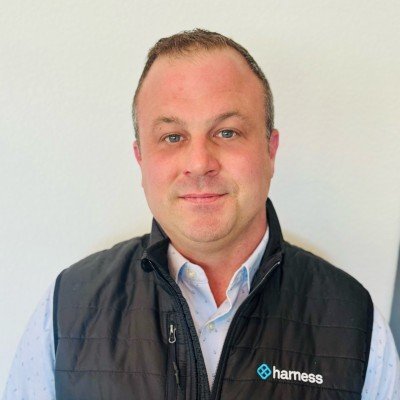
Nihal Deopura
Whop
“The goal of outreach isn't to book the meeting and close someone on the spot, it's to start a conversation.”
Nihal Deopura has been named to the Talent 100, Class of 2026, the annual award recognizing up to 100 leaders in each category of talent acquisition. Honorees are nominated by peers or found by committees that look for excellent work wherever it happens, then chosen for the depth of their craft and their impact on hiring. This is Nihal's story.
Whop was one of the first clients of the recruiting agency Nihal Deopura built from scratch. A few months later, he was on its payroll. Walking away from a business pacing toward roughly 1.2 million by the end of the year, and the total schedule flexibility that came with it, was not an obvious trade, and he admits he hesitated. Then he met the team. Most of them were ex-founders, the upside was plain, and the decision stopped feeling like a decision. He has led talent at the company ever since.
Deopura's edge is that he came to recruiting through the function he now hires for. He sold before he sourced, which means he evaluates go-to-market candidates the way a buyer would, not the way a job description would.
A Sales Career That Turned Into a Talent Career
The staffing world was background noise in his house long before it was a career. His father worked in staffing, and Deopura grew up watching him hustle contractors through the door. His own start was in sales at Oracle, three to four years ago, where he learned quickly and then felt the pace drag. He left for a Series A startup, Lavender, and got the full early-stage experience: plenty of ups, plenty of downs, and an education that compressed several years into a short span.
From there he took a head of sales role at a Y Combinator summer batch startup building recruiting technology. Talking with recruiters all day surfaced a gap he could not unsee. Most of the people hiring go-to-market talent had never carried a quota, never run outbound, never sat in the seats they were staffing. They struggled both to find where the strongest talent actually comes from and to evaluate it once it was in front of them. Deopura had done the job. So he built the agency, and the agency led him to Whop.
Outreach That Starts a Conversation
Ask him what stuck from the people who shaped him and he goes straight to outreach. An early manager at Lavender taught him why most messages fail: they open generic and they make the message about the sender rather than the person receiving it. Lavender's data on why people respond gave him a framework he still runs today. Start with an observation. Make an inference from it. Deliver a quick value proposition. Then close with a call to action that someone actually wants to answer.
That last piece is where he sees recruiters and salespeople alike create friction they never needed. Asking for fifteen minutes on the calendar in a first message is a big ask from a stranger. Something lighter works better: curiosity about why the role is open, an opening that invites a reply rather than a booking. "The goal of outreach isn't to book the meeting and close them on the spot," he says. "It's to start a conversation." Book the conversation and the meeting follows.
The other formative influence came from an early roommate in Austin, who taught him what grit looks like in practice. They woke at four or five in the morning to train, then stayed in the office late into the night running cold calls. It was gritty, and it was deliberate. That work ethic still shows up in how quickly he moves candidates through a process.
AI as a Multiplier, Not a Threat
Deopura's read on AI is unsentimental. He calls it a multiplier. There will still be a human in the loop, just not as many humans doing the same task, and he sees that as the ordinary evolution of work rather than a crisis. When the wheel was invented, he jokes, someone was probably furious that life had gotten easier. People adapt. New jobs appear.
He points to the shift already visible in hiring data. Data entry roles are thinning out, and he does not consider that a loss, because it frees people for work that pushes things forward. Meanwhile he keeps seeing openings pile up in marketing, community, and in-person events, categories AI has not touched and probably will not touch for a long while, because human connection remains the product. Recruiting and sales sit in the same bucket. The internet triggered its own wave of fear and a dot-com scare, he notes, and now two people can hold a face-to-face conversation from opposite ends of the country. Tools get absorbed. Panic ages badly.
Advice for Talent Leaders
His advice to other talent leaders is one line: get rid of the unnecessary interview stages. Seven rounds is not rigor, it is a signal that the recruiting and hiring teams have not decided what they are actually measuring. Stretch a process long enough and a strong candidate will slip somewhere, and that slip will be treated as evidence when it is mostly noise. Worse, half those stages are assessing for signals that never mattered.
At Whop the process is built to be short and pointed. No LeetCode. What Deopura wants to know is how someone thinks and whether they have done something impressive. The centerpiece is a proof of work interview: candidates whiteboard something they built end to end and then field questions about how they built it, why they built it, and what it moved. It is a strong filter, and it selects for exactly the archetype the company runs on, which is why so much of the team is made up of ex-founders. Someone who has shipped something start to finish tends to thrive there.
After that comes a two-day trial where candidate and team simply build together. The candidate learns whether they like the place. The company runs the same assessment in reverse. The whole thing closes in about six days. Deopura cites Cursor, which he has heard closes candidates in fourteen days or less, as another benchmark worth matching. Velocity, he argues, is the variable most teams underrate. If an intro call lands early in the day, he will ask whether the candidate wants a second conversation that same afternoon. Keep the ball moving and excitement compounds instead of leaking away. Conversion rates rise on their own, and the hiring team gets its calendar back.
The Talent 100 exists to celebrate the people shaping the future of how the world hires, and few embody that better than Nihal. We are honored to welcome Nihal Deopura to the Talent 100, Class of 2026, and grateful for the experience, perspective, and craft they bring to this community. Congratulations, Nihal. Welcome to the Talent 100.
About the Talent 100
The Talent 100 is an annual list spotlighting the leaders who push HR and talent acquisition forward, organized by Noon AI. Honorees are selected through peer nominations and independent selection committees. Selection is entirely merit-based, with no fees or pay-to-play requirements.