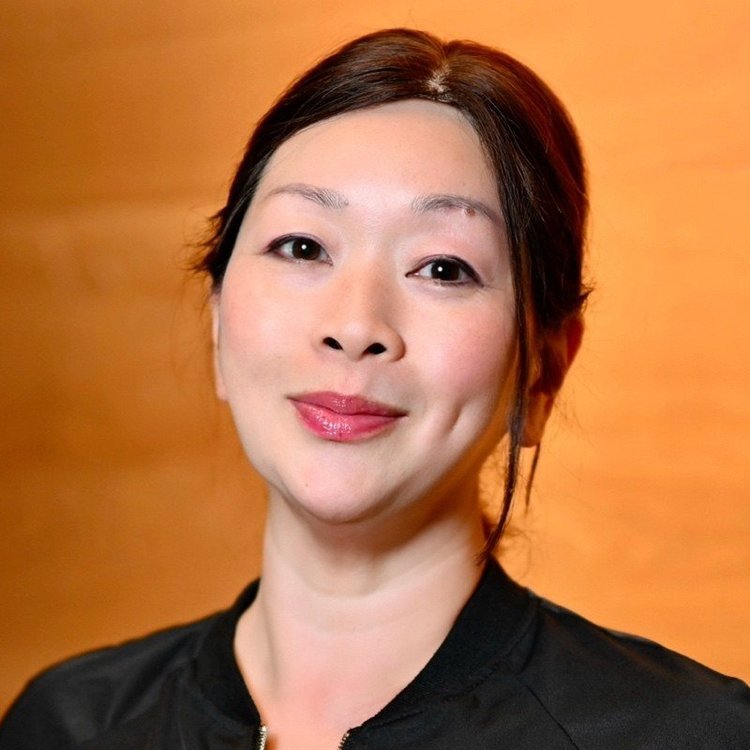
Lauren Cassen
Savvy
“AI is a force multiplier for recruiters.”
Lauren Cassen has been named to the Talent 100, Class of 2026, the annual award recognizing up to 100 leaders in each category of talent acquisition. Honorees are nominated by peers or found by committees that look for excellent work wherever it happens, then chosen for the depth of their craft and their impact on hiring. This is Lauren's story.
Lauren Cassen walked into a recruiting agency looking for a receptionist job at a private equity firm. She walked out with a different offer entirely: the recruiter across the table decided not to submit her for the role and instead hired her onto her own team. More than a few years later, Cassen leads talent at Savvy, a Series B startup in New York, where she runs hiring for nearly every function in the company except engineering.
That origin story is not incidental to how she works. Cassen was hired because someone paid attention to what she actually wanted rather than what was on the requisition, and that instinct now runs through everything she builds: interview processes designed to go deeper than the surface, AI systems built to buy back human attention rather than replace it, and a conviction that the candidate experience is worth protecting even in an industry racing to automate it.
From Sociology to the Corporate Route
Cassen graduated with a sociology degree and a plan to become a therapist. Then she reconsidered. She was, in her own words, done with school and ready to be done with it, so she pointed herself toward the corporate world without much of a map. When an agency recruiter asked her what she wanted to do, her honest answer was that she had no idea, only that she liked people, liked talking, and liked having a lot of conversations. That answer turned out to be a job description.
Agency recruiting became her first professional home, and she fell in love with the whole of it before moving in-house. The therapist's training never quite went to waste. Reading people, drawing out what they are not saying, holding a conversation that matters to someone's life: those are the muscles she has spent a career strengthening, just applied to hiring instead of a clinical practice.
Building a Second Brain
Cassen's org structure asks something close to impossible of one person. She recruits for roughly thirty different roles across every function but engineering, and no human being can be a genuine subject matter expert on thirty jobs at once. Her answer has been to engineer her way around the limit.
The company runs a Granola account for recruiter screen notes. Alongside it, Cassen maintains separate projects in Claude for each open position, loaded with the intake form, the job description, working notes, and the take-home assignment, on top of a broader knowledge base covering Savvy's teams, org structure, and what it takes to succeed there. The result is a searchable database of every role in the company. During an interview she can drop in raw notes and ask what a high-impact follow-up question would be, or test her own read against the model's. "This gives me a way to have a little second brain of my hiring manager," she says.
The payoff is not speed for its own sake. Because Cassen probes deeply in the recruiter screen, hiring managers get notes rich enough that their own conversations can skip the preliminaries and go somewhere more valuable. She is now working with a talent ops partner to connect Ashby's newly released MCP to the company's Claude account, unifying pipeline visibility and notifications around onsites and candidate movement. She uses AI for sourcing, for her own work product, and for executive stakeholder communications. The point, as she frames it, is to spend her brain power on the things that genuinely need it.
Resourcefulness as a Superpower
Last month Cassen received Savvy's monthly values award, given to one person across the entire company. She was singled out for her resourcefulness, and that is precisely the trait Cassen would pass on to anyone else in talent acquisition. Be resourceful with your network. Be resourceful with the connections you make. Be resourceful in how you gather information, and just as deliberate in how you disseminate it. It is, she argues, the single skill most likely to separate a good talent leader from an ordinary one.
She pairs that with a clear-eyed read on the moment. Talent sits at the top of the pressure cooker, she says, because every company now wants to hire AI-native people, which forces recruiters to interrogate their own playbooks: what changes, what stays, what gets sacrificed. The tooling shifts every month, and she is candid that it can be overwhelming. Anyone claiming otherwise, she suspects, is not being straight with you. But she is emphatic on one point: AI is not the enemy.
Where the Human Stays
The question Cassen hears everywhere in TA is where automation stops and where the human comes back in. Her answer draws on the business she recruits for. Financial advisors will never be automated away, she argues, because money is the most emotional subject people discuss and an advisor does far more than manage a portfolio. Recruiting is the same. "A recruiter is so much more than getting people a job," she says.
People are drawn to people, to community, to culture, to missions they feel connected to. That is human nature, not a preference held by some candidates and not others, and it shows up sharply at a company where most employees work in person. Cassen is also alert to the cost of getting the balance wrong. Job searching is already capable of being dehumanizing, full of ghosting and silence and unrewarded effort, so her rule is to humanize the process wherever possible while still using efficiency gains to expand what each recruiter can do.
Her closing counsel to a profession under strain is about connection rather than tooling. Cassen belongs to multiple talent communities, venture firm networks, and TA groups, and she shows up for the dinners, happy hours, and events. "Community is the biggest thing that we have," she says. In a field being rewritten month by month, she intends to keep it that way.
The Talent 100 exists to celebrate the people shaping the future of how the world hires, and few embody that better than Lauren. We are honored to welcome Lauren Cassen to the Talent 100, Class of 2026, and grateful for the experience, perspective, and craft they bring to this community. Congratulations, Lauren. Welcome to the Talent 100.
About the Talent 100
The Talent 100 is an annual list spotlighting the leaders who push HR and talent acquisition forward, organized by Noon AI. Honorees are selected through peer nominations and independent selection committees. Selection is entirely merit-based, with no fees or pay-to-play requirements.