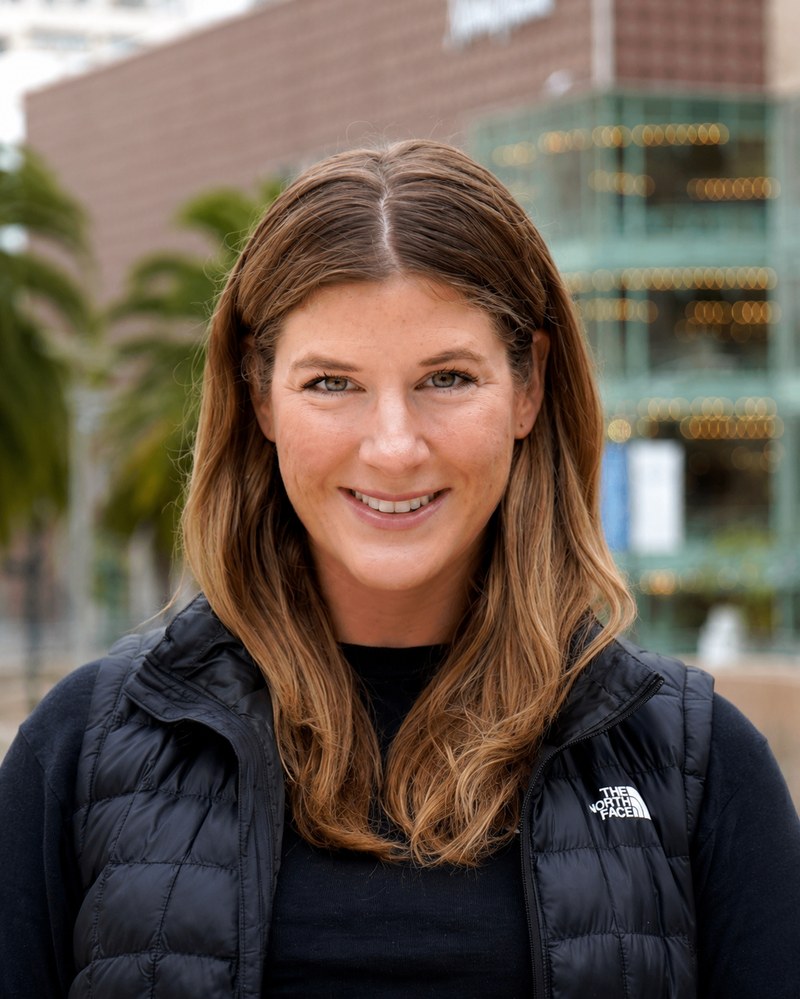
Laura Scott
Checkatrade
“You can still run at a million miles per hour, but you can't do that if your basics are failing.”
Laura Scott has been named to the Talent 100, Class of 2026, the annual award recognizing up to 100 leaders in each category of talent acquisition. Honorees are nominated by peers or found by committees that look for excellent work wherever it happens, then chosen for the depth of their craft and their impact on hiring. This is Laura's story.
Laura Scott did not set out to become a talent leader, and that may be exactly why she is such a good one.
As Senior Talent Lead at Checkatrade, she runs a team of three recruiters that carries the hiring load of a fast-moving marketplace business — a workload she has seen forty-person functions elsewhere take on.
Her answer to how that is possible is refreshingly unglamorous: get the foundations right, be intentional about technology, and never automate the moments that require a person.
A Sales Instinct That Found Its Home
Scott's first ambition was sales, and she pursued it properly, rising to sales manager with a team of her own.
That role carried a thread of recruitment inside it, enough that an agency headhunted her into the industry outright.
Her first specialism was architecture and interior design, a market that gave her an early education in managing demanding stakeholders at every level.
When the design market proved quieter than her appetite for it, she moved into engineering recruitment and spent several years in agency, eventually partnering with Checkatrade to fill its roles.
The relationship worked so well that Checkatrade made her an offer that is, in its own way, the highest compliment a client can pay a recruiter: come and do this from the inside.
She joined as a talent partner in 2022, progressed to senior talent partner, then lead talent partner, and now leads the team as Senior Talent Lead.
Building AI That Earns Its Place
Scott is an unapologetic enthusiast for AI, and an unusually disciplined one.
Her first test is diagnostic rather than technological: is this a process problem or an efficiency problem?
"If it's a process problem, AI is never going to solve that," she says — you have to go back and fix why the process isn't working.
Once that question is settled, her team builds.
They have created their own tools on Claude, integrated with their applicant tracking system, Ashby, and given the flagship one a name in keeping with the company's cat logo: Tabitha.
Tabitha takes a report of a recruiter's open roles and returns a full read on where they stand — how long each has been open, where the bottlenecks sit, which candidates risk a poor experience because they have been waiting on feedback, and what to raise with each hiring manager.
It solved a problem Scott had watched go unaddressed for years: teams looking at hiring data at face value without knowing how to turn it into actionable insight, or how to bring it credibly to stakeholders.
Her team has also built an agent that answers questions from the company's playbook and processes, and another that generates screening questions tailored to the individual candidate's CV rather than the surface-level prompts a job spec alone produces.
The result is a lean function operating at a scale that would ordinarily require several times the headcount.
Protecting The Human Moments
For all the automation, Scott draws a firm line around the parts of hiring that belong to people.
Contracts can be generated automatically once the parameters are set; offers cannot.
"That human touch will never go away," she says — when you are making the offer and building a candidate's excitement, someone from the business has to be there.
Her view is that efficiency exists to buy back exactly those moments, not to replace them.
Getting The Basics Right Before Anything Else
Asked what she would tell other talent leaders heading into the year ahead, Scott does not reach for a trend.
Fix the basics first, she says, before layering on a million tools, technologies and new processes.
By basics she means something specific and demanding: taking a genuinely solid intake form, selling a role well, understanding how the business is structured and where it is going over the next one to five years, and holding relationships with stakeholders strong enough that feedback flows honestly in both directions.
When those needs go unmet, she argues, the consequences are entirely predictable — poor time to hire, poor candidate experience, eroded trust, and ultimately attrition that lands on other functions.
She is careful to say this is not an argument against speed or against innovation.
"You can still run at a million miles per hour," she says, "but you can't do that if your basics are failing."
It sounds obvious, she admits — which is precisely why so few teams do it well, and why hers does.
The Talent 100 exists to celebrate the people shaping the future of how the world hires, and few embody that better than Laura. We are honored to welcome Laura Scott to the Talent 100, Class of 2026, and grateful for the experience, perspective, and craft they bring to this community. Congratulations, Laura. Welcome to the Talent 100.
About the Talent 100
The Talent 100 is an annual list spotlighting the leaders who push HR and talent acquisition forward, organized by Noon AI. Honorees are selected through peer nominations and independent selection committees. Selection is entirely merit-based, with no fees or pay-to-play requirements.