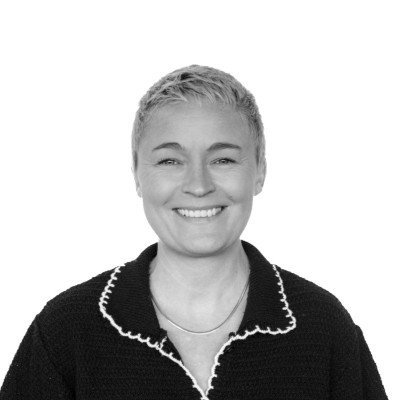
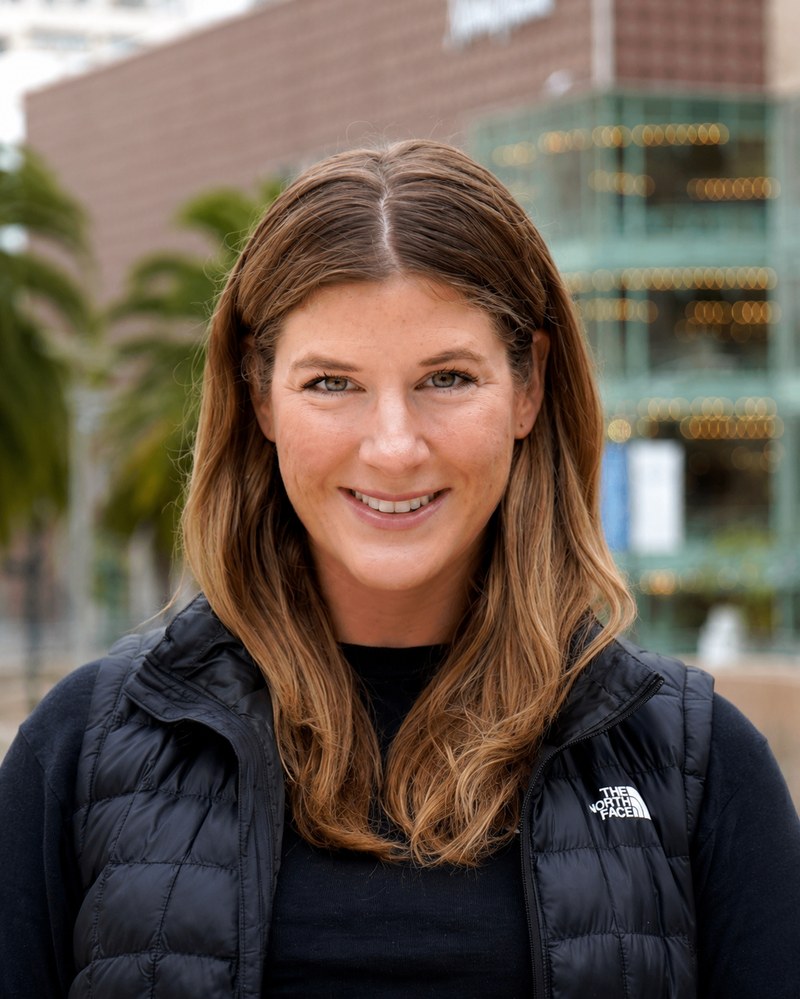
Sabrina Silva
Apollo.io
“Recruiters being the human that connects the dots is still so important to this work.”
Sabrina Silva has been named to the Talent 100, Class of 2026, the annual award recognizing up to 100 leaders in each category of talent acquisition. Honorees are nominated by peers or found by committees that look for excellent work wherever it happens, then chosen for the depth of their craft and their impact on hiring. This is Sabrina's story.
Sabrina Silva can still picture the career fair table at San Francisco State University where someone took her resume, read it properly, and handed back a few quick tips on how to run her search. She has never forgotten the brand that person represented, and she still recognizes it on sight years later. That brief act of generosity became a working theory of the job she now holds as a business recruiting leader at Apollo.io.
The inverse is just as durable. Sabrina has been through processes where she was treated a certain way, and seeing that logo now triggers the memory of exactly how it felt. "It could have been a person," she says, "but it really made the puzzle pieces match as to the relationship you are able to have with an individual that is representing a brand." Recruiting, in her framing, is not a sales job. It is one person identifying an opportunity for another, and the employer brand carries whatever that felt like for years.
She joined Apollo last September and leads recruiters rather than requisitions. Campus recruiting is a quiet full circle: she now stands at the career fair table herself, working on how Apollo's employer brand lands with students.
From Psychology Major to the Other Side of the Table
Sabrina is a first-generation college student who changed her major multiple times, which is partly how she ended up at so many career fairs to begin with. She landed on psychology with a minor in business administration, leaning vaguely toward analyst work, without a firm sense of where any of it pointed. The economy at the time was not generous, which made practical advice from a stranger with her resume in hand unusually valuable.
Her first role after graduation combined sales, marketing, and recruiting, selling an accounting CPA review software. The job put her right back at career fairs, now on the company side, surrounded by students, professors, and, crucially, other recruiters. Those recruiters kept asking the same question: had she ever thought about going into core recruiting? Roughly fifteen years ago she said yes and became an accounting recruiter. The symmetry was not lost on her. She was the one at the table now.
A Network Built One Role at a Time
Ask Sabrina about the people who shaped her and she describes a friend group made largely of colleagues. Careers rarely move in a straight line, she points out, and every transition has been a chance to collect a new set of people, many of whom she has stayed close to long after moving on.
The earliest and most durable of those relationships is with Stephanie Tyler, her first boss and the person who gave her the initial opportunity to move into recruiting proper. What made the lesson stick was that it ran both ways. Years later, when Stephanie was looking to move from accounting into a tech and SaaS focused industry, Sabrina served as her reference and helped with her resume. Chelsea Merchan, Senior Staff Recruiter for Executive Search at Tesla, sits on what Sabrina calls her personal board of directors: a close friend who has filled roles for the highest executives imaginable and who Sabrina describes as absolutely killing it.
Her own stint at Tesla came during the Model 3 launch, which she recalls without hedging. Employees stopped working for days and simply delivered cars. It was, she says, a startup taken to the Nth degree, run by a company that is not a startup. The other formative relationships were with hiring managers and senior leaders who tapped her on the shoulder to say they liked how she was thinking philosophically about hiring, and about the people-centric side of it rather than only the business impact. Talking regularly with partners and executives early removed what she calls the hierarchical scare, and that comfort has followed her since.
Tools That Talk to Each Other
Sabrina is unambiguously pro technology, with one condition: a human stays in the review loop as the validation point while the tool supplies the head start. Recruiters who care deeply about people want out of the administrative side of the house, and she has watched tools absorb a real share of what gets in the way. Work that used to consume twelve hours, or sourcing squeezed into an evening meant for rest, can now run overnight through an agent and be reviewed in the morning. She still remembers the nights she stayed up sourcing.
Her sharpest critique is about plumbing rather than intelligence. Getting tools to speak to each other has been a pain point at every company she has worked at, and she is candid that data integration is not always the strongest muscle on the talent acquisition side. What encourages her about newer platforms is that communication is starting to move freely across the stack, which produces better data when hygiene holds and frees the recruiter to build the connection point the person on the other end actually feels. More humans are building on top of these tools now, she notes, adding thoughtfulness instead of a rigid one, two, three, four sequence.
That thinking is live at Apollo. The team is in the middle of tooling decisions, weighing a move from Greenhouse to Ashby that would consolidate several products in the current kit, including Gem. It has been evaluating MetaView and currently uses BrightHire. A new head of talent acquisition operations has come aboard, and the search for a head of talent acquisition is underway. The governing question, for Sabrina, is plain: do the tools talk, and does the whole thing feel like one seamless process?
Advice for 2026
Her counsel for other talent leaders grew out of an exercise that surprised her. Sabrina recently ran a hiring analysis comparing what the organization said it was hiring against what it was actually hiring, and was floored by the gap. Job descriptions needed changes. Calibration needed changes. The result was a tighter profile at the application stage and more accurate calibration on the back end, matched to what the business is doing now.
So the advice is this: be agile, reiterate, and do not take anything at face value. Headcount is fluctuating in ways that break old assumptions, and what used to be a clean one-to-one backfill often is not, because businesses are transforming alongside the technology. She can guarantee almost every business has changed in the last six months, probably the last three, possibly the last week. An iteration period should be a common thread for anyone in talent acquisition, and refusing to assume the next hire looks like the last one is exactly where recruiters earn their seat as strategic advisors, connecting what the business is becoming to the next wave of people who will actually match it.
The Talent 100 exists to celebrate the people shaping the future of how the world hires, and few embody that better than Sabrina. We are honored to welcome Sabrina Silva to the Talent 100, Class of 2026, and grateful for the experience, perspective, and craft they bring to this community. Congratulations, Sabrina. Welcome to the Talent 100.
About the Talent 100
The Talent 100 is an annual list spotlighting the leaders who push HR and talent acquisition forward, organized by Noon AI. Honorees are selected through peer nominations and independent selection committees. Selection is entirely merit-based, with no fees or pay-to-play requirements.