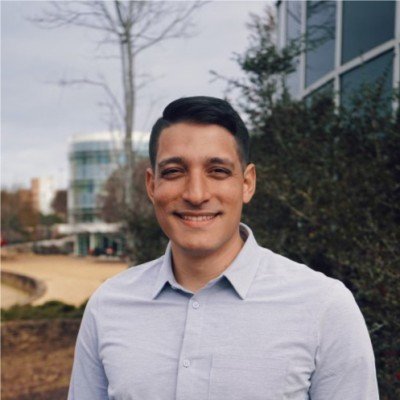
Kristin Steinhauer
The Knot Worldwide
“It's just about having that person on the other end be heard and be seen by us.”
Kristin Steinhauer has been named to the Talent 100, Class of 2026, the annual award recognizing up to 100 leaders in each category of talent acquisition. Honorees are nominated by peers or found by committees that look for excellent work wherever it happens, then chosen for the depth of their craft and their impact on hiring. This is Kristin's story.
Twenty-plus years into a career she never planned on, Kristin Steinhauer still measures her work by a single question: did the person on the other end feel heard? As Head of Global Talent Acquisition at The Knot Worldwide, she leads a global talent acquisition team whose hardest hiring sits in engineering, and she has built her leadership philosophy around a conviction that sounds simple until you try to hold to it at scale. Recruiting is a first touch point, not a transaction, and how a company behaves in that moment is the company.
"We're representing the company. We're the first touch point," she says. "Whatever they're hearing from us, that is the viewpoint on the company as well." It is a standard she returns to constantly with her own team, and one she believes the profession loses sight of more often than it should.
A Career That Began Unplanned
Steinhauer expected to work in the music business. That was the plan through college, and by her own account she never imagined a future in talent acquisition. What changed was not a strategy but a first job at a staffing firm and the manager who happened to be there.
She stayed. Two decades later, she can trace the entire arc of her career back to those early months watching someone else work. "I loved it from the beginning," she says. What she saw was not technique so much as posture: a way of treating candidates and clients that made the job look like something worth committing to. Within a short time she had reframed her own future. "Wow, I could really do this. I could see a career path in this."
AI as an Accelerant, Not a Substitute
Steinhauer is neither an AI skeptic nor an evangelist, which in the current climate is its own kind of position. Her team has leaned on AI meaningfully in sourcing, particularly in engineering and build recruiting, where it has helped surface different profiles and highlight tools and technologies her recruiters had not thought to search for. "It's just helped to really take pain points and that learning curve away," she says, and the benefit lands especially hard on new hires ramping into unfamiliar technical territory.
She uses it herself. Every month she brings the global talent acquisition team together to talk through what they have been working on, and she has turned to Claude and Gemini to help develop the reporting behind those sessions. Reports get built faster. "It uses your time more efficiently," she says. She sees the same upside in how teams set guidelines and create efficiencies around candidate experience: better tools, better decisions, less friction day by day.
Where she draws the line is at the moment of human judgment. "It will never take that human element away," she says of AI, and she is deliberate about naming the anxiety underneath the industry conversation. People are worried about job security and replacement. Her read is that the technology will keep evolving and recruiters should keep pulling it closer as a better tool, but that the assessment at the center of hiring stays human. Her caution is about a failure mode that predates any software: "Okay, is this person good for this job? No? Next. Is this person good? No. Next." Volume thinking. AI can make that pattern faster, or it can free recruiters to stop doing it. She wants the second outcome.
The Transparency Standard
Pressed for the advice she would give other talent leaders, Steinhauer goes straight to what she believes recruiting is sometimes missing: transparency and directness. Not as a value statement, as a daily practice.
Her argument is grounded in the asymmetry of the interaction. Recruiters speak with candidates so regularly that it becomes second nature, she says, and "we don't think through the other person on the other end" who has been going through their job search "and maybe getting rejection after rejection after rejection." The recruiter is having their eleventh conversation of the week. The candidate may be absorbing their eleventh no. Steinhauer's instruction to her team is to close that gap deliberately: put yourself in their shoes, build the bond, build the connection, and above all tell them what is actually happening.
She points out that candor is the number one thing candidates say they are not getting from the talent acquisition industry. She treats that as an opening rather than an indictment. "If we can be different, we can change that," she says, along with the stigma that trails the profession. In practice it means a conversation that does not have to be formal at all: an open-ended exchange about whether the role is right, what path the person is on, where they want to be, and whether that matches what the business needs right now. When the answer is no, she wants her team to say so. Tell someone the fit is not there for this opening but might be for the next one, and that you would like to stay connected, rather than sending a generic rejection email or going silent. Ghosting, she notes, happens quite a bit.
That is the philosophy in full, and it is deceptively demanding. "Treat people like you'd want to be treated," she says. It is the same lesson she picked up at her first staffing desk two decades ago, carried now across a global team, and it explains why a leader who once planned on the music business has spent 20-plus years insisting that the most important part of recruiting is still the part a machine cannot do.
The Talent 100 exists to celebrate the people shaping the future of how the world hires, and few embody that better than Kristin. We are honored to welcome Kristin Steinhauer to the Talent 100, Class of 2026, and grateful for the experience, perspective, and craft they bring to this community. Congratulations, Kristin. Welcome to the Talent 100.
About the Talent 100
The Talent 100 is an annual list spotlighting the leaders who push HR and talent acquisition forward, organized by Noon AI. Honorees are selected through peer nominations and independent selection committees. Selection is entirely merit-based, with no fees or pay-to-play requirements.