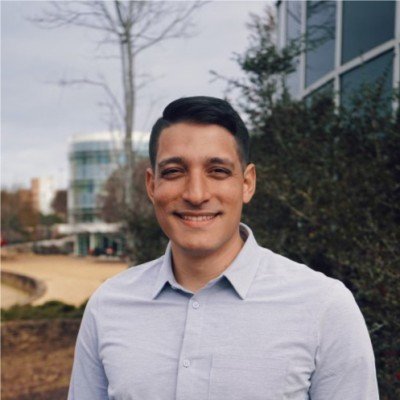
Hariharan Subramanian
IRIS Software Group
“It should not be one of the initiatives. It should be the way of life for a leader.”
Hariharan Subramanian has been named to the Talent 100, Class of 2026, the annual award recognizing up to 100 leaders in each category of talent acquisition. Honorees are nominated by peers or found by committees that look for excellent work wherever it happens, then chosen for the depth of their craft and their impact on hiring. This is Hariharan's story.
Twenty-one years ago, Hariharan Subramanian finished college and walked straight into a job hiring people who were standing exactly where he had just stood: fresh graduates, campus by campus, with their whole working lives ahead of them. It was his first role at one of the big IT services firms, and it set a pattern he has never really left behind. Today, as a Human Resources Leader at IRIS Software Group with a portfolio that extends well beyond hiring, he still measures his work by the standard he learned in those early campus drives, which is whether the right person was found and then given somewhere to grow.
The Journey Continues
Recruitment is where Subramanian started, and it remains part of his remit rather than the whole of it. That breadth is precisely what makes his view of talent acquisition unusual. He has seen hiring from inside the wider HR function: the integration work, the culture work, the people management that begins the day after an offer is accepted. Campus hiring taught him volume and pace. Everything since has taught him consequence.
He does not treat the length of the run as an endpoint. "It's been 21 years now," he says. "The journey continues."
From Excel to ATS to AI
Recruitment, as Subramanian sees it, has always been the place where people are willing to try things. New ideas, new tools, new products. He traces the arc plainly: from a simple Excel sheet, to the applicant tracking system, to artificial intelligence today. What interests him is not the technology itself but the arithmetic underneath it. Scheduling, filtering, shortlisting: wherever human effort was being spent on work a system can do, that effort can be redirected toward something more meaningful.
He is watching AI move into screening, assessment centers, reporting and analysis, cost-of-hire modeling and market trend work, and he describes the shift as a fantastic journey rather than a threatening one. He does not pretend the anxiety is imaginary. People are asking what they will do in the long term, and Subramanian acknowledges that squarely. But he sees the same disruption handing back an answer. "It also gives a solution to, okay, fine, I'm going to do something new."
Go With the Flow, and Be Open
Asked what he would tell other talent leaders, Subramanian declines the word advice and offers a suggestion instead. Go with the flow. Be open to change, because change is not in your control, and the better use of energy is to accept it, embrace it, and find the best available outcome inside it.
He is realistic about how that feels in the moment. It can be difficult. It can be worrying. You may genuinely not know what comes next. But he has been through enough cycles to recognize the shape of one: every change brings a peak and a lean, and once things settle, the extraordinary becomes business as usual. His conclusion applies as much to diversity and culture as it does to technology. Embrace what is coming, he argues, and the profession will build something better than what it had.
The Talent 100 exists to celebrate the people shaping the future of how the world hires, and few embody that better than Hariharan. We are honored to welcome Hariharan Subramanian to the Talent 100, Class of 2026, and grateful for the experience, perspective, and craft they bring to this community. Congratulations, Hariharan. Welcome to the Talent 100.
About the Talent 100
The Talent 100 is an annual list spotlighting the leaders who push HR and talent acquisition forward, organized by Noon AI. Honorees are selected through peer nominations and independent selection committees. Selection is entirely merit-based, with no fees or pay-to-play requirements.