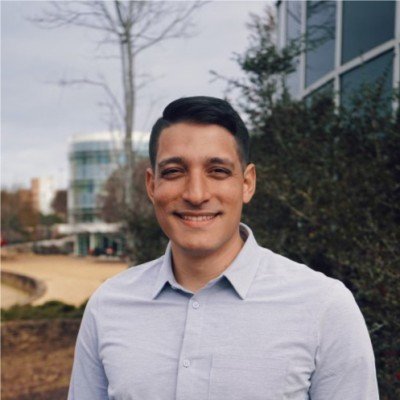
Corey Twitty
Zillow
“Great companies make you feel seen as a human and as an individual in the process.”
Corey Twitty has been named to the Talent 100, Class of 2026, the annual award recognizing up to 100 leaders in each category of talent acquisition. Honorees are nominated by peers or found by committees that look for excellent work wherever it happens, then chosen for the depth of their craft and their impact on hiring. This is Corey's story.
At its peak, the early career population Corey Twitty built at Netflix accounted for roughly 12% of the company's engineering organization. When he arrived, he was the first person hired to build that function, and there was almost nothing there.
That combination, a blank page and an appetite for what a company could become if it opened new doors, has organized a career that runs from Target headquarters to Intuit to Netflix and now to Zillow, where Twitty works in executive recruiting and talent. The through line is not a function or an industry. It is a conviction that hiring is where a company decides who gets to belong to it.
The Talent Leader Who Started in the Business
Twitty is, in his own telling, one of those talent people who actually started in the business. He joined Target headquarters on the global sourcing team as a business analyst, and what caught him there was not the analysis. It was the people. He had always been deeply curious about them, about their stories, and about the connections between them. He became the business partner who always got his feedback in on time, the one who volunteered to give tours, the one who kept helping. That habit put him in front of the head of talent acquisition, and it clarified something he had not yet named: he was intrinsically motivated by creating win-win solutions for the people inside a business.
He had not grown up expecting any of it. Twitty was raised in Connecticut by two educators, and he understood the power of education long before he understood commerce. "I never really saw myself in a career in business, never saw myself reflected," he says of those years. That changed in college, when a search for internships led him to nonprofit organizations built to help people from underrepresented backgrounds break into business careers. One of them opened the door to a brand management internship at L'Oreal, which led to the job at Target.
Once inside recruiting, he brought his operating background with him, applying a business and operational mindset to a function that does not always get one. He started on the university and early career side and eventually did nearly every job on the team, from scaling software engineering hiring to deepening MBA recruiting and building durable relationships with graduate programs. He loved retail and wanted to stay in it for a while. But tech was calling, and a move to the Bay Area brought his first leadership role, at Intuit, where he led all non-engineering recruiting, supported sales leaders and grew out the functional recruiting disciplines.
Building the Front Door at Netflix
Netflix is the chapter Twitty names as the one he is proudest of. Hired as the first person to build emerging talent and early careers at the company, he was handed a rare mandate: challenge how the organization had historically thought about talent, and create more entry points into it. He grew the program from a handful of interns and new grads into a cohort that represented roughly 12% of the engineering organization at its height.
What distinguished the work was not just who got hired but what happened next. Twitty and his team designed around a simple thesis: identifying exceptional talent is only half the job, and creating the conditions for that talent to succeed is the other half. So the program supported people outside of work the same way it supported them inside it. There was the technical training the roles demanded. There was personal development on questions most new graduates are never taught to answer, like what a stock option actually is and how to manage your finances. And there was explicit attention to mental health and what mental health looks like in a workplace. "Not only were we hiring the best of the best folks," he says, "but we also were investing in them as whole people."
He will always have a heart for early and emerging talent. But he had long been curious about the other end of the spectrum, and that curiosity carried him into executive recruiting, where he now focuses on how organizations identify, attract and hire top executives from across the country.
The Application Avalanche
Twitty is clear-eyed about what AI has done to the mechanics of hiring. Volume, first. Application flow at many companies is five to ten times what it was, an avalanche driven by tooling that has made candidates dramatically more efficient at applying everywhere. Within the last five years, he notes, a company announcing 80,000 applicants for 100 spots was flexing a badge of honor. Now it is simply the norm, and it says almost nothing about brand strength.
The downstream effect is a supply and demand imbalance that makes every opening feel high stakes. Candidates apply to 50 places to hear back from 10, and a spray and pray posture becomes rational behavior. On the employer side, clean signal from the application funnel gets harder to find, which is pushing hiring, particularly at the executive level, back toward relationships and referrals.
That marks a real swing from where the field stood a few years ago. During COVID, Twitty watched companies seize the chance to open the aperture and reach talent from anywhere, a shift that coincided with a broader racial reckoning in the United States and a push to screen people in rather than out. Companies benefited enormously from taking that broader, more inclusive approach. Those instincts still exist, but the retrenchment toward networks and referrals is real, and it sits in tension with them. Meanwhile engagement is going the other direction, becoming more experiential as applying becomes more digital, mirroring the pop-ups and activations reshaping consumer marketing.
He also spends real time on the trust problem. At Zillow, which is 100% remote, he thinks about fraud on both sides of the table: fake recruiters reaching out to exploit talent, and applicants with fabricated profiles and resumes moonlighting across multiple employers. Detection, he says, is an emerging discipline. So is assessment, where he sees genuine upside in working out how AI should be used inside the hiring process, by companies and by candidates alike.
Where he most wants to take recruiting is toward being insights led and data driven. Used well, the tools surface market intelligence that was previously out of reach: who the direct competitors are, who the adjacent ones are, and where great talent congregates on Reddit, Discord and in GitHub portfolios. That, he argues, is the real prize, richer data and sharper insight in service of identifying best-in-class talent.
Feet in the Grass
For all the technology, his advice to other talent leaders is deliberately human. It starts with a line from a former leader he still quotes
"We're in a people business," he says. Do not underestimate the depth and importance of being human and making people feel seen along the way. Automate what should be automated, move quickly, drive efficiency, generate better insight. But the companies that win, in his view, are the ones that leave candidates feeling seen and heard, understood, respected and valued. It is the same principle that ran through the Netflix program, through the mentors who backed him, and through the internships that once showed a kid from Connecticut that a career in business had a place for him.
The Talent 100 exists to celebrate the people shaping the future of how the world hires, and few embody that better than Corey. We are honored to welcome Corey Twitty to the Talent 100, Class of 2026, and grateful for the experience, perspective, and craft they bring to this community. Congratulations, Corey. Welcome to the Talent 100.
About the Talent 100
The Talent 100 is an annual list spotlighting the leaders who push HR and talent acquisition forward, organized by Noon AI. Honorees are selected through peer nominations and independent selection committees. Selection is entirely merit-based, with no fees or pay-to-play requirements.