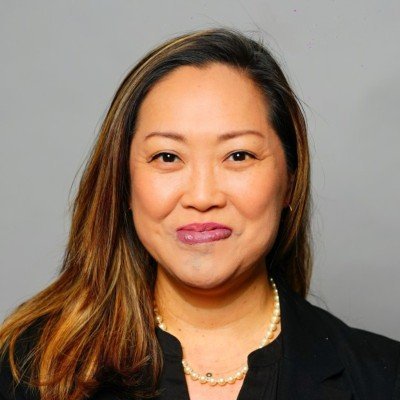
Kieran Mander
Rate A Recruiter
“I don't think there's ever a place where AI will replace people.”
Kieran Mander has been named to the Talent 100, Class of 2026, the annual award recognizing up to 100 leaders in each category of talent acquisition. Honorees are nominated by peers or found by committees that look for excellent work wherever it happens, then chosen for the depth of their craft and their impact on hiring. This is Kieran's story.
Kieran Mander's journey into talent acquisition began at a supermarket checkout counter, a humble start that would lead to transforming recruitment processes for hundreds of thousands of applicants. He started at Tesco, one of the UK's largest retailers, working the checkout during his university and college days to pay for his education, and that early experience earned him a spot on the company's graduate program.
The program rotated him through every HR specialism Tesco offered: employee relations, pay and benefits, talent development, and eventually talent acquisition. It was in TA that he found his calling, and the company wasted little time putting that instinct to the test. The brief was to standardize recruitment processes across an organization fielding roughly 208,000 applications per year, a volume that had no standard way of being handled at all. Working from a UK-centric perspective, he built the systems that turned that chaos into order.
After 15 years with Tesco he moved into HR generalist roles across different businesses, but recruitment remained his throughline. "Usually when you go into an organization, one of the key things you look at is the talent," he explains. Sometimes that means building talent and bringing in new employees; other times it means restructuring and determining what the organization truly needs.
Early Adoption and Ethical AI
Mander describes himself as an early adopter when it comes to technology, and the record supports it: he was using AI for presentations and suggestions long before it became mainstream in HR circles. More recently he switched from ChatGPT to Claude, citing it as a more ethical and efficient tool.
His involvement extends well beyond personal use. He has helped shape conversations at the CIPD about how HR professionals should approach AI, and in those discussions governance is paramount. "There's definitely a piece for HR and recruitment in general about how we use it from a governance point of view," he says. In practice, that means holding AI providers accountable for how they process data and build algorithms. It means ensuring bias isn't baked into systems, or, if it is, understanding the rationale behind it.
On one point he is unequivocal: "I don't think there's ever a place where it will replace people." What it can do is make people more efficient.
Practical Applications
Meeting notes are one simple example of AI's utility, automatically summarizing conversations that would otherwise require manual documentation. Further up the value chain, he is particularly enthusiastic about Sapia.io, a tool designed for mass recruitment screening. The platform adjusts its speech dialogue based on candidate demographics, changing how it communicates based on age or ethnic profile. It remains in testing phase but is already being used by multiple providers, and what excites him most is that companies are co-creating these tools, ensuring they're built with real-world input.
The contrast with poorly implemented AI is stark. He points to the Workday lawsuit in the US, where algorithms allegedly discriminated against certain groups, a cautionary tale about what happens when governance fails.
Three Pillars of AI Use
In his day-to-day work, Mander uses AI across three dimensions. First, he turns to Claude for advice and support on immediate challenges. Second, he leverages it to handle administrative tasks, freeing up time for more strategic work. Third, and perhaps most importantly, he focuses on governance, ensuring AI is used appropriately across the organizations he supports.
That balanced approach reflects his broader philosophy: technology should enhance human capability, not replace human judgment, and it should be deployed thoughtfully, with clear guidelines and accountability. His career arc, from checkout clerk to HR leader shaping the conversation around AI in talent acquisition, demonstrates how far intentionality and adaptability can take someone.
He didn't stumble into recruiting by accident. He was given an opportunity to solve a massive operational challenge and seized it. Now he is applying that same problem-solving mindset to one of the most pressing questions in modern HR: how to harness artificial intelligence without losing the human element that makes great recruiting possible.
The Talent 100 exists to celebrate the people shaping the future of how the world hires, and few embody that better than Kieran. We are honored to welcome Kieran Mander to the Talent 100, Class of 2026, and grateful for the experience, perspective, and craft they bring to this community. Congratulations, Kieran. Welcome to the Talent 100.
About the Talent 100
The Talent 100 is an annual list spotlighting the leaders who push HR and talent acquisition forward, organized by Noon AI. Honorees are selected through peer nominations and independent selection committees. Selection is entirely merit-based, with no fees or pay-to-play requirements.