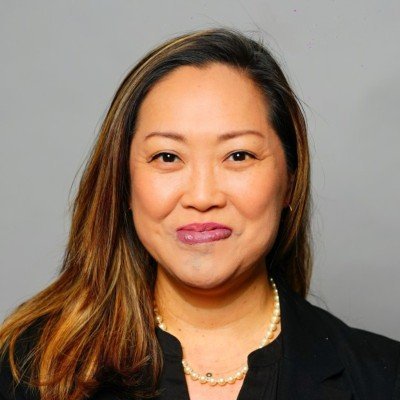
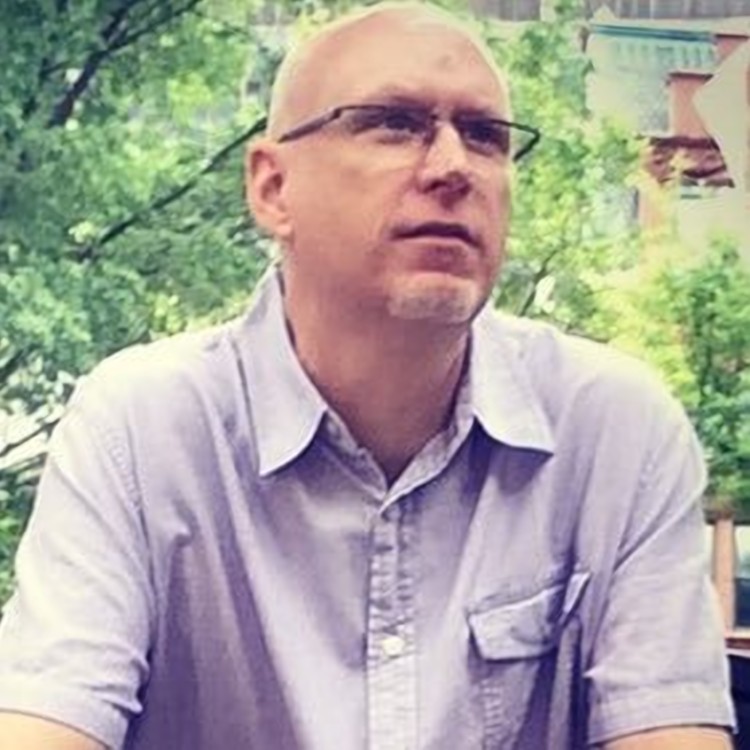
Colin Minto
JobSync
“Every single person's got a voice, and every single person's voice is of equal importance.”
Colin Minto has been named to the Talent 100, Class of 2026, the annual award recognizing up to 100 leaders in each category of talent acquisition. Honorees are nominated by peers or found by committees that look for excellent work wherever it happens, then chosen for the depth of their craft and their impact on hiring. This is Colin's story.
At 21, Colin Minto walked into an interview hoping to be put forward for a sales role elsewhere inside the Securicor group. He never made it to that second interview. The recruiters across the table stopped the process and hired him themselves, handing him a salary, a car and a mobile phone to go and sell recruitment solutions. He has not stopped since.
Now 53, Minto has spent more than three decades in and around hiring, including 16 plus years as an in-house talent acquisition leader at some of the largest employers in the world. Today he sits on the vendor side at JobSync, where the pitch is unusually credible: he is a global head of TA talking to global heads of TA. "I've done the job, or their job, for the last 16 plus years," he says. "I've got all the scars and all the war stories."
Telesales, Windows and Kitchens, and a Career That Compounded
Minto came out of college, not university, with a couple of A-levels and a working knowledge of the telephone. While studying he sold windows and kitchens over the phone. His first proper job was telesales for the security solutions business Securicor, where he was promoted into marketing for one of its main service companies, Securicor Guarding. Wanting to get back into sales, he applied for an internal move, and instead landed at Securicor Recruitment Services, the group's recruitment business.
When Randstad acquired the business, Minto transferred with it, a decision he frames not as career strategy but as an obligation. He went, in his words, to be loyal to his customers. From there he moved into digital recruiting, then crossed the fence to the client side with Group 4 Securicor, G4S, where he spent six years as global head of talent acquisition, employer brand and HR technology. That role set the shape of everything that followed. He went on to hold roles at HSBC and JLL, served as EMEA lead for talent acquisition and employer brand at Marriott, and delivered contract work across other organisations.
The move to JobSync completes a loop that began in that Securicor interview room: agency, digital, in-house global leadership, and now technology built for the people whose job he used to hold.
AI, and Keeping an Eye on What Gets You Sacked
Minto watched the generative AI boom arrive as what he calls a Klondike rush: everyone asking at once how to use it, how to embed it, how to drive efficiencies with it. The pressure behind that rush is familiar to him. Businesses are asking TA leaders to do more for less, and the answer they reach for is automation and innovation.
What surprised him was the framing. AI, in his view, is not new. He was playing with parsing and matching technology in the early 2000s, technically machine learning, part of a 25 to 30 year arc of development that suddenly became a marketing conversation. That history does not make him a sceptic. He uses a number of GPTs to be as efficient as he can, and calls this arguably the biggest shift in any form of technology he has seen in his entire working life.
It does, however, make him unusually alert to the downstream. "One of the things that I learned myself was to keep an eye on the things that are going to get you sacked," he says. So he watches legislation. He watches risk. He is already seeing organisations that sprinted into adoption now sitting down with data privacy, data security and internal counsel, asking what the exposure actually is, while courts examine whether AI making decisions on behalf of humans, or feeding humans the majority of the information that shapes a decision, can be discriminatory against particular groups.
Minto is open about where part of that vigilance comes from. He lives with OCD and anxiety disorder, now completely managed and controlled, and credits the condition with giving him a solutions brain and an unusually wide field of vision on risk. It is a quality he has turned into professional value rather than something to be quiet about.
His conclusion is a prediction as much as a warning. Ethical and fair AI is the way forward, and the winners will be the producers who can prove it with good systems, good processes and good governance, supporting clients without discrimination or compromise on humans. "Those that can prove it," he says, "are the ones that will prevail and survive."
Solving for Tomorrow
Asked what he would tell talent leaders, existing and developing, Minto's answer is two words first: be curious. Then comes the practical instruction. Understand the trajectory and direction of the organisation. Where will it be in five, ten, fifteen, twenty, twenty five years? Current problems matter, but as he puts it, the smart people are solving for the future, and the most successful people he has ever met keep an eye on what is happening downstream.
That means climbing out of the weeds. Leaders still have to roll their sleeves up, he acknowledges, but leaders are leaders because they solve for now and for tomorrow at the same time, keeping abreast of innovation and tracking where the organisation, the world and the technology are all heading.
The second half of his advice is about people, and he delivers it without hedging. This is a people game. Being human, compassionate, open, supportive and respectful, and letting people express themselves and be themselves, is how the best teams get built. He is a vocal advocate for diversity in the teams he runs and the organisations he joins, on the straightforward grounds that the best solutions emerge from difference of view, opinion and background. And he offers a release valve to anyone leading under pressure: "You don't have to know everything to be the best leader. You just need to surround yourself with people that know everything and have the ability to pull that together and leverage it and ultimately deliver it."
He practises the talent-spotting he preaches, keeping an eye on emerging leaders doing what he calls really quite cool stuff across the industry. For a man who was pulled out of one career and into another by someone who saw something in him at 21, the instinct to point at the next generation is not incidental. It is the whole method.
The Talent 100 exists to celebrate the people shaping the future of how the world hires, and few embody that better than Colin. We are honored to welcome Colin Minto to the Talent 100, Class of 2026, and grateful for the experience, perspective, and craft they bring to this community. Congratulations, Colin. Welcome to the Talent 100.
About the Talent 100
The Talent 100 is an annual list spotlighting the leaders who push HR and talent acquisition forward, organized by Noon AI. Honorees are selected through peer nominations and independent selection committees. Selection is entirely merit-based, with no fees or pay-to-play requirements.