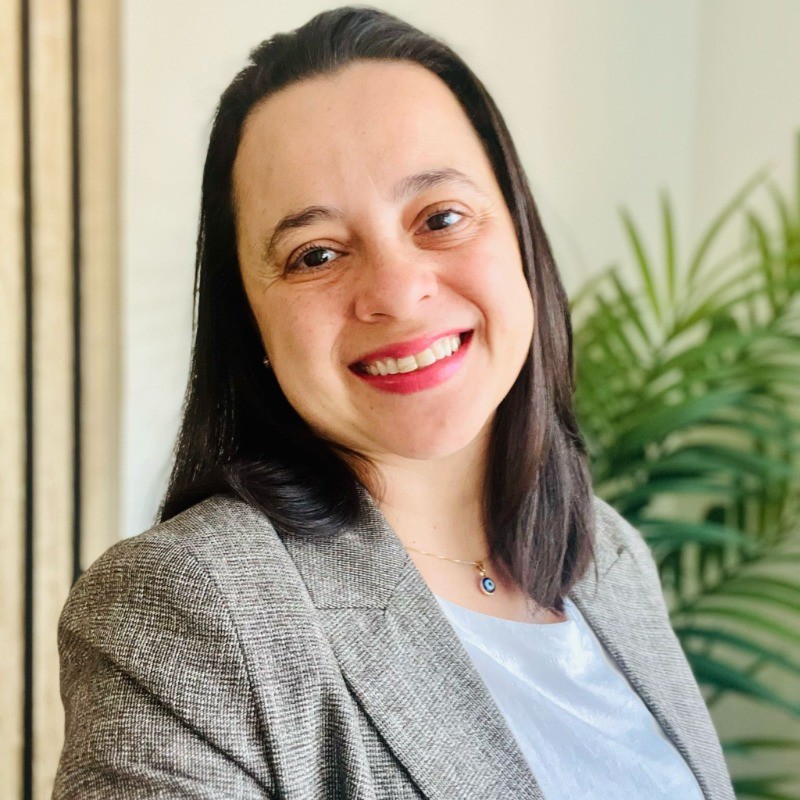
Julie Zimmerman
Higher Education and EdTech Advisory
“Human resources is the first word that is human.”
Julie Zimmerman has been named to the Talent 100, Class of 2026, the annual award recognizing up to 100 leaders in each category of talent acquisition. Honorees are nominated by peers or found by committees that look for excellent work wherever it happens, then chosen for the depth of their craft and their impact on hiring. This is Julie's story.
Julie Zimmerman's career began not with requisitions and applicant tracking systems but with admissions files: persuading students to choose a college, and building graduate programs worth choosing. It was recruiting by another name, and it taught her something most talent professionals learn late, if at all, that the work of matching a person to an opportunity is the same discipline whether the outcome is an offer letter or an acceptance letter.
Today she advises across higher education and EdTech, drawing on a background that spans university admissions, federal partnerships, startup program launches, and corporate talent management. It is an unusually wide aperture for someone in the people space, and it shows in how she thinks: less about filling seats, more about how classes, cohorts, and workforces get built.
A Non-Traditional Path Into Talent
Zimmerman is candid that her pathway looks different from the typical HR resume. She started in the higher education sector, working in admissions and recruiting students into undergraduate and graduate programs. From there she moved into partnerships, working directly with the US government, including Congress and the State Department, an experience that sharpened her instincts for stakeholder management and long-cycle relationship building.
Program launches followed, both inside startups and at larger companies. Then came the pivot that formally moved her into HR: she applied for a role in early career recruitment and talent management at PAR Technology. That job opened the door to human resources as a profession, though as she points out, she had been recruiting all along. "I've always done recruiting in other ways, just not for a company," she says, pointing to her work in the school environment and around fellowships.
The result is a practitioner who understands recruitment, admissions, and partnerships as variations on a single theme. Zimmerman describes the value plainly: understanding the progression of talent, and recognizing how much these disciplines share when the goal is building either an employee base or a student class.
On AI: Useful, But Not Unsupervised
Zimmerman's read on AI is refreshingly unsentimental in both directions. On the upside, she sees real value for recruiters and talent professionals: the ability to move through far more applications quickly, and to surface signals on resumes that human reviewers have historically missed, including where a candidate is likely to succeed.
She is equally clear about the tradeoff. "On the flip side of it, it is relying on a machine," she notes. AI works from patterns and learns from a given model, which means it misses things too, just different things than a human reviewer would. The same duality plays out on the candidate side. Applicants can now paste a job description into ChatGPT to understand what a role is genuinely asking for and decide whether it fits before applying, which is a net good. They can also use AI to modify resumes in ways that drift from what they actually did.
Her conclusion is about craft, not tooling. The value, she argues, comes from individuals learning to use AI effectively and efficiently for their own role and their own needs, rather than simply accepting whatever capability arrives prepackaged inside a platform like Greenhouse. Fluency beats defaults.
Advice for the Next Phase
Zimmerman's counsel to fellow talent leaders is short and pointed: keep learning. AI, she observes, is moving faster than any technology that has ever come to market, which makes continuous exploration a baseline requirement rather than a professional nicety. HR professionals need to keep testing what is out there.
The second half of her advice is the anchor. "Human resources is the first word that is human," she says. AI can assist the work and even absorb parts of it, and leaders can reasonably lean on that. What cannot be delegated is engagement. She urges the field to stay hyper-focused on the people side of people operations, arguing that the engagement element is precisely what gives the profession its value and its future.
It is a fitting philosophy from someone who has spent a career on both sides of the selection table, in admissions offices, government partnerships, startup launches, and corporate talent functions. Whatever the setting, Zimmerman has been doing the same thing: finding the potential others overlook, and making sure a person, not just a process, is on the other end of the decision.
The Talent 100 exists to celebrate the people shaping the future of how the world hires, and few embody that better than Julie. We are honored to welcome Julie Zimmerman to the Talent 100, Class of 2026, and grateful for the experience, perspective, and craft they bring to this community. Congratulations, Julie. Welcome to the Talent 100.
About the Talent 100
The Talent 100 is an annual list spotlighting the leaders who push HR and talent acquisition forward, organized by Noon AI. Honorees are selected through peer nominations and independent selection committees. Selection is entirely merit-based, with no fees or pay-to-play requirements.