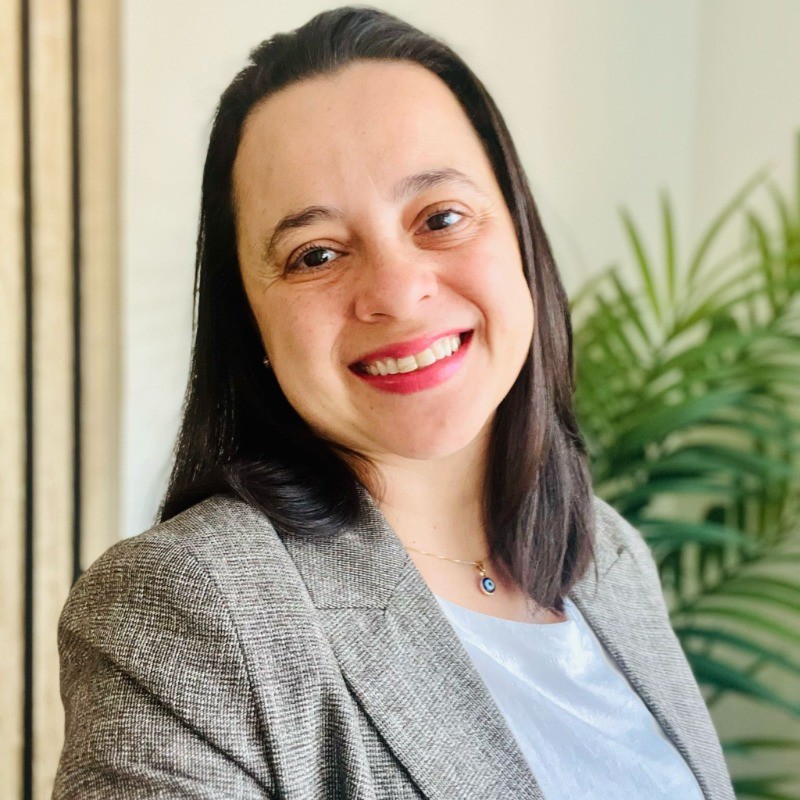
Michael Brown
Counsel Health
“The future of this profession belongs to the people who build, not the people who wait for the building to come to them.”
Michael Brown has been named to the Talent 100, Class of 2026, the annual award recognizing up to 100 leaders in each category of talent acquisition. Honorees are nominated by peers or found by committees that look for excellent work wherever it happens, then chosen for the depth of their craft and their impact on hiring. This is Michael's story.
When Michael Brown talks about scale, he is not speaking theoretically. At Toast he helped grow a company from roughly 1,000 people to 3,500, the kind of expansion that compresses a decade of recruiting lessons into a couple of years. Twenty plus years into a career as a talent acquisition practitioner, he has built recruiting functions from scratch more than once, and today advises multiple companies as a consultant, including Counsel Health.
That kind of growth, he says, "teaches you to be resourceful, and resourceful very fast." It is a phrase that doubles as a summary of his professional temperament. Brown is less interested in the theater of recruiting than in the machinery of it: the funnels, the signals, the headcount math, the systems that let a small team behave like a large one.
The Job He Almost Never Took
"Nobody ever says they went to college to become a recruiter," Brown observes, and his own entry into the field proves the point. Fresh out of school, he lined up what he believed was a marketing interview. It turned out to be a recruiting company, and a bit of a bait and switch. He got the offer, went home, talked it over with his parents, and ultimately turned it down.
What stuck was the curiosity. The episode sent him looking into what recruiting actually was, and the answer was interesting enough to build a career on. Two decades later, that career includes standing up talent functions where none existed, scaling teams through hypergrowth, and now running a consulting practice where he juggles several clients at once, moving between contexts that each demand a different version of the same craft.
AI as Decision Support
Brown's read on the past year is clear eyed about the friction. At the macro level, candidates are using AI to shape and inflate their experiences, and recruiting teams are absorbing the consequences: distorted inbound flow, fake candidates, and a general erosion of trust. "There's a strife that's happening between the two," he says.
He is still, on balance, an optimist. AI, in his framing, lets recruiting teams automate and augment the mundane work that used to consume the week: reporting, funnel analysis, candidate prep, interview kits, feedback analysis. What it produces is not just saved hours but better inputs. He calls it decision support. "They're signals," he says. "They give you greater signals." The real acceleration, in his view, is that recruiters can now operate with far more signal in the work they do than the profession has ever had before.
The second half of the equation is what recruiters do with the time they reclaim. Brown pushes for reinvestment rather than idle capacity: going deeper on data, sharpening stakeholder management skills, or taking on a passion project that moves the business forward, whether that means building something internal or vibe coding a website. The skill ceiling, he argues, has risen, and the reclaimed hours are the raw material for reaching it.
The Builders Will Inherit It
Brown's advice for talent leaders heading further into 2026 is compressed into a single conviction: "The future of this profession belongs to the people who build, and not necessarily for the people that are going to wait for the building to come to them." It is a call to agency in a moment when many recruiting teams are waiting to be told what the new rules are.
Asked which peers deserve a wider spotlight, Brown answered without hedging. He named leaders who embody hunger for thoughtful change, empathy in leadership, and genuine recruiting skill, the player coaches everybody wants. He pointed to practitioners who have put expertise on the line to share headcount planning knowledge with the TA community. And he highlighted VP-level leaders doing exceptional work: thoughtful, direct, empathetic, able to lead teams through constant change, and doing it with grace.
The pattern in his choices is telling. Brown values people who build in public, who explain complexity instead of guarding it, and who carry teams through turbulence without losing their humanity. It is the same standard he has spent twenty years holding himself to.
The Talent 100 exists to celebrate the people shaping the future of how the world hires, and few embody that better than Michael. We are honored to welcome Michael Brown to the Talent 100, Class of 2026, and grateful for the experience, perspective, and craft they bring to this community. Congratulations, Michael. Welcome to the Talent 100.
About the Talent 100
The Talent 100 is an annual list spotlighting the leaders who push HR and talent acquisition forward, organized by Noon AI. Honorees are selected through peer nominations and independent selection committees. Selection is entirely merit-based, with no fees or pay-to-play requirements.