Thais Cacador
Talent Centric
“Keep improving, but never lose the focus on people.”
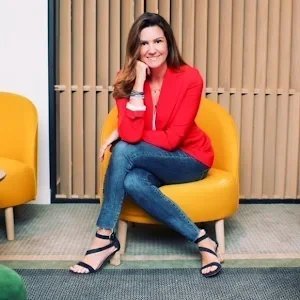
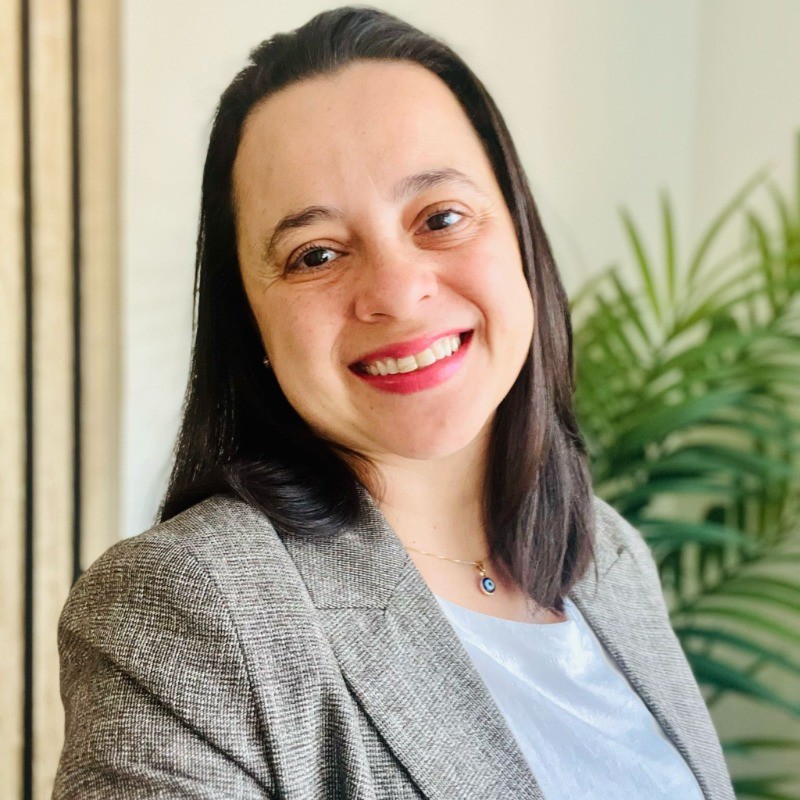
Thais Cacador has been named to the Talent 100, Class of 2026, the annual award recognizing up to 100 leaders in each category of talent acquisition. Honorees are nominated by peers or found by committees that look for excellent work wherever it happens, then chosen for the depth of their craft and their impact on hiring. This is Thais's story.
Twice now, across the last two editions of London Job Show, Thais Cacador has stood in front of a room of jobseekers and told them the technology reading their CV is not the enemy. Hiding from it, she argues, costs far more than facing it.
That message cuts against the mood of the UK market, and it is the organizing idea behind Talent Centric, the firm she founded and runs as recruitment director. Thais pairs a real appetite for automation with a flat refusal to let it hollow out the human part of hiring, a balance that sounds simple in a keynote and is considerably harder to hold in daily practice, where volume metrics reward speed and candidates remember only how they were treated.
She works both sides of that equation at once. She sources, she screens, she coaches people through decisions they have not yet fully articulated to themselves, and she does it for professionals who, by her account, are asking harder questions about their careers than the market tends to answer cleanly.
A Career Assembled From Unlikely Places
Her early working life reads like a list of businesses with nothing in common. A car wash. A pet shop. Properties. Thais describes the mix fondly, and she is quick to name the thread running through all of it, because it is the same thread running through her work now. Every one of those jobs was, at bottom, about people: reading them, understanding what they actually needed, and figuring out how to make them happy.
Recruitment, when it arrived, was less a pivot than a natural consequence. The industry gave her a formal structure for something she had been doing informally for years, and it added a dimension she found even more interesting than placement itself: careers. People come to her knowing something has to change without knowing what. "Sometimes they don't even know exactly what they're looking for," she says. The work is translating that fog into a plan, then walking the recruitment process alongside them rather than in front of them.
That combination, industry-hopping curiosity plus a fixation on human need, is what she credits for the professional she became. Different sectors, one constant subject.
An Education Delivered by International Professionals
Ask Thais who shaped her and she does not reach for a single boss or a corner-office mentor. She reaches instead for the sheer number of international professionals whose journeys she has been part of: people working across borders, joining multinationals and startups scattered around the globe, each carrying a different set of assumptions about what a career is supposed to look like.
Being trusted with those stories changed more than her technique. It rewired her beliefs and her whole recruitment strategy, and it altered how she thinks about her own plans. Exposure at that scale, she says, teaches respect and it teaches empathy, and both are operating requirements in a job where you are handling the most consequential decisions in someone else's professional life.
One relationship illustrates the pattern. Luca was a client of hers back when she worked at a recruitment agency. He moved on, she moved on, and they kept tracking each other's paths anyway, several years of it by now. She has watched his progress with genuine pleasure and notes the quality she recognises as kin to her own: the same care for people and for process. He recently began a role at OpenAI. In an industry that treats contacts as currency, Thais treats them as relationships that outlast the transaction that created them, and she is unhesitating in recommending him.
Enthusiast and Realist on Artificial Intelligence
Thais has been passionate about technology since she was young, and AI sits comfortably inside that enthusiasm. But she is not selling anyone a frictionless future. She acknowledges the fear openly, particularly given conditions in the UK job market, and she does not claim immunity from it herself. The tools are growing quickly. They are advancing quickly. Pretending otherwise helps nobody.
Her argument is about direction rather than comfort. The further you keep your distance, the wider the gap grows between you and your own future, whether you are a candidate building a CV, a hiring manager running a process, or a business owner depending on both to work. That is the substance of what she brought to the London Job Show stage across two editions: practical guidance on how to get responses, and how to shape a CV and a career around AI technologies rather than in denial of them.
In her own operation she has chosen adoption on her terms, bringing tools in to lift productivity and improve the experience for everyone doing business with her. Her platform is Loxo, whose sourcing integration she rates highly and whose recently released longlisting and shortlisting functions she has been putting to work. Screening, she observes, is where the interesting frontier now sits. She is equally clear that her answer need not be anyone else's. Companies have different priorities and will apply the technology differently. The non-negotiable is learning about it, because, as she puts it, AI is not going anywhere.
What She Would Tell Talent Leaders in 2027
Her advice to peers is short and pointed, and it lands harder because it comes from someone who genuinely likes the tools. Applying technology has become easy, and the cost of doing so keeps falling. That is precisely the danger. Automate without watching your connection, your respect, and your relationships with people, and you will certainly increase volume while candidate experience and business results slide downhill fast.
So the instruction is to do both, permanently, without pretending there is no tension between them. Keep improving. Keep the focus on people. Thais has spent a career proving those two things are not in competition, from a pet shop counter to a London stage, and she is betting the next stretch of the industry on the same premise.
The Talent 100 exists to celebrate the people shaping the future of how the world hires, and few embody that better than Thais. We are honored to welcome Thais Cacador to the Talent 100, Class of 2026, and grateful for the experience, perspective, and craft they bring to this community. Congratulations, Thais. Welcome to the Talent 100.
About the Talent 100
The Talent 100 is an annual list spotlighting the leaders who push HR and talent acquisition forward, organized by Noon AI. Honorees are selected through peer nominations and independent selection committees. Selection is entirely merit-based, with no fees or pay-to-play requirements.