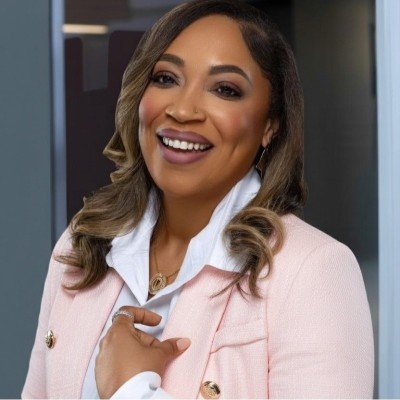
Caitlin Cooke
People Culture Talent
“The more value you can add and bring to other people's lives, the more that it will bring back to you in the future.”
Caitlin Cooke has been named to the Talent 100, Class of 2026, the annual award recognizing up to 100 leaders in each category of talent acquisition. Honorees are nominated by peers or found by committees that look for excellent work wherever it happens, then chosen for the depth of their craft and their impact on hiring. This is Caitlin's story.
Before Caitlin Cooke ever built a talent function, she was a boat captain, piloting Walt Disney World's friendship boats across Epcot as part of a college internship program. The recruiting came next: Disney ran a college recruiting program, she signed up to represent it on her own campus, and that was the window. "I knew that that was kind of what I wanted to pursue in the long term," she says. Nearly two decades later, she was the first Head of Talent at GitHub, an early-stage builder at ID.me and Google, and advised hundreds of founders at Andreessen Horowitz, work she continues today through People Culture Talent.
A Career That Began in a Closed Market
Caitlin graduated into the 2008 crash, a moment when, as she puts it plainly, nobody was recruiting. So she took the door that was open. She found a job in IT and kept recruiting on the side for the company she was with, treating the work as a craft she intended to keep even when the market would not pay for it. Eventually that side work became a full-time role, and the trajectory she had wanted since her campus days finally lined up.
What followed was a career built almost entirely at the front edge of things: early-stage work at ID.me and Google, then GitHub, and beyond. Caitlin has repeatedly walked into companies before the systems existed and built the function that would carry them, which is a very different skill from operating a machine someone else designed.
From Reactive to Proactive
Caitlin's central piece of advice is also the main thread of her own career. Talent, she says, has historically been a reactive function: handed a directive, told to execute, discouraged from asking questions. The single biggest shift she made was moving out of needs-based recruiting and into shaping what the company and its teams would need, running gap analysis against where the business was actually heading, and building capacity plans from there.
The new tooling, in her view, makes that shift more achievable than ever. Recruiters sit closer to the market than almost anyone else in the building, and their stakeholders, hiring managers and founders simply do not have the time or space to absorb what a talent leader absorbs every day through their conversations, their tools and the market itself. Collect that data, tell the story with it, and the job description changes. "The more you can get into that framing and that mindset of being a strategic talent knowledge holder and sharer, the better off you're going to be in your career," she says, adding that it also makes the work, the team and the life around it considerably easier.
The Community Flywheel
The counterweight to all that automation, Caitlin argues, is human connection, which she believes is more powerful now than ever precisely because of how much noise exists. In her most recent role at Andreessen Horowitz she built out a talent and community flywheel designed to connect people to opportunities and to each other, rather than routing everything through her. Her reasoning is refreshingly unsentimental: "I'm only one person. I can only scale so much."
She learned the same lesson accidentally on LinkedIn, where she now has a substantial following that she never set out to build. She simply began posting things she thought would resonate and opportunities she thought would help. Founders started telling her they had hired people off her lists. Candidates started thanking her for jobs they had found through her. A personal brand formed around the habit, and it is now what she is best known for. Her takeaway extends well past recruiting, to anyone in any career: think a few steps above your own purview and build community layers for other people, because generosity compounds in ways that are impossible to forecast.
The Talent 100 exists to celebrate the people shaping the future of how the world hires, and few embody that better than Caitlin. We are honored to welcome Caitlin Cooke to the Talent 100, Class of 2026, and grateful for the experience, perspective, and craft they bring to this community. Congratulations, Caitlin. Welcome to the Talent 100.
About the Talent 100
The Talent 100 is an annual list spotlighting the leaders who push HR and talent acquisition forward, organized by Noon AI. Honorees are selected through peer nominations and independent selection committees. Selection is entirely merit-based, with no fees or pay-to-play requirements.