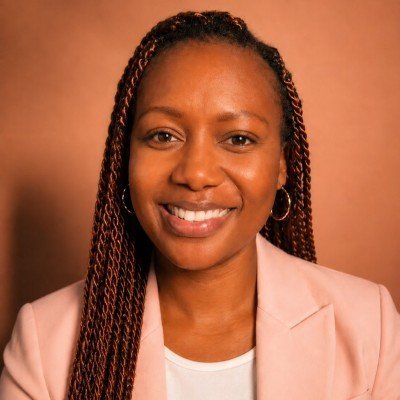
Jocelyn S. Lai
Duolingo
“We finally have permission to reimagine.”
Jocelyn S. Lai has been named to the Talent 100, Class of 2026, the annual award recognizing up to 100 leaders in each category of talent acquisition. Honorees are nominated by peers or found by committees that look for excellent work wherever it happens, then chosen for the depth of their craft and their impact on hiring. This is Jocelyn's story.
About 100 employees, no talent acquisition function of any kind, and an outsized ambition to go public: that was Duolingo when Jocelyn S. Lai arrived nearly eight years ago. Her remit was simple to state and enormous to execute, which was to build a talent acquisition team from the ground up. Today Duolingo is a profitable public company, the team she built runs in maintenance mode, and Lai has moved on to something that did not exist before she made the case for it.
That new chapter, which she began two years ago, is Talent Brand. The question it answers is deceptively large: how do you make an employer known and loved by top talent all over the world? For Lai, the answer was never a purely recruiting answer. It was a marketing answer, and she had been building toward it, without quite knowing it, since the start of her career.
The Marketer Who Found Recruiting
There is no bachelor of science in talent acquisition, as Lai likes to point out, which is why almost everyone in the field arrives sideways. She studied advertising and marketing and started her career on the business side, coming of age professionally during the first e-commerce boom. At JCPenney, JCP.com was her property, and digital production was brand new territory. Banner ads, she remembers, were hot.
Her first real foray into recruitment came directly out of that work. Someone had to find people who could actually build these new digital assets, and Lai could find them because she had done the digital production herself. She approached hiring through a business lens from day one, and she liked it enough to keep circling back: into recruitment, out to business development for a stretch, then back into recruitment for good.
Along the way she reached a conclusion that has organized her entire career. "Recruitment is actually the exact same principles as marketing," she says, and she describes that lens as the secret sauce behind everything she has built since. Looking back now, the arc reads as almost inevitable. Marketing, then recruiting, and now Talent Brand, which is the two disciplines fused into a single job.
Talent Brand, Run Like a Marketing Org
Plenty of companies talk about employer brand. Fewer measure it. Lai runs Talent Brand with the machinery of a marketing function: developing the right content to build the right awareness with the right key messages, then holding all of it accountable to classic marketing funnel metrics with real attribution behind them.
Crucially, she refuses to treat talent as a single undifferentiated audience. As she puts it, the message is very different between engineers, product designers and product managers, and each one has to be built deliberately. That segmentation discipline is borrowed straight from consumer marketing, and it is what turns employer reputation into something a leader can actually plan, run and report on.
The context of her arrival makes the pivot sharper. When she built Duolingo's talent acquisition team, Wall Street rewarded headcount growth, and the mandate was to hire as many people as possible. That era ended. Rather than defend a function optimized for a market that no longer existed, Lai started a brand new one, and as she stood up Talent Brand, the company also found someone to take on her former role.
The End of the Recruiting Armies
Ask Lai how AI has changed recruiting and she starts in 2012, when the giants of that moment were pulling talent out of media companies and ad agencies at scale and recruiting departments swelled into armies, thousands of people deep inside a single TA department. That world is gone. The pandemic was one factor. AI, she believes, is the reason it is not coming back.
Her case rests less on cost than on morale. AI absorbs the mundane, repetitive tasks that she considers genuinely corrosive to a team. She points to a complaint that predated her arrival at Duolingo and continued after it: coordinators whose entire job was scheduling would come to her about a year in and say, plainly, that they were bored and tired of scheduling. Now there are tools that handle that layer, which frees those same people to build other skill sets and grow into recruiters, sourcers or leaders. "We're not ever, I believe, going to go back to the era of recruiting armies," she says. "Because we have great tools at our fingertips."
The opportunity, in her reading, is one the profession has been requesting at HR conferences for years, in the perennial complaints about wanting a seat at the table and about a function that never seems to innovate. "We finally have permission to reimagine," she says. But permission is not the same as courage. Change is hard, and Lai believes the real work sits with leaders willing to say they believe in a change, disrupt a few things, and bring their teams along so that what is coming feels exciting rather than frightening. That, she says, is the central leadership challenge of this moment: making sure AI is understood as something that enables people rather than something that threatens them.
Gratitude for the Highs and the Lows
Asked to name the people who shaped her most, Lai pushes back on the premise. Every person she has worked with has made a mark, she says, including the ones with whom there were challenges to work through. Her gratitude runs at a different altitude, organized around moments rather than a shortlist of names.
The good stretches taught her what it feels like when everything is in sync. The hard ones, the pandemic chief among them, taught her two things at once. Challenge is where she discovered new skill sets she did not know she had, and it is where her values were tested. "In the high moments, that's when we celebrate and are reminded of what our values are," she says. When a leader carries a team through the low ones with those values intact, she argues, the values come out stronger than they went in. Her word for what that produces is unshakable: an unshakable team, an unshakable culture. It is why she describes herself as grateful for the lows as much as the highs, confident that each one held a lesson pushing her toward who she was meant to become.
The Talent 100 exists to celebrate the people shaping the future of how the world hires, and few embody that better than Jocelyn. We are honored to welcome Jocelyn S. Lai to the Talent 100, Class of 2026, and grateful for the experience, perspective, and craft they bring to this community. Congratulations, Jocelyn. Welcome to the Talent 100.
About the Talent 100
The Talent 100 is an annual list spotlighting the leaders who push HR and talent acquisition forward, organized by Noon AI. Honorees are selected through peer nominations and independent selection committees. Selection is entirely merit-based, with no fees or pay-to-play requirements.