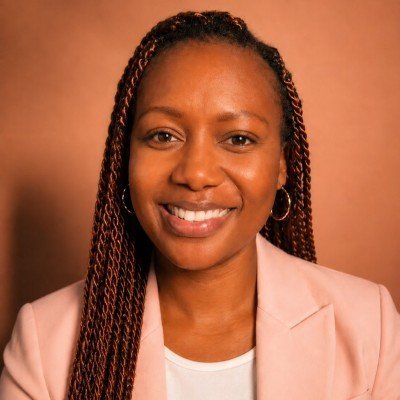
Charlie Lavender
Zinc
“You have to try to be kind to as many people as you speak to.”
Charlie Lavender has been named to the Talent 100, Class of 2026, the annual award recognizing up to 100 leaders in each category of talent acquisition. Honorees are nominated by peers or found by committees that look for excellent work wherever it happens, then chosen for the depth of their craft and their impact on hiring. This is Charlie's story.
Charlie Lavender grew up in a military family, and that background sharpened one observation on the defense hiring desk: too few veterans were being hired into defense companies. Charlie set out to change that, working with charitable organizations that help veterans and their families find work after conflict or other hardship tied to their service.
That instinct for spotting who is missing from a shortlist, and then doing the work to fix it, runs through a career that has moved from high-volume agency recruitment to diversity-focused consultancy. The newest chapter began only weeks earlier: Charlie had joined Zinc, an AI company, as a Talent Partner, trading the agency and consultancy side for an internal talent seat.
It is also a front-row seat to the debate over what AI is doing to hiring. Charlie's view is measured. The technology creates real headaches for recruiters and real gains for engineers, and it raises far bigger questions for the world than for any talent team. Through all of it, one conviction holds: candidates deserve kindness, context and an honest answer.
From Contractor Desks to Defense Hiring
The grounding came in agency recruitment at La Fosse, a UK recruitment and consultancy business. Charlie calls it recruitment 101: placing contractors, largely in software engineering. It was a hands-on education in the mechanics of the trade and the foundation for what followed.
From there Charlie moved into the consultancy side of the business, focusing on people working in the defense and public sectors. Alongside that work sat the La Fosse Academy, a graduate and junior programme that takes diverse and underrepresented people from different backgrounds, embeds them within companies for two years and then makes them permanent. Defense is not known as the most diverse industry, yet the academy had built very good statistics there. Charlie went looking for ways to push the numbers further.
One gap stood out: veterans. Partnering with charities that support veterans and their families gave the work a personal dimension as well as a professional one, and it anchored three years of consultancy work before the move to Zinc.
The Leaders Behind a People-First Approach
Three leaders shaped how Charlie works. The first is the head of the La Fosse Academy, who founded that part of the business from ground zero. Charlie counts her among the most empathetic and emotionally conscious people in the business, and that example of empathy shows up directly in how Charlie now talks about candidates.
The second is an engineering manager at Microsoft who helped Charlie understand the mental health challenges facing engineers inside fast, dynamically moving tech companies. The lesson was one of balance. Recruiting is about benefiting the company, but it is equally about making sure the people inside it are doing well, even somewhere as demanding as Microsoft.
The third is Charlie's current boss, an independent contractor running a private company who has recruited for Netflix, Amazon and a long list of major FTSE-listed organizations. They had worked together only briefly, yet the impression was immediate: Charlie calls him "the most unflappable individual I've ever met." That steadiness is a useful model in a field being reshaped by new technology.
A Clear-Eyed View of AI
The effects of AI on hiring show up daily, and many are unwelcome. Charlie sees perfectly written job descriptions matching the roles on offer. Some candidates set up bots to apply to the same role six different times every week. Algorithmic technical tests given to engineering candidates are being solved by AI in five minutes, and those candidates are then left wondering why they were rejected.
The upside is real too. Engineers can solve code far faster, and AI helps Charlie sift through applications quickly. But the balance of pros and cons, Charlie argues, will come down to how the technology is regulated and enforced, and its geopolitical consequences dwarf anything happening inside talent acquisition. "At the end of the day, we can probably solve the recruitment part," Charlie says. "It's the other parts that are a bit scarier."
In this view, the hiring problems AI creates are fixable. The larger questions about what the technology means for the planet are the ones that deserve serious concern.
Advice for the Year Ahead
Charlie's advice to fellow talent leaders starts with kindness. "You have to try to be kind to as many people as you speak to," Charlie says, because a CV reveals only so much. "It's very easy to look at a CV, but it's quite difficult to actually assess what someone's going through at that time." With the world feeling more chaotic, there is room for recruiters to be more empathetic and understanding, not less.
The second piece of advice is not to get overly frustrated by AI. Charlie points to the dotcom bubble: few people believed everything would end up on computers, then it did, and everyone adapted. Stressing too much about the technology helps no one.
The final point is practical. Recruiters should explain their decisions and give candidates a reason for a rejection, rather than sending blank, cold rejections to 300 people in 20 seconds. For someone who built a career on widening the door for overlooked candidates, a clear explanation is the least a rejected applicant should expect.
The Talent 100 exists to celebrate the people shaping the future of how the world hires, and few embody that better than Charlie. We are honored to welcome Charlie Lavender to the Talent 100, Class of 2026, and grateful for the experience, perspective, and craft they bring to this community. Congratulations, Charlie. Welcome to the Talent 100.
About the Talent 100
The Talent 100 is an annual list spotlighting the leaders who push HR and talent acquisition forward, organized by Noon AI. Honorees are selected through peer nominations and independent selection committees. Selection is entirely merit-based, with no fees or pay-to-play requirements.