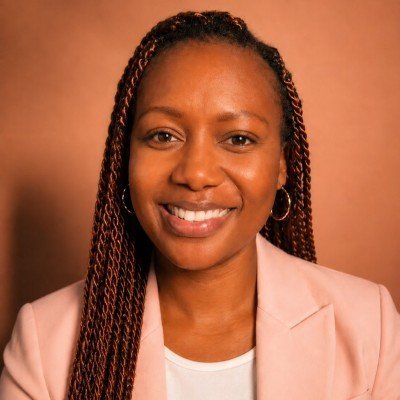
Carlos Lezama
Serval
“Recruiting used to be this high-touch, human-centered, relationship-based career, and with AI, I think that now will unlock our ability to do that.”
Carlos Lezama has been named to the Talent 100, Class of 2026, the annual award recognizing up to 100 leaders in each category of talent acquisition. Honorees are nominated by peers or found by committees that look for excellent work wherever it happens, then chosen for the depth of their craft and their impact on hiring. This is Carlos's story.
When Carlos Lezama joined Serval in January, the company had 30 people on its payroll. It now has more than 120. That kind of growth curve tends to break traditional recruiting functions, and Lezama's response was not to add headcount to absorb the strain but to redesign how the work happens: automate the administrative layer, then spend the reclaimed hours on the part of the job no software can do.
As Head of Talent at Serval, he is running the function at an early-stage company that is scaling fast, and he is candid that the pace would not have been possible under an older operating model. "We were only able to do that because of AI," he says, "and basically taking this approach of building this non-traditional" pipeline of candidates who already know the company before they ever need a job.
A Career He Chose on Purpose
Most people in talent acquisition describe arriving in the field by accident. Lezama knows he is the exception. "I actually looked at recruiting as a career," he says. "I think I might be an outlier there."
His original plan was child psychology. He wanted to work with kids, then concluded the path was more intense than the one he wanted and began looking for something that would keep him closer to the moving parts of a business. He took the question to a handful of mentors, including someone then working at LinkedIn, and the answer came back quickly: he could be very good at recruiting, and he might find it genuinely interesting. He did not take that on faith. He spent a month researching the profession before committing, then used the last two quarters of his college career to run a job search in the field. He landed at Oracle as a recruiting coordinator, the start of what he calls the most incredible journey he has taken.
The early years at Oracle and later at LinkedIn taught him what the job looked like before the current wave of tooling. "A lot of it was administrative," he says. Outbounding, chasing responses, following up, building a system and feeding it. The craft was real, but so was the overhead.
Running Talent the Way Sales Runs Sales
The organizing idea behind Lezama's work at Serval is that recruiting was always supposed to be a relationship business and that technology, used correctly, gives it back. He and his team have spent significant time automating away the administrative work that used to slow them down, standing up systems and operational improvements that now run quietly on the backend. What that buys is time, and time gets spent on the one-to-one connection.
The second shift is structural. Serval runs talent the way a sales organization runs pipeline and the way a marketing team runs demand. That means identifying the top ten candidates for a role that is coming up, then engineering reasons for those people to engage with the brand long before a requisition opens. Sometimes that is an invitation to a fjord event the company hosts in Sausalito. Sometimes it is poker. Sometimes it is an intimate dinner with Serval executives. The goal is that when a strong engineer eventually starts looking, Serval is already top of mind.
He is equally direct about the discipline the industry has let slip. "We have to bring back candidate experience," he says. Augmenting an interview process with AI is fine, in his view, as long as it is supplemented with connection. The bar he sets is high: make the experience so delightful that, regardless of the outcome, candidates recommend Serval to their peers and their network. Done consistently, he argues, that becomes a ripple effect and one of the largest untapped levers a growing company has for attracting talent.
Advice for 2026
Lezama's counsel to other talent leaders is forward-looking by design. Anticipate where technology will be able to unlock the talent organization's potential, he says, and ask where else the recruiting team can be augmented so that its people can get back to human connection. His framing is a sequence: read the needs of the business before they arrive, leverage technology to augment the team, then think about recruiting in a non-traditional way.
In a market where the gaps are eating at the talent space, he does not see that as one option among many. "I think that's the only way to stand out right now," he says. The recruiters who thrive will be the ones who use the machinery to buy back time, then spend it breaking down walls one conversation at a time.
The Talent 100 exists to celebrate the people shaping the future of how the world hires, and few embody that better than Carlos. We are honored to welcome Carlos Lezama to the Talent 100, Class of 2026, and grateful for the experience, perspective, and craft they bring to this community. Congratulations, Carlos. Welcome to the Talent 100.
About the Talent 100
The Talent 100 is an annual list spotlighting the leaders who push HR and talent acquisition forward, organized by Noon AI. Honorees are selected through peer nominations and independent selection committees. Selection is entirely merit-based, with no fees or pay-to-play requirements.