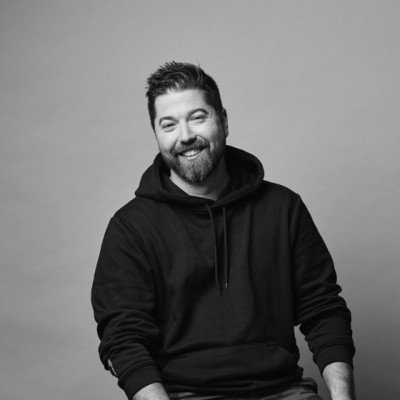
Cassie Chao Leemans
Craft Ventures
“No one's going to sell it better than you as a founder.”
Cassie Chao Leemans has been named to the Talent 100, Class of 2026, the annual award recognizing up to 100 leaders in each category of talent acquisition. Honorees are nominated by peers or found by committees that look for excellent work wherever it happens, then chosen for the depth of their craft and their impact on hiring. This is Cassie's story.
The talent function at Craft Ventures runs partly on software its own talent partner wrote. In five months of teaching herself to code, Cassie Chao Leemans has shipped a fully AI automated CRM, a set of custom dashboards, and a scheduling feature that loads every calendar invite with the full context of why a meeting is happening and who made the introduction. For years she assumed she needed an engineer to bring her ideas to life. She stopped waiting.
That instinct, to build the thing nobody else is going to build for you, runs through a career that has moved deliberately in one direction: earlier and earlier stage, smaller and smaller rooms, closer and closer to the moment when a company is still being invented.
From Hiring Interns to Hiring at 15,000
Her first internship was in New York, on the events team at the Advertising Research Foundation. She had gone in wanting events and marketing. The company's HRBP pulled her in to help hire the next class of interns instead, and that became her first exposure to interviewing and to opening a role. "It was just really exciting to know that you could be a decision maker and help the company find that next set of people to join," she says.
After a year abroad she came back to the United States still thinking her future was in marketing, and took an onsite agency recruiting role at Cisco. She was largely on her own there, working the phones and learning the ropes without anyone teaching her. So she did the most recruiter thing possible: she sourced herself into her next job. She wrote to recruiting leaders at Facebook, at Oracle, at anyone who would answer, with a simple pitch. I want to learn from you.
Oracle and then Palantir followed, both on the university recruiting side she had fallen for. Palantir was her first startup and her first lesson in moving faster, driving faster, building from nothing. Uber was the longest chapter and the defining one. She joined when the company was around 500 people and was the third person on the tech recruiting team. She stayed four and a half years, until Uber was 15,000. From there she went to a 250 person company, and then to a 15 person, Sequoia backed startup called Threads, later acquired by Shopify. Each move was a step down in headcount and a step up in influence. Eventually a former manager called with the logical conclusion: you love early stage, that is what we invest in, come do it for 30 or 40 founders at once.
What She Tells Founders
Her message to the founders she supports is blunt, and it is not the one they expect from a talent partner. Do not hire a recruiter, treat them like a service provider, and assume everything will be fine and dandy at an early stage company. "You need to be just as involved, if not more involved, than your recruiter, because this is your company," she says. "No one's going to sell it better than you as a founder."
She is equally honest about the other side of the equation. Not every recruiter is great, and founders should hold their own ground. But if you are constantly pushing back against someone you hired precisely to do this job, you will not get the outcome you are expecting. Trust, in her framing, is not a soft value. It is the mechanism.
The Wall Is Lower Than It Looks
Four and a half years in venture have shown Leemans a gap. Internal recruiters source and build pipelines, and a wave of tools is being built for exactly that work. On the venture side, where recruiting is chronically underfunded and underbudgeted, almost nobody is building. Maybe one search firm is standing up a CRM, and everyone else wrestles with a legacy system and does the rest by hand. So she built her own.
The hardest part, she says, was never the technology. It was knowing what to ask. Her answer, which she now gives to everyone who asks her the same question, is to ask AI where to start. She uses Whisperflow to talk the problem out loud, describing what her day to day actually looks like and where she is stuck, and lets the model help her frame it. If the answer is over her head, she asks it to dumb it down, to turn it into bite sized pieces. Five months in and building with Claude, she still stops and says she does not understand why a particular suggestion was made, and asks it to explain what is happening on the back end. That, she argues, is how the learning compounds.
An engineer at her firm told her plainly that unless she runs into deep technical optimization issues, AI will explain things better than he will, at whatever level she asks for, from high school engineering down to elementary. She has taken that to heart and made it public, posting openly on LinkedIn about what she is building, because she remembers exactly how high the wall looked from the outside. "Don't be afraid," she says. The barrier was never capability. It was not knowing where to begin.
She sees the market moving the same way. Talent engineering roles are appearing: people who can use AI, build out dashboards, and ship their own tooling. And she sees a clear pattern in who is pulling ahead. Those who are open to problem solving, who think critically and stay curious with AI, are the ones launching further and faster in their careers right now. The compounding effect matters to her as much as the individual advantage. A recent exchange with a colleague now at Anthropic, ostensibly about references and back channels, handed her a new product feature. She went home and built it.
The Talent 100 exists to celebrate the people shaping the future of how the world hires, and few embody that better than Cassie. We are honored to welcome Cassie Chao Leemans to the Talent 100, Class of 2026, and grateful for the experience, perspective, and craft they bring to this community. Congratulations, Cassie. Welcome to the Talent 100.
About the Talent 100
The Talent 100 is an annual list spotlighting the leaders who push HR and talent acquisition forward, organized by Noon AI. Honorees are selected through peer nominations and independent selection committees. Selection is entirely merit-based, with no fees or pay-to-play requirements.