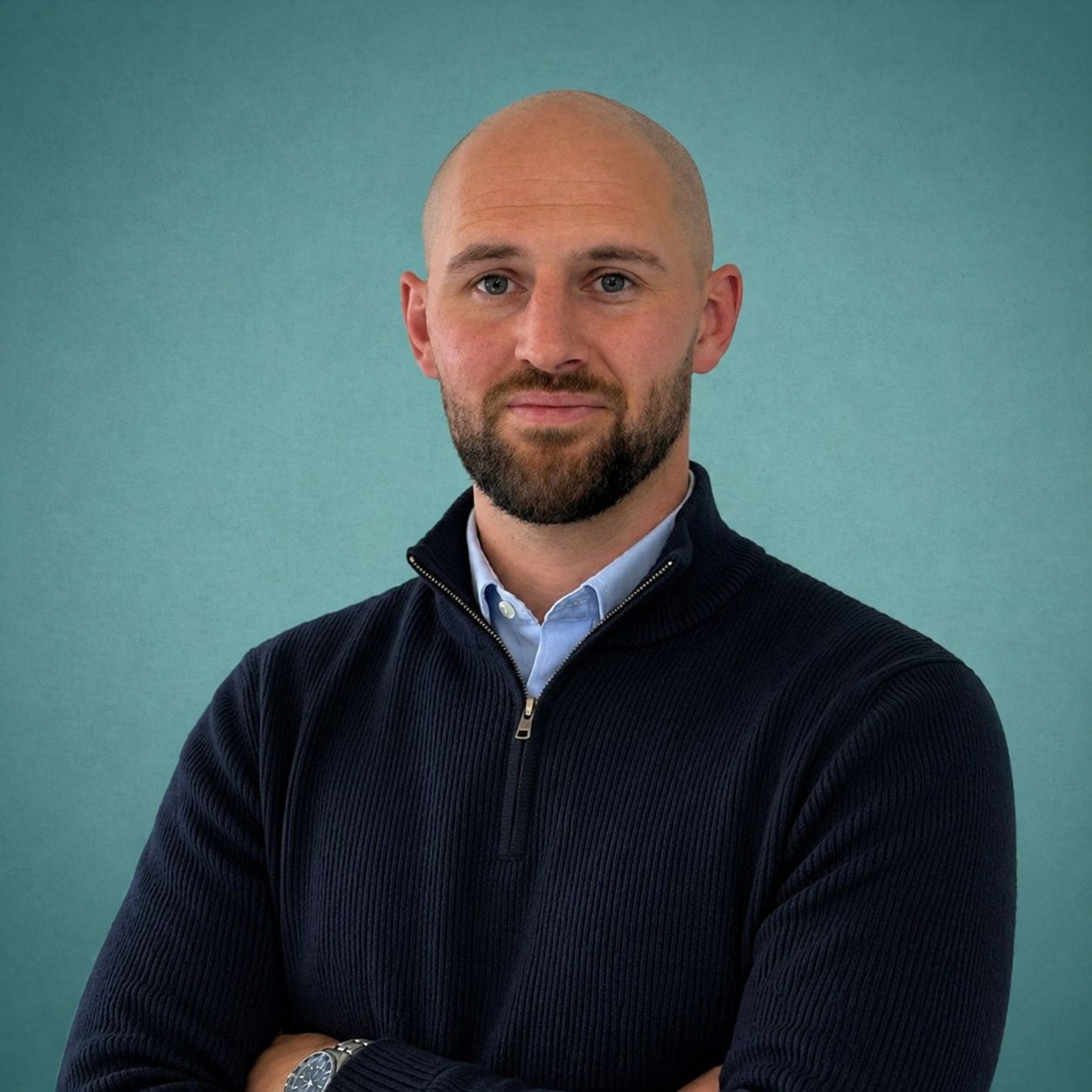
Andrew Lewiski
“Deeper roots mean a better plant at the end of the day.”
Andrew Lewiski has been named to the Talent 100, Class of 2026, the annual award recognizing up to 100 leaders in each category of talent acquisition. Honorees are nominated by peers or found by committees that look for excellent work wherever it happens, then chosen for the depth of their craft and their impact on hiring. This is Andrew's story.
Andrew Lewiski wants the recruiting seat to be dangerous. The phrase grew out of work with a colleague at a national staffing firm, and it describes a recruiter versatile enough to recruit any and all roles, freed from administrative drudgery and loved as much as they are asked to love their candidates and clients.
That idea now shapes talent acquisition at MS Companies, the firm headquartered in Carmel, Indiana, where Andrew is Director of Technical Recruiting. Working from the Gadsden, Alabama area, Andrew oversees nationwide talent acquisition strategy across manufacturing, automotive, engineering and operational support. The breadth of that portfolio echoes the territory where Andrew first made a mark, building a practice in light industrial and engineering recruiting.
The path began in the Alabama area and led to Georgia, where Andrew went to play college ball. Recruiting was not the plan, and that puts Andrew in good company. Of everyone in the profession, Andrew can think of only two people who set out to become recruiters on purpose. One of them now works on Andrew's team, having left a different career to make the switch.
The way in came through one of the large national recruiting firms, a company based in Maryland with an office in Atlanta. The original role was an on-premise recruiting position that appeared headed toward business operations and HR. It turned out to be full staffing and recruiting. When that on-site agreement ended, the firm offered a seat in Atlanta, and Andrew said yes without hesitation.
In Atlanta, Andrew launched a southern practice for the firm focused on light industrial and engineering recruiting, and never looked back. That firm, by Andrew's estimate, has since grown into a $14 billion recruiting business.
In Andrew's experience, the staffing world can be all hustle and bustle, with one question driving the day: how quickly can a position be staffed and closed? A colleague at the firm pushed Andrew toward a different one. Are we bringing people to a better place? Get that right, the reasoning went, and the organizations doing the hiring will be served well too. The lesson widened Andrew's view of the work, revealing more than one way to recruit, staff and support a business, with care for the candidate at the center.
That conviction soon turned inward, toward the recruiters themselves. As the practice grew, the two watched recruiters get bottlenecked, a risk made plain by the layoffs that hit tech recruiting groups. The answer, as they saw it, was versatility built on a simple truth: whatever the role or industry, recruiting comes down to connection and relationships. A recruiter who masters that can recruit anyone. They called it making the seat dangerous. Andrew, for the record, urges peers to read up on story branding.
Pouring into recruiters remains the mission. They carry the burdens of customer and candidate at once, and that liaison life, Andrew believes, is hard work that does not get recognized often enough.
Since COVID, by Andrew's count, the industry has flipped over two or three times. Through all of it, the stance on artificial intelligence has stayed fixed: the goal is not to replace anyone but to make people more efficient. Driving AI implementation across the organization, Andrew targets the administrative and mundane work that eats a recruiter's day, from updating job orders, descriptions and submissions to preliminary screening and the first intake of candidate information. The technical groundwork is already familiar territory. Andrew has piloted Nebula.io, and MS Companies runs a homegrown ATS built on Salesforce, with XML feeds running directly to job boards to build a central internal database.
The ambition is a seat where sourcing requires no energy from the recruiter, leaving time for real conversation. Recruiters often earn bad reputations because the job forces them to smile and dial and grab whoever is available fastest. Calling the right people instead lifts candidate experience, lifts client experience and changes how the profession is seen. In Andrew's framing, the hours saved are not the prize. The prize is the deeper relationships those hours make possible, and the stronger results that grow from them.
Andrew's counsel for fellow leaders begins with an honest audit. Are your recruiters set up to win, from front-end qualification at intake to account management and follow-up in third-party staffing? Every one of those handoffs shapes a relationship the recruiter has to manage. The sharpest version of the question is about priorities: are you investing in your people as much as you invest in your tools?
That question matters more as automation spreads, because even AI needs an operator. Andrew urges leaders to grow their teams deliberately, through education and through camaraderie, because recruiting is hard and the people doing it deserve real care. Neglect them, Andrew warns, and a company ends up with a toolbox full of tools and nobody to take them out.
The Talent 100 exists to celebrate the people shaping the future of how the world hires, and few embody that better than Andrew. We are honored to welcome Andrew Lewiski to the Talent 100, Class of 2026, and grateful for the experience, perspective, and craft they bring to this community. Congratulations, Andrew. Welcome to the Talent 100.