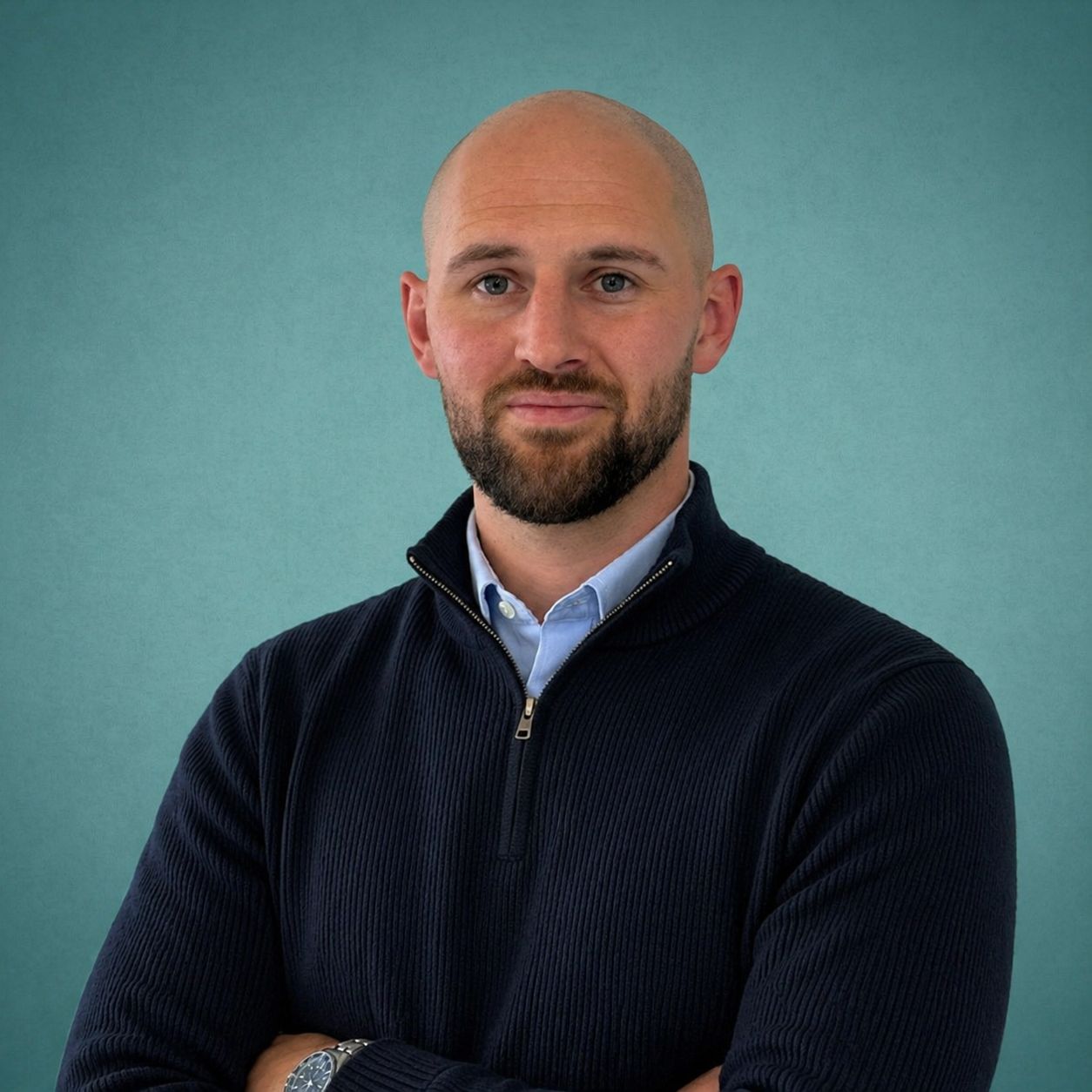
Scott M. Long
Hire Source Recruiting
“If you use AI to enhance the power of people, I think it's a phenomenal tool and can really grow the business.”
Scott M. Long has been named to the Talent 100, Class of 2026, the annual award recognizing up to 100 leaders in each category of talent acquisition. Honorees are nominated by peers or found by committees that look for excellent work wherever it happens, then chosen for the depth of their craft and their impact on hiring. This is Scott's story.
Scott M. Long once narrowed an entire continent down to a single city in about three hours. Tasked with finding where his company should expand in Eastern Europe, a region where no one on his team had ever worked, he used AI to map competitor footprints, engineering talent density, university strength and cost of living, then screened out any market where NVIDIA, Google or Meta already had offices, on the theory that a smaller name cannot outbid giants. Warsaw was out. Wroclaw was out. Krakow, home to what he identified as the top AI and high performance computing university in Europe and conspicuously free of those three logos, was in. Before AI, that analysis would have taken weeks.
It is a useful window into how Long works. Twenty five years into a talent acquisition career, he is fluent in the newest tooling and unsentimental about what it can and cannot do. The research is faster. The judgment about which city, which candidate, which conversation is still entirely human. That balance, technology in service of people rather than in place of them, is the through line of everything he has built.
A Question at Church That Changed a Career
Long's entry into the profession came from an unlikely source: a woman at his church who watched him for a while and told him, flatly, that he would be an outstanding recruiter. He was enthusiastic and completely uninformed. "I said, yes, absolutely. I'd love that. What's a recruiter?" he recalls. "I literally had no idea what it was."
She turned out to be one of the top performers at her firm. She secured him an interview and told him the rest was on him, that he would have to sell himself into the role. He did. He loved the work immediately, even though that first employer lasted only nine months on his resume. The job went. The career stayed. Twenty five plus years later he is still in it, which is its own kind of verdict on how right that first read on him was.
His background before recruiting was theology. Long had been studying to become a pastor, and while the vocation changed, the orientation never did. He describes trying to operate as a follower of Jesus Christ throughout his professional life, imperfectly by his own account, but consistently, and he credits that consistency with a great deal of what has followed: the ability to get things done, to make things happen, and above all to have people trust him.
The People Who Taught Him
Ask Long who shaped him and the first name out is Tony Natella, who led the recruiting firm he joined after that nine month stint. Natella, who turns 80 this year and has long since retired, taught him recruiting from the ground up: what to do and what not to do, how to say things and how not to say them, how to read people and understand their likes and dislikes. Long does not hedge on the debt. "The recruiter I am today really is because of Tony," he says, describing him as a major impact on his business life and someone he remains deeply grateful to.
The second is Andy Mills, the former CEO of Thomson Financial and Professional Publishing, who helped build the business from a startup into a group generating billions in revenue with more than 20,000 people worldwide. Mills mentored Long for years, teaching him business at a level far above the recruiting desk. His most durable lesson was about differentiation. In an industry that Mills warned is often crowded with people chasing a quick buck, he told Long that simply being himself, operating with honesty and integrity and the pastoral instincts he already had, would set him apart. Long has lived by those words ever since, and after 25 years he considers the advice validated many times over.
The third acknowledgment is less a person than a principle: the teams that have reported to him. Long has made a practice of hiring recruiters good enough that he never has to hand hold them. "You don't have to pull out a bullwhip," he says. You talk about what needs to be done, point them in the right direction, guide them, shape them, and then get out of the way. He has deliberately sought people he could direct rather than manage inch by inch, people who become successful in their own right. He is candid that this reflects well on him too, and equally candid that the gratitude runs the other way.
The Case for the Human Side
Long's read on AI is genuinely two sided, and he refuses to collapse it into either evangelism or alarm. On the upside, he has seen it compress weeks of market research into hours and open up decisions his teams could not previously have made with confidence. He is emphatic that recruiters should use it. "Absolutely use AI," he says. "It's critical."
The concern is what it is quietly displacing. Long has spent recent years interviewing recruiters and has noticed a pattern among those with five years of experience or less. They are excellent with tools. They are excellent with LinkedIn, Google and AI, and they can surface strong candidates on a screen. What they often lack is what he calls historic recruiting: the read on cultural fit and personal fit, the understanding of what motivates a candidate and what drives them, the ability to engage a human being at a human level. It is not a character flaw, in his view. They have simply never had to learn it.
That gap has a commercial consequence he wants leaders to see coming. If the industry keeps advancing the story that AI can replace people, talent acquisition will be among the functions most severely harmed, because executives will conclude they can hire one recruiter, hand them a tool and fill every role. "No, they really won't actually," Long says. "That's going to harm companies long term to think that way."
Advice for the Next Cycle
Long's guidance to talent leaders heading deeper into 2026 is deliberately contrarian to the prevailing conversation. Every discussion he is in right now, he notes, opens with what tools you use and how you use AI. He does not dispute that this matters. He simply thinks the field is over indexing on it and under investing in the thing that actually closes candidates.
"My encouragement to TA leaders today is focus on the personal, the human side of recruiting," he says. The first reason is straightforwardly self interested: it will make you more successful. The second is structural, a defense of the profession itself against the assumption that it can be automated away.
His formula for what comes next is simple and technology agnostic. Find great recruiters who genuinely understand people, because it remains a people business, and equip them with the best available technology. Today that is AI. At some point it may be quantum computing. The tool will keep changing. "At that point, if we do that," Long says, "then we're looking at success." It is the same lesson Andy Mills gave him decades ago, updated for a new machine: the differentiator was never the platform. It was always the person using it.
The Talent 100 exists to celebrate the people shaping the future of how the world hires, and few embody that better than Scott. We are honored to welcome Scott M. Long to the Talent 100, Class of 2026, and grateful for the experience, perspective, and craft they bring to this community. Congratulations, Scott. Welcome to the Talent 100.
About the Talent 100
The Talent 100 is an annual list spotlighting the leaders who push HR and talent acquisition forward, organized by Noon AI. Honorees are selected through peer nominations and independent selection committees. Selection is entirely merit-based, with no fees or pay-to-play requirements.