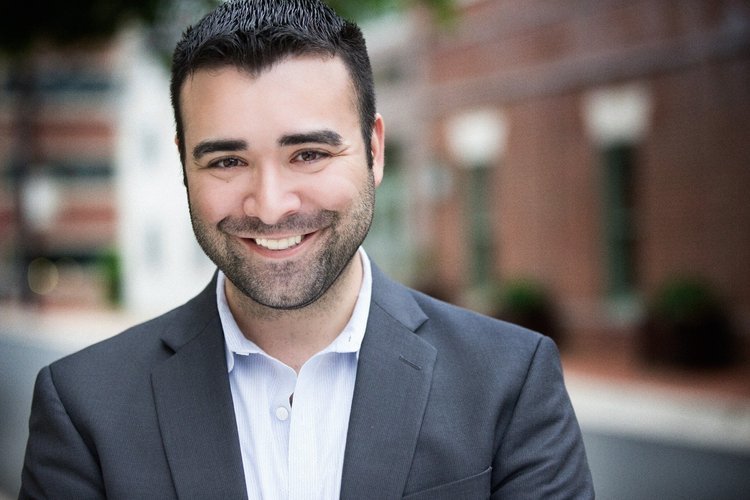
Kate McCabe
Eclaro
“We don't measure our client relationships in deals, we measure them in decades.”
Kate McCabe has been named to the Talent 100, Class of 2026, the annual award recognizing up to 100 leaders in each category of talent acquisition. Honorees are nominated by peers or found by committees that look for excellent work wherever it happens, then chosen for the depth of their craft and their impact on hiring. This is Kate's story.
In the late 1990s, Kate McCabe stood in front of clients demonstrating an Eclaro platform built on machine learning and natural language processing, and heard a response that redirected an entire company: they loved the technology, they loved the innovation, and they wanted Eclaro to run the process itself. A software pitch became a services business, and the terms of a 27 year career were set.
Today McCabe serves as Senior Vice President, Talent Solutions & Strategy at Eclaro, working at the intersection of technology, talent, talent acquisition, recruiting solutions and innovation, with client optimization as the organizing job. Eclaro provides talent to some of the largest organizations in the world and to a long list of innovative startups, which means the work is equal parts systems thinking and relationship building. Across nearly three decades, McCabe estimates having met tens of thousands of people in the industry. The scale is unusual. So is the vantage point it creates.
From Implementations to Talent Solutions
The starting point was a very different industry. Before Eclaro, McCabe managed IT implementations, change management, and training around technology, which is a discipline built on the unglamorous truth that software only works when people actually adopt it. That background explains a great deal about what came next.
When clients asked Eclaro to manage the process rather than simply license the platform, the company became a solutions provider in the staffing and talent acquisition space. McCabe has held a variety of capacities over 27 years, but the underlying assignment has stayed consistent: understand where technology ends, where human judgment begins, and how to optimize the handoff between the two. Curiosity is the engine. McCabe is candid about being a self described data nerd who digs into the numbers, at a company that has been data driven from the beginning and where asking hard questions about optimization has always been welcome rather than tolerated.
The Right People Are the Answer
Ask McCabe about the people who shaped this career and the answer arrives as a framework rather than a list. Some people show you who you want to be and how you want to be. Others teach you, less comfortably, how you do not want to be. Both categories are useful, and McCabe treats them as such, describing the lesson from the second group as a reminder that behavior does not always align with the values a person claims to hold. There is always an opportunity to learn.
What holds it together is alignment. Eclaro's tagline, "The right people are the answer," is not a poster on a wall in McCabe's telling but a working standard, one shared with the company's ownership and lived in daily practice. Values sit at the center of the business, and the people who built it came together around a common vision of engagement and interaction. McCabe calls the ability to deliver that every day a blessing, which is a striking word from someone who spends most of the working day inside dashboards and platform evaluations.
Reading the AI Wave with Thirty Years of Context
Longevity buys skepticism, and McCabe deploys it precisely. Having watched wave after wave of technology arrive with inflated claims attached, McCabe argues that plenty of what the market currently labels AI is still machine learning and natural language processing, which is exactly what Eclaro's original platform ran on almost 30 years ago. It is not agentic. Vendors describe it as AI because they feel they have to, and much of the technology presented to McCabe on any given day does not clear the bar.
Skepticism is not resistance. Eclaro leads with innovation, exposes itself to everything on the market, and tests widely, both the embedded AI inside packaged solutions and tools the team is building internally. McCabe expects that combination to be the durable answer: customize what needs to be specific to your business, and use what is already built into your existing tech stack.
There is a second reason for caution, and it has nothing to do with product roadmaps. This remains a human centric industry. Decisions about where people work, whether they change jobs, and how they feed their children are deeply embedded in people, not in workflows. Meanwhile the downside of automation is now visible everywhere in the form of candidate fraud, job fraud, and ghost jobs, which has left many candidates with a genuine trust problem where technology is concerned. Keeping humans at the center of the high value interactions, McCabe argues, is critically important, and that balance is where the industry will settle.
Advice for 2026
McCabe's counsel to other talent leaders starts with an audit rather than a purchase. Look hard at the state of your business. Look at your client base. Ask sharper questions about what clients actually need, where their budgets sit, and where their strategic initiatives are heading. Keep clients and candidates at the center of the business, the workflow, and the value stream, and much of the rest tends to resolve itself.
The proof point is tenure. Eclaro's internal shorthand is that client relationships are measured not in deals but in decades, and the firm has served a number of clients for almost three decades, evolving its business, work streams, and service offerings alongside them. McCabe frames that adaptability as the actual success mechanism in any business, not just staffing or talent acquisition.
On technology specifically, McCabe reaches for a consumer analogy. Apple's approach to the AI pivot, letting other players experiment, observing what works and what does not, then investing strategically, closely mirrors Eclaro's own posture, and McCabe believes it has served Apple well and will continue to. The contrast is instructive too: Microsoft moved early as an investor in OpenAI, embedded OpenAI into its Copilot products, then broadened further by adding Claude for Work and other large language models. Neither path is universally correct. The right balance between technology investment and human investment depends on the size of the business and the size of the technology budget.
Which produces a piece of advice that is both permissive and disciplined. Know your business, know where you stand, and know where the tools and the technology genuinely are. Then experiment, thoughtfully, because resources are always limited.
The Talent 100 exists to celebrate the people shaping the future of how the world hires, and few embody that better than Kate. We are honored to welcome Kate McCabe to the Talent 100, Class of 2026, and grateful for the experience, perspective, and craft they bring to this community. Congratulations, Kate. Welcome to the Talent 100.
About the Talent 100
The Talent 100 is an annual list spotlighting the leaders who push HR and talent acquisition forward, organized by Noon AI. Honorees are selected through peer nominations and independent selection committees. Selection is entirely merit-based, with no fees or pay-to-play requirements.