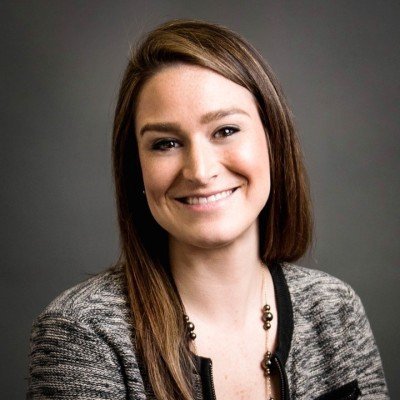
William Huffaker
Newell Brands
“What I like most about TA is the opportunity to offer people opportunity and change their lives.”
William Huffaker has been named to the Talent 100, Class of 2026, the annual award recognizing up to 100 leaders in each category of talent acquisition. Honorees are nominated by peers or found by committees that look for excellent work wherever it happens, then chosen for the depth of their craft and their impact on hiring. This is William's story.
Sharpie. Rubbermaid. Contigo. Roughly 50 consumer brands sit under Newell Brands, and Bill Huffaker can tell you exactly why that matters to a candidate: the scale and the breadth mean a career spent working on products that touch people in their everyday lives. Ask him what gets him out of bed, though, and the answer is not the products. It is the offer letter, and what happens to a person's life after they sign it.
"What I like most about TA is the opportunity to offer people opportunity and change their lives," he says. "I really get a lot of satisfaction out of that." Roughly 30 years into a career in talent, that sentence has not changed. Almost everything around it has, and Huffaker now spends much of his week on the change itself: alongside leading talent, he heads what Newell calls its future of work initiative inside the company's AI transformation office.
Thirty Years, Many Names for the Same Work
Huffaker has spent about three decades in the field, long enough to have watched it renamed several times. He came in focused on talent, and over the years that has meant talent development, talent management, and, off and on, leading talent acquisition outright. He works fully remotely from Palm Springs, California, for a company headquartered in Atlanta, and travels often to the Sandy Springs area. The arrangement is not incidental to his thinking. A leader who has built a career at 2,000 miles of distance tends to be less nervous than most about where good work gets done.
The largest assignment of his career, by scope, came earlier and elsewhere, at a previous global employer. The entire talent acquisition function had been outsourced. Huffaker led the initiative to bring it back in house, at high volume and across a global footprint, which meant standing up process, capability and credibility at once. He describes it plainly as a challenge he enjoyed. It is the kind of project that leaves a leader with a permanent instinct for the plumbing beneath a hire.
Building an AI-Enabled Enterprise
Newell Brands has spent the past year refreshing its employee value proposition, and the refresh has a clear center of gravity. The company is leaning hard into upskilling its people so they become, in Huffaker's phrase, "AI fluent, not just AI literate." An internal program called AI Every Day carries that mandate, training employees to treat the tools as a daily habit rather than a novelty.
The commitment extends into hiring. Newell's behavioral interview guides now screen every single candidate on their ability to learn AI and to use it. If the goal is an AI-enabled enterprise, Huffaker argues, then the people joining have to be able to leverage the tools the company puts in front of them. He is equally direct about the promise on the other side of the table: the company does not intend to leave any employees behind, and it wants to attract people who will embrace a new era. "None of us exactly all know what that means, what it looks like," he says. "We're all figuring this out together."
Within recruiting itself, he sees AI accelerating sourcing, coordination and assessment, and he likes what it can do for fairness. It can democratize work, strip out bias, and compress a process that has historically punished candidates with silence. What he does not believe is that the human disappears. If he were the candidate, he says, he would want to sit eye to eye with someone, even virtually, and ask what it is really like there. At the end of the day it is humans who represent the company and invite someone to join a community and do their best work. A fully automatic end to end process, in his view, is still a number of years out.
Five Conditions, and the One That Keeps Him Up
Leading the future of work initiative inside Newell's AI transformation office has given Huffaker a working theory of why AI programs succeed or fail. He counts five conditions.
First, data. Recruiting data tends to live all over the place, and until it is centralized and in order, nothing built on top of it will make sense. Second, process. He concedes the subject is boring, then explains why it is decisive: a company that has acquired many brands has inherited many different ways of recruiting, and layering AI over processes that were never smoothed out, he warns, "is going to be a disaster." Third, the technology itself, which requires investment and careful evaluation and which he calls, frankly, almost the easiest part. Fourth, value capture. Doing it because it is cool may teach you something, but an enterprise eventually has to show value in return.
The fifth is the one he worries about most: adoption. Getting people genuinely comfortable with AI, confirming they have access to the tools, confirming the skills have actually been built, and confirming that people are using it daily to improve their work. That is where he spends his time, and he frames it not as a technology problem but as a learning one.
Head, Heart, Body, Spirit
His advice to other talent leaders heading into 2026 begins with a framing he offers with a slight apology for how it might sound, and which lands anyway. He thinks about careers in four quadrants: the head, the heart, the body and the spirit. The head asks whether you have the skills to operate in this new era. The heart asks whether you actually know what you enjoy doing, because everyone has held a job that was a slog. The body is life situation and priorities, whether you want to commute, work remotely, go hybrid or work part time. He hopes employers offer far more flexibility there than they have.
The spirit is the quadrant business rarely discusses, and the one he believes will matter more, not less, as AI reshapes work: purpose, and the meaning a person takes from their job. He does not pretend the product ledger supplies that on its own. Selling more Sharpies, he says, is not what motivates him. Giving people opportunity, helping them learn and grow, helping them reach their full potential: that is what does.
Most organizations, he notes, are currently pouring their energy into the skills quadrant. That is necessary, and at Newell it is well funded and well organized. It is also incomplete. "This is the biggest shift that we're making probably in our lifetime," he says, and his hope is that the same advent of AI that forces the skills question will finally buy people more degrees of freedom in the other three.
The Talent 100 exists to celebrate the people shaping the future of how the world hires, and few embody that better than William. We are honored to welcome William Huffaker to the Talent 100, Class of 2026, and grateful for the experience, perspective, and craft they bring to this community. Congratulations, William. Welcome to the Talent 100.
About the Talent 100
The Talent 100 is an annual list spotlighting the leaders who push HR and talent acquisition forward, organized by Noon AI. Honorees are selected through peer nominations and independent selection committees. Selection is entirely merit-based, with no fees or pay-to-play requirements.