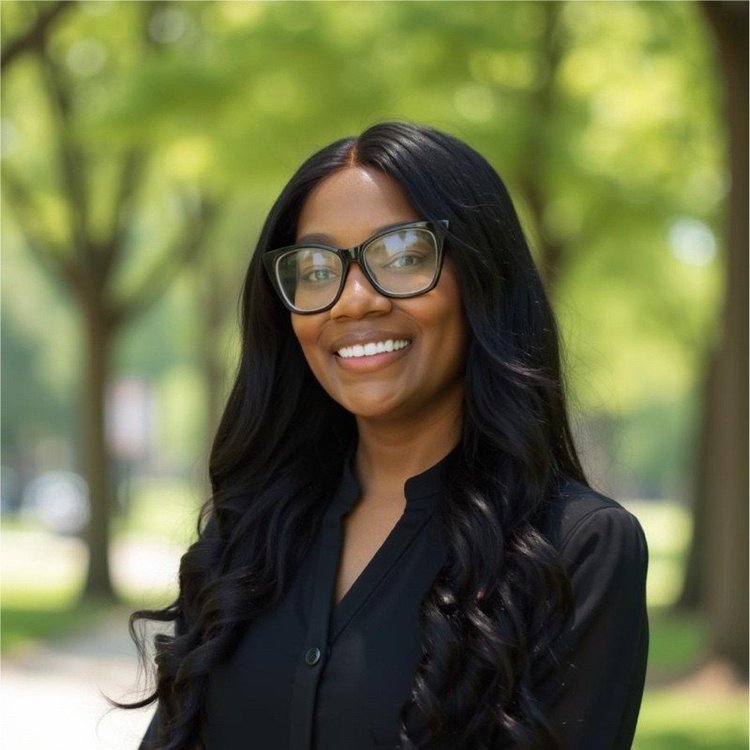
Trishan Peiris
Hiregenics
“It's learning, not necessarily from books, but from people, from their mistakes, from their successes, and applying it to mine.”
Trishan Peiris has been named to the Talent 100, Class of 2026, the annual award recognizing up to 100 leaders in each category of talent acquisition. Honorees are nominated by peers or found by committees that look for excellent work wherever it happens, then chosen for the depth of their craft and their impact on hiring. This is Trishan's story.
Trishan Peiris grew up in Sri Lanka watching his parents run a staffing company, and he was certain of one thing: he would never do that for a living. Fifteen years later, staffing and managed services is not just his profession but the space he describes as near and dear to his heart, the place where, in his words, he does exceptionally well.
That inheritance, resisted and then embraced, is the through line of a career that has taken him from a small island between India and the Maldives to the front lines of contingent workforce strategy for large enterprises. Today he's one of the sales leads supporting managed services work at Hiregenics, where he recently completed his first year, advising senior talent acquisition and procurement leaders on how to build workforce solutions that are people-first and technology-backed.
From SAP Sales to the MSP World
Peiris began his American career straight out of university, selling SAP in a B2B sales and marketing capacity. The pivot came when he moved from selling the software to recruiting the people who ran it, taking on SAP recruitment in Philadelphia. It was there that the shape of the industry started to make sense to him, and in 2014 he moved into the MSP space. He has never left it.
Over more than 15 years across staffing and managed services, the appeal has stayed constant: the variety of clients, and the chance to make a measurable impact on the HR and talent acquisition function itself. Managing contingent workforce for large organizations is not an easy task. It's complex! It requires centralized systems, disciplined reporting, visibility across thousands of moving parts, and the ability to hold everyone accountable to a single process. Peiris is fluent in that machinery, and he is candid that none of it works without the technology underneath it.
Started From the Bottom
Peiris entered the industry as a senior analyst. He describes the arc that followed with a grin and a Drake lyric: started from the bottom, now I'm here. At one organization he stayed close to 12 years, rising from analyst to Director of Client Relations, then to lead Advisory Services for North America and APAC, and finally into a senior sales role. Longevity is a point of pride for him. "I stay where I go," he says, and his LinkedIn bears it out.
He credits none of it to solo effort. Multiple mentors and multiple bosses taught him, coached him, and, crucially, challenged him. Some of that challenge was uncomfortable but good for him. He recalls times working for some tough managers in roles. He could read it as defeat and walk, or he could read it as an invitation to get stronger. "Are they putting me down? Or are they challenging you to grow and be better?" he asks. "I always choose the latter." He chose to use it to win, and win, and win.
His success continues at Hiregenics. Ask him to explain his first-year success and he redirects the credit almost immediately to the team around him, a group he calls genuinely supportive and central to the organization's growth. It is, he says, the fundamental of his growth throughout: learning from people rather than books, absorbing their mistakes and their successes, and applying both to his own path.
High Touch, High Tech
When the conversation turns to artificial intelligence, Peiris makes a deliberate move: he sets AI aside first and talks about technology as a whole. Over the last eight to 10 years, he argues, the entire talent acquisition space has been pulled toward a high-touch, high-tech model. Clients want a people-first solution engineered and backed by technology to deliver efficiency, speed, and cost savings. That was true long before the current wave of excitement, and it remains the organizing demand of the market.
On AI itself, he is enthusiastic and unsentimental in equal measure. Is AI adding value? "100%," he says. But he has spent considerable time testing that claim in the open, hosting roundtable discussions and thought leadership conversations with senior talent acquisition and procurement leaders specifically to pressure-test where the value actually sits. His conclusion is blunt: there is enormous hype around AI, and comparatively minimal practicality in his corner of the market so far. People have seen the good it can do. They are still waiting on the numbers.
That skepticism does not translate into avoidance. Peiris considers AI an enabler, best deployed to strip out manual steps and to hand practitioners better inputs rather than to make decisions on their behalf. He is direct about how embedded these tools already are in daily life, noting that anyone claiming they never touch ChatGPT or Claude is not being straight with you. His argument follows logically: if clients and candidates use AI every day and see value in it, then it is the provider's duty to incorporate it and drive value through their solutions. Anything less is losing out.
What he will not concede is the primacy of the human relationship. Hiregenics, he emphasizes, is a people-first solutions organization, and in talent acquisition people still prefer to talk to people rather than a bot. AI should make that human interaction better, not replace it.
Advice for the Next Generation
Asked what he would tell someone entering the industry, Peiris splits his answer in two, because he gets the question often enough to have thought it through.
The first half is about restlessness. Before you chase a new opportunity, interrogate what is actually driving you to leave, and ask honestly whether it can be fixed where you are. He has watched an industry conditioned to move at the first sign of frustration, always assuming the grass is greener, only to discover on arrival that it is not. If you stay and push yourself and your surroundings to solve the problem, he believes you gain far more. He is careful not to be dogmatic about it: if the compensation on the other side is genuinely transformative, that is a different conversation. But he has also seen people leave for lesser reasons and spend over a year unemployed, which is why he urges anyone in that position to think twice and treat the decision with the seriousness it deserves.
The second half is about what actually lasts. "The logo is going to brush off after the honeymoon period," he says. "What's going to keep you is the group of people that you're surrounded by." He points to research suggesting people spend roughly 80% of their lives working and 20% on everything else, a ratio that makes cultural fit less a nice-to-have than a life decision. His instruction to candidates going through interviews is simple: look hard at the culture of the organization, and go somewhere that will be more than a job.
It is advice drawn straight from his own ledger. A career built on 12 years in one place, a series of mentors who pushed him harder than was comfortable, and a first year at Hiregenics he attributes to the team beside him. Peiris did not plan to end up in staffing. Having arrived, he has made a persuasive case that the people around you are the whole point.
The Talent 100 exists to celebrate the people shaping the future of how the world hires, and few embody that better than Trishan. We are honored to welcome Trishan Peiris to the Talent 100, Class of 2026, and grateful for the experience, perspective, and craft they bring to this community. Congratulations, Trishan. Welcome to the Talent 100.
About the Talent 100
The Talent 100 is an annual list spotlighting the leaders who push HR and talent acquisition forward, organized by Noon AI. Honorees are selected through peer nominations and independent selection committees. Selection is entirely merit-based, with no fees or pay-to-play requirements.