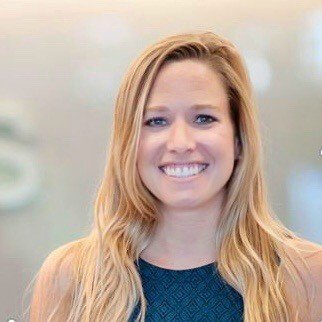
Matthew Peterlechner
Woods & Co
“If you want to find good talent, move quickly. It's as simple as that.”
Matthew Peterlechner has been named to the Talent 100, Class of 2026, the annual award recognizing up to 100 leaders in each category of talent acquisition. Honorees are nominated by peers or found by committees that look for excellent work wherever it happens, then chosen for the depth of their craft and their impact on hiring. This is Matthew's story.
The meeting that launched Matthew Peterlechner's recruitment career was never supposed to happen. Peterlechner had applied for a sales role at an agency called SMAART Recruitment and was booked to see one consultant, who was out sick that day. A director took the meeting instead and, rather than pitching Peterlechner to clients, made a different offer: don't go to the client, come and work for me. Almost eleven years later, Peterlechner runs the North America business of Woods & Co from New York, having brought the Australian-owned firm to the United States four years ago and worked alongside that same director across two companies for a decade.
The path from candidate to country lead was not a plan so much as a compounding series of good decisions, but the operating philosophy that emerged from it is precise: technology should carry the process, people should carry the relationship, and nothing kills a placement faster than a hiring team that takes its time.
Ten Years, Two Companies, One Constant
Longevity is unusual in agency recruitment, where the average tenure is often measured in months rather than years. Peterlechner has spent a decade working with the same director, eight of those years reporting directly to that person, first in Australia and now on opposite sides of the world. That continuity shows up in how Peterlechner describes the influence: not a single lesson but a whole approach absorbed over time. The way the work gets done, the way clients are handled, the way candidates are treated, all of it traces back to that partnership.
Setting up in New York four years ago meant translating an Australian business into an American market, with all the recalibration that implies. The client base is different, the competitive intensity is different, and, as Peterlechner has learned in detail, the pace of hiring is different too.
The Wisdom That Got Passed Down
Peterlechner is unusually clear-eyed about where the craft came from. A first manager, appointed by the director who made the original hire, arrived with roughly twenty years in the industry at a point when Peterlechner had none. What followed was a steady transfer of what Peterlechner calls recruitment wisdom, for lack of a better term: knowledge, education, and the accumulated instincts that only come from having seen a market cycle or three.
Two other colleagues from those early SMAART Recruitment years round out the list of people whose habits Peterlechner still borrows. It is a generous accounting from someone who could easily claim the results as personal. "Everything that I am and the way that I act is in part due to them," Peterlechner says, with the rest picked up as tips and tricks along the way. In an industry where mentorship is often talked about and rarely credited, that kind of specificity about who taught what is worth noting.
Automation With the Human Element Intact
Peterlechner has heard the prediction that technology will take over recruitment for the entire length of a career. "In some parts it has, in some parts it hasn't," is the verdict. The Woods & Co stack is real and working: AI note takers, VoIP systems that transcribe calls straight into AI-generated notes, search and match functions inside Bullhorn. None of it is decorative, and Peterlechner has no interest in resisting tools that remove friction.
The line is drawn somewhere else. Peterlechner describes the position as hellbent, and it is a simple one: a computer can do a great deal inside a recruitment process, but the human element still has to be there. The tools assist and leverage. They do not replace the judgment call, the difficult conversation, or the read on whether a candidate is genuinely committed. Peterlechner builds processes so that the human step is protected by design rather than left to survive by accident.
Time Kills All Deals
Ask Peterlechner for the single piece of advice worth carrying into the year ahead and the answer arrives without hesitation. Time kills all deals. It is a saying as old as the industry, and Peterlechner watches it prove itself with grim regularity. In one recent week alone, two candidates accepted other offers because a client wanted to add an interview stage that had not been agreed at the start of the process.
There is a cultural dimension to this that Peterlechner, working across two markets, sees plainly. The Australian instinct is to give a strong candidate a go and every opportunity to succeed. In the US, Peterlechner has encountered processes where a week passes between interviews, or a candidate is routed to meet someone with no relevance to the role, and then everyone is surprised at offer stage to learn the person has already signed elsewhere. After seven weeks in process, that outcome is not a mystery.
Peterlechner is candid that this sounds like an agency recruiter wanting deals closed faster, and refuses to hide behind that. The point cuts both ways. Nobody wins by losing a candidate to a slow process. From the candidate's side, an extra interview carries no guarantee of an offer at the end of it, and someone who is unemployed or looking at a meaningful salary increase will move on the first real thing in front of them.
The remedy is structural rather than heroic. Interview stages should be ironed out before a role goes live, not invented midway through. Internal talent functions and their agency partners should agree the sequence in advance and then hold to it. Peterlechner is careful not to generalize about internal teams, but the standard is firm: if the role is genuinely live and genuinely needs filling, the process should be built to move at the speed of the market it is hiring in.
The Talent 100 exists to celebrate the people shaping the future of how the world hires, and few embody that better than Matthew. We are honored to welcome Matthew Peterlechner to the Talent 100, Class of 2026, and grateful for the experience, perspective, and craft they bring to this community. Congratulations, Matthew. Welcome to the Talent 100.
About the Talent 100
The Talent 100 is an annual list spotlighting the leaders who push HR and talent acquisition forward, organized by Noon AI. Honorees are selected through peer nominations and independent selection committees. Selection is entirely merit-based, with no fees or pay-to-play requirements.