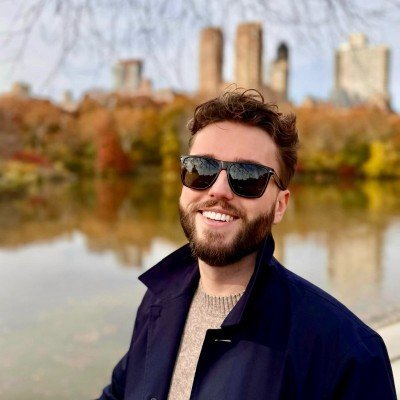
Shawna Maccario
Walden Robotics
“I believe that we're actually in a rebirth phase as a function.”
Shawna Maccario has been named to the Talent 100, Class of 2026, the annual award recognizing up to 100 leaders in each category of talent acquisition. Honorees are nominated by peers or found by committees that look for excellent work wherever it happens, then chosen for the depth of their craft and their impact on hiring. This is Shawna's story.
Ask Shawna Maccario where talent acquisition is headed and she does not reach for the word disruption. She reaches for rebirth. The then head of talent acquisition at Watts Water Technologies, now Head of Talent Acquisition at Walden Robotics, has spent her career watching the function change shape, moving from order-based recruiting into something far more strategic, and she is convinced that the current wave of AI is not the end of the profession but the moment it becomes what it was always meant to be: a seat at the table occupied by true talent advisors.
The Pull of the Perfect Fit
Maccario is the first to admit that almost nobody plans this career. "Most of us definitely fall into recruiting," she says. "It's not something we come out of college anticipating that we're going to be doing." What keeps people in it, in her experience, is something harder to schedule into a curriculum: a deep and durable interest in other human beings.
For her, the draw has always been the connection itself, matching people with employers who can actually satisfy their career ambitions rather than simply fill a requisition. When the fit is genuinely right for both the company and the person, she describes the result as one of the most rewarding experiences the work offers. That feeling, repeated across years and hundreds of decisions, is why she has stayed in talent acquisition for so long while the tools, the job boards, the platforms, and even the vocabulary of the profession kept changing around her.
Two Schools of Thought on AI
Maccario sees the profession splitting into two camps. One is nervous, and she does not dismiss that. Talent acquisition professionals are asking real questions about how AI will affect their jobs and what it will take to stay relevant. The other camp, the one she belongs to, treats the moment as exactly what it appears to be. "That's what it is," she says of the opportunity, and she speaks with the authority of someone who has led substantial AI projects rather than merely admired them from a distance.
Where the technology has actually delivered, in her assessment, is specific and unromantic. Sourcing has benefited greatly. Scheduling has benefited greatly. Those two functions, she notes, are the biggest time sucks for recruiters, and automating them is not about replacing judgment but reclaiming it. Every hour returned is an hour a recruiter can redirect toward the deeper, messier problems inside a business that no model will solve on its own. That is the whole argument in her view: free the critical thinking, then aim it at something that matters.
From Order Takers to Talent Advisors
Maccario frames the last two decades as an arc. Recruiting was order-based work, executed by people who were not even called talent acquisition professionals. Talent acquisition brought strategy: external market, internal market, and the harder job of uncovering opportunities to attract and retain the best people available. Now, she argues, a third wave is arriving, and AI is the accelerant carrying the function toward a genuine talent advisor model.
Her advice to other leaders heading into 2026 is a call to hold the line on purpose. Remain strategic and stay focused on the main objective, because a business hires talent leaders to drive strategy and attract the best talent in the industry, not simply to process demand. She wants the profession leaning harder into demand planning, sharper on identifying key market opportunities, and consistently proactive with business leaders. Show them who they need. Show them what it will take. Help them see, as she puts it, who is required to bring their business to the next level. The output of the best people in an industry is what creates real change inside a company, and that makes the person who finds them a strategic actor rather than a service desk.
Watching the Next Wave
She also points to a colleague running a full system implementation and overhaul while weaving AI into a smaller business that is growing. That case matters to her precisely because of the constraints. "It doesn't necessarily matter how large you are as a company," she says. What matters is using the tools within reach, even with limited to no spend. And she highlights a former colleague who worked on her team at Watts Water as a talent acquisition manager and now serves as a process specialist enhancing processes across the organization, someone she describes as deeply caring. It is the same instinct that has organized her entire career: find the people doing the real work, and make sure someone notices.
The Talent 100 exists to celebrate the people shaping the future of how the world hires, and few embody that better than Shawna. We are honored to welcome Shawna Maccario to the Talent 100, Class of 2026, and grateful for the experience, perspective, and craft they bring to this community. Congratulations, Shawna. Welcome to the Talent 100.
About the Talent 100
The Talent 100 is an annual list spotlighting the leaders who push HR and talent acquisition forward, organized by Noon AI. Honorees are selected through peer nominations and independent selection committees. Selection is entirely merit-based, with no fees or pay-to-play requirements.