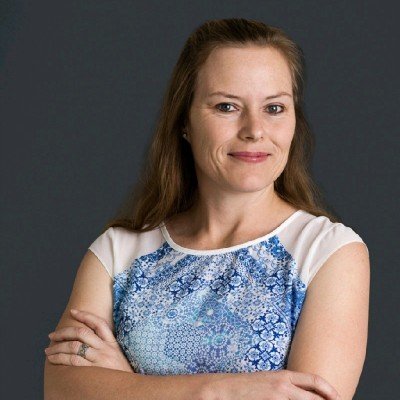
Sanjana Govil
Social Finance
“Innovation for the sake of public good was something that really excited me.”
Sanjana Govil has been named to the Talent 100, Class of 2026, the annual award recognizing up to 100 leaders in each category of talent acquisition. Honorees are nominated by peers or found by committees that look for excellent work wherever it happens, then chosen for the depth of their craft and their impact on hiring. This is Sanjana's story.
Somewhere in a filing cabinet, or more likely a neglected spreadsheet, sits the honest opinion of a community that a nonprofit surveyed and never had the resources to read. Sanjana Govil noticed that gap years before ChatGPT made machine reading of language a dinner table topic, and she has spent the better part of a decade building toward closing it. Today she is an Associate Director on the data and digital team at Social Finance, where machine learning, AI and digital service design are pointed squarely at public sector problems.
It is an unusual seat for someone who qualified as a lawyer in 2012. Govil is candid that her route was, in her words, a far cry from the AI space. That distance is precisely what makes her useful. She arrived at technical work through the problem rather than through the tooling, and she has never stopped asking the question that first pulled her in: what is all this information actually for, and who does it serve?
From Legal Transactions to the Innovation Side of the Table
Govil began her career advising social entrepreneurs on legal transactions. The work was solid, the clients were fascinating, and after a while the imbalance became impossible to ignore. What her clients were building, she decided, was considerably more interesting than the legal machinery humming in the background. She wanted to be on the innovation side of the table, and she wanted that innovation aimed at public benefit.
So she made the transition deliberately rather than hoping for a lucky break. An MBA at Oxford served as the bridge into strategy consulting and research in the social impact sector, and that work handed her something she had not expected: sustained exposure to how data actually moves, or fails to move, through the social and public sectors.
What she found was an abundance nobody was using. Frontline nonprofits collect survey data constantly, asking the communities they serve what they need and what they think of the services they have received. Then the data sits there, because trawling through it and extracting rich insight takes resources that grassroots organizations rarely have. Meanwhile, at the other end of the system, philanthropic money flows downward. Funders decide strategically where capital should go, and the community voice that could sharpen those decisions almost never bubbles up to the funder level. Govil saw a loop that had been left open.
Unseen Insight and a Deep End Worth Diving Into
Her response was to build. This was before ChatGPT and Claude were in anyone's pocket, and the question she was asking was a genuinely hard one: could natural language processing draw usable insight out of vast quantities of unstructured, qualitative community feedback, and could those insights then be handed to philanthropic foundations to inform where the money actually went?
That idea became Unseen Insight, the startup Govil founded and led as CEO. She secured funding from Innovate UK to run a feasibility study, assembled a team and built an MVP, something real that could be tested against the world rather than argued about in a deck. Raising the capital to scale the business proved difficult, and Govil is matter of fact about it. What she carried out of the experience was more durable than a cap table: a working command of NLP models and a concrete sense of what it means to apply AI to messy human data. It also gave her a team to build and hire, her first real exercise in assessing talent for a problem nobody had solved before.
Why This Moment in the Public Sector Excites Her
Govil's read on AI is refreshingly unromantic about the technology and genuinely optimistic about the institutions. The capability that matters most to her is AI's ability to transform pathways to access services. She points to the NHS and its 10 year plan, so much of which hinges on improving how quickly people can reach good healthcare, and to the real spotlight now trained on what AI could contribute there. Technology that widens access to crucial rights and services is, in her view, the version worth building.
But the shift she finds most exciting is cultural rather than computational. Public service organizations are open to innovation in a way they simply were not before, and she credits generative AI for that. Because Claude and ChatGPT are in everyone's pocket, because ordinary people have played with them and seen what they can do, leaders across the public sector are now willing to have the conversation. How could I be using technology to my advantage? How could I be using AI?
She is quick to add the practitioner's caveat. A general purpose chatbot will often not be the right solution for the problem in front of them. What matters is that the door is open. "The fact that they actually want to sit and reimagine all of these processes now," she says, and that they carry so much optimism about what technology could do for their domains, is the opening she has been waiting for since she first noticed all that unread community feedback. The work now is to make sure the answers those organizations get are worth the trust they are extending.
The Talent 100 exists to celebrate the people shaping the future of how the world hires, and few embody that better than Sanjana. We are honored to welcome Sanjana Govil to the Talent 100, Class of 2026, and grateful for the experience, perspective, and craft they bring to this community. Congratulations, Sanjana. Welcome to the Talent 100.
About the Talent 100
The Talent 100 is an annual list spotlighting the leaders who push HR and talent acquisition forward, organized by Noon AI. Honorees are selected through peer nominations and independent selection committees. Selection is entirely merit-based, with no fees or pay-to-play requirements.