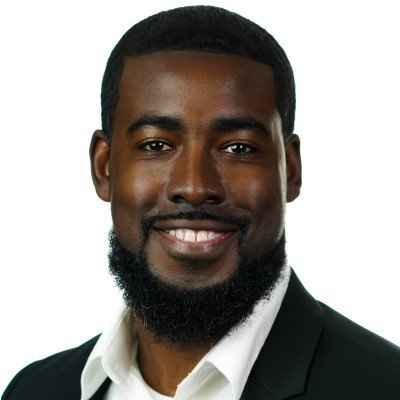
Leanne Hardman
Citywire
“I never want it to take the people element out of what we do.”
Leanne Hardman has been named to the Talent 100, Class of 2026, the annual award recognizing up to 100 leaders in each category of talent acquisition. Honorees are nominated by peers or found by committees that look for excellent work wherever it happens, then chosen for the depth of their craft and their impact on hiring. This is Leanne's story.
When Leanne Hardman joined Citywire in 2022, the brief was unambiguous: the business wanted to hire roughly 100 people that year. It was also, for the first time in her career, a genuinely global mandate, one that meant recruiting across markets, time zones and cultures rather than a single office. That combination of scale and reach is precisely what attracted her. "It was nice just coming and working with lots of different people," she says, "finding out about different people's cultures and all of that."
Today her remit extends well beyond filling roles. Alongside recruitment she has moved into succession planning and development, treating talent as a whole system rather than a hiring funnel. It is a widening of scope she can trace directly back to one conversation, with one manager, at one of the hardest moments of her career.
A Law Degree, a Move to Kent, and a Second Look at Recruitment
Leanne studied law at university and finished with no fixed sense of what came next. She applied for graduate roles, initially staying close to the field she had trained in, and looked at recruitment jobs at the time without pursuing them. It took three or four years, and a relocation to Kent, where she is still based, before she circled back.
The prompt was self-knowledge rather than ambition. A previous role had carried people elements, and she recognised where her strengths actually sat: conversation, curiosity, relationships. "I'm a really nosy person," she says, and she means it as a professional asset. Finding out what people do, why they are looking, and where they might thrive next is the part of the job she has never tired of.
She started agency-side and learned quickly that it was not the right fit. The model rewarded numbers on the board more than it rewarded getting the match right, and that was not how she wanted to work. Moving in-house changed everything. She began across general hiring, then built her career through a series of technology businesses before arriving at Citywire. The legal training never went to waste either. Employment law, contracts and the compliance edges of hiring all sit close to what she studied, which made the pivot feel less like a departure than a connection.
And the moment that still lands, after all these years and all those hires, is the phone call. Telling someone they have been offered the position. The excitement on the other end of the line is, in her telling, the whole point.
Automate the Admin, Protect the Conversation
Leanne's position on artificial intelligence is unusually clear for a field full of hedging. She is an enthusiastic adopter of anything that removes friction and a firm sceptic of anything that removes people. Across Citywire, she uses AI to streamline talent and business processes, enabling teams to focus less on administration and more on meaningful conversations, development, and decision-making.
Her approach is grounded in a simple principle: technology should be an accelerator, not a substitute for human judgement. While she embraces tools that simplify routine work and improve efficiency, she is clear that AI is there to support people, not replace them. As she puts it, "it doesn't replace CV screening". Instead, it removes the surrounding administration, allowing people to focus on the conversations, relationships and decisions that matter most.
She remains fiercely opposed to market trends such as automated first-round video screening, holding every piece of technology to a clear benchmark: does it create more direct conversations with people, or build a barrier between them?
As an internal champion for modern technology, she focuses on building confidence across the business, supporting colleagues who feel hesitant or uncertain about how to leverage AI effectively. Her perspective is simple: delegate the routine heavy lifting to smart tools, freeing up maximum bandwidth for high-empathy, high-value human connection.
Advice for the Next Generation: Be Nosy About the Business
For anyone entering talent acquisition now, Leanne's counsel is direct and, notably, not about sourcing technique. Ask questions. Especially in-house, she argues, the job begins with understanding the business you serve: the commercial model, where the money is made, who the customers are and why they choose you.
That commercial fluency is what makes the rest possible. It tells you who the right people are for the organisation, and it teaches you the culture, the team dynamics and how each function contributes to the mission. She is also honest about the impossible expectation baked into the role. Recruiters are treated as experts in every job they hire for, which no one ever truly is. Her remedy is to sit side by side with colleagues and learn what they actually do.
It is the same instinct that carried her out of a law degree and into a career built on curiosity. Be nosy. Ask more than you are expected to. Then match the person to the job properly, and make the phone call.
The Talent 100 exists to celebrate the people shaping the future of how the world hires, and few embody that better than Leanne. We are honored to welcome Leanne Hardman to the Talent 100, Class of 2026, and grateful for the experience, perspective, and craft they bring to this community. Congratulations, Leanne. Welcome to the Talent 100.
About the Talent 100
The Talent 100 is an annual list spotlighting the leaders who push HR and talent acquisition forward, organized by Noon AI. Honorees are selected through peer nominations and independent selection committees. Selection is entirely merit-based, with no fees or pay-to-play requirements.