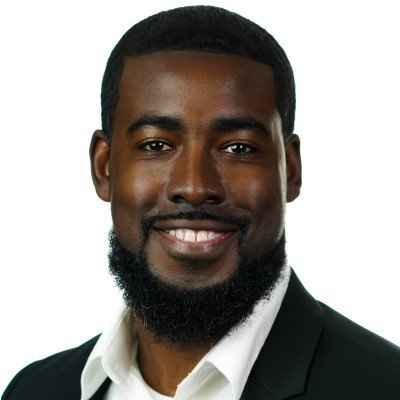
Eric Hess
Protective Life
“There's a human and a personal touch that comes with talent acquisition that is important to not lose touch of.”
Eric Hess has been named to the Talent 100, Class of 2026, the annual award recognizing up to 100 leaders in each category of talent acquisition. Honorees are nominated by peers or found by committees that look for excellent work wherever it happens, then chosen for the depth of their craft and their impact on hiring. This is Eric's story.
Thirty minutes into a phone conversation about a customer service opening at a bank, the staffing professional on the other end stopped and changed the subject. After this conversation, he told Eric Hess, I think you might be better suited for a role within the talent acquisition space. Hess said he would be more than happy to chat in more detail. He was in the office that week, meeting the team the next, and working in staffing shortly after that.
That recruiter offered recognition in a single unscripted half hour that is the same recognition Hess has spent a career extending to other people. Today he leads talent acquisition at Protective Life from Birmingham, Alabama, running a team he joined at the invitation of one of the mentors he credits most, after years inside Amazon and a long apprenticeship on the agency side. The through line of the work is unmistakable: technology should absorb the transactional so that recruiters can spend their attention on the human parts of the job that no system will ever replicate.
A Career That Began With Someone Else's Instinct
Hess graduated from college into a recession and was working retail when the opportunity found him. He had no plan to build a life in hiring. "I wasn't necessarily anticipating taking a role in talent acquisition," he says. "I just kind of fell into it. And it's been a love of mine ever since."
Staffing became his proving ground for quite a few years before his path carried him into large corporate environments and eventually into leadership. He describes what followed without embellishment: his career progressed and blossomed from there. What is striking, two decades on, is how little distance he puts between the person he is now and the twenty-something who got a chance from someone willing to look past the application in front of him.
Leaning In Before the Curve
On artificial intelligence, Hess is neither skeptic nor hype merchant. He sees talent acquisition sitting at the front end of adaptation and adoption, from language models to new automations, and he thinks that position is earned rather than accidental. Recruiting teams have an appetite for these tools, he says, because they understand the lift AI can provide against the nuanced and transactional tasks the function has always had to handle.
He puts the stakes plainly. "In our world, if you're not leaning into it, you're behind the curve," he says. The reasoning is not novelty but arithmetic. Efficiency in the process affects time to fill, affects hiring, and affects the candidate experience, and those are the measures by which successful talent acquisition organizations are judged. So his team examines the entire chain, from the inception of the application through evaluation, offers, negotiations, and start date, asking where AI can close a gap or break down a barrier that existed in previous years.
The endpoint he cares about is not the technology. It is how the organization shows up, how candidates are treated, and how quickly and how timely a team is able to respond to the people who raised their hand. That, he says, is something Protective Life continues to iterate on, and something the wider profession should keep iterating on too.
What Never Changes
Asked what advice he would offer other talent leaders heading into 2026, Hess acknowledges the volatility of the last two decades: the rise and fall of job boards, the arrival of LinkedIn, the remote work reset, now the AI wave. Then he pivots to what has survived all of it, and to the thing he credits for his own success.
"Keeping your customer top of mind," he says, whether that customer is an internal stakeholder in the business or an external candidate. Deep, sustaining, meaningful partnerships. Communication and collaboration. The customer service dimension of the work, held visible inside the team and across the current and future employee base. "That will never change," he says. "There's a human and a personal touch that comes with talent acquisition that is important to not lose touch of."
It is worth noting where that conviction was formed. Hess's career exists because a recruiter spent thirty unhurried minutes with a job seeker who had applied for something else entirely, listened closely enough to hear a different future, and said so out loud. No automation would have caught it. His counsel to the field is essentially an argument for protecting that capacity at scale: let the tools take the friction, and make sure the relationships, the rapport, and the partnerships with hiring managers, business leaders, and candidates stay at the center of the work. "The more things change," he says, "the more things stay the same."
The Talent 100 exists to celebrate the people shaping the future of how the world hires, and few embody that better than Eric. We are honored to welcome Eric Hess to the Talent 100, Class of 2026, and grateful for the experience, perspective, and craft they bring to this community. Congratulations, Eric. Welcome to the Talent 100.
About the Talent 100
The Talent 100 is an annual list spotlighting the leaders who push HR and talent acquisition forward, organized by Noon AI. Honorees are selected through peer nominations and independent selection committees. Selection is entirely merit-based, with no fees or pay-to-play requirements.